Do You Need a Reptile Fogger? (Keepers Say No)
By ReptileGearLab · Updated August 2026
Quick Take
Probably not. We'll go further: the fogger is the one humidity gadget we'd steer you away from, which matches what experienced keepers say fast when you ask. The concern is consistent. The vapor is fine enough to be breathed deep into the lungs, the reservoir harbours bacteria that then get sprayed around the enclosure, and the result is a raised risk of respiratory infection. Foggers are not safe for reptiles, but misters are.
What we'd do instead depends on your animal. For a humidity-loving snake like a ball python, the cheapest and most reliable fix isn't a device at all. Four to six inches of moisture-holding substrate with water poured into the corners holds humidity far more steadily than any fogger. For an arboreal gecko that also drinks droplets, we'd reach for an automated misting system, which does the job a fogger was trying to do and gives the animal drinking water on top.
Already own a fogger? There's a safer way to run one, and we cover it below. Our picks: See picks ↓
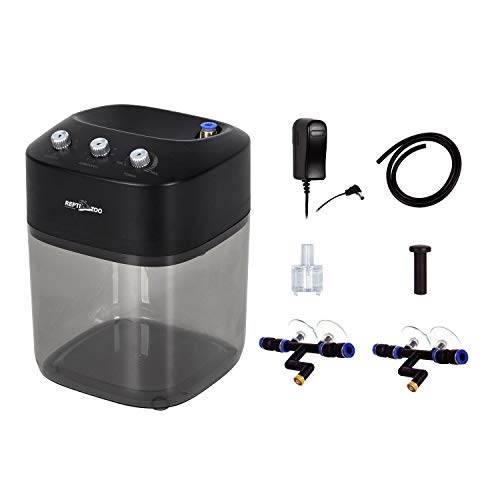
Foggers look like the obvious answer. Your humidity is too low, the tank needs moisture, and here's a machine that fills it with atmospheric mist for about thirty dollars. They also look fantastic, which is a bigger part of their popularity than anyone admits.
This is one of the clearest cases where the popular product and the experienced-keeper consensus diverge. The reasons come down to your animal's lungs, not snobbery.
Why keepers steer away from foggers
The objection is specific and it repeats almost word for word across communities. A fogger produces an ultrasonic vapor whose droplets are extremely fine, fine enough to be inhaled deep into the respiratory tract rather than just raising ambient humidity. Cool vapor going into a reptile's lungs is a recognised way to invite a respiratory infection, which is a serious and common illness in captive reptiles.
The second half of the objection is hygiene, and it's arguably worse. A fogger holds a standing reservoir of water. That reservoir grows bacteria. The machine's job is to aerosolise that water and blow it over the animal. Keepers put it plainly: they harbour a lot of bacteria and spread it around the enclosure, leading to upper respiratory infections. Hard to clean, and it sprays whatever is living inside it.
Third, the substrate problem. Foggers tend to leave surfaces and bedding persistently wet rather than raising humidity evenly, and permanently damp substrate under a snake is a route to scale rot. Wet and humid are two different conditions, which is why the fogger underperforms at the thing it was bought for.
What we'd do instead
Both alternatives cost less than a fogger and work better, depending on the animal.
- For ball pythons and terrestrial humidity species: deep substrate. This is the community's default and it beats every device. Four to six inches of moisture-holding bedding with water poured into the corners so the bottom stays damp releases humidity slowly and steadily all day. About ten dollars, nothing to break, nothing to disinfect.
- For arboreal geckos and planted vivaria: a misting system. A mister sprays droplets rather than inhalable vapor, which raises humidity AND gives the animal water to drink off the leaves, something a fogger cannot do. Keepers name the MistKing first and the Exo Terra Monsoon as the affordable option.
- Either way: let it dry out. Constant saturation is its own problem. Keepers deliberately mist morning and night with dry-down periods in between, because a humidity cycle is healthier than a permanent swamp.
Neither option aerosolises a stagnant tank of water into your animal's face. That's the thread running through both.
If you are buying a mister: MistKing is the one keepers name
When keepers recommend a misting system, the name that comes back first is MistKing, and it's sold direct rather than on Amazon. It's the one we'd point you to anyway, so here it is.
The appeal is scale and reliability. It runs off your own reservoir, so you're not refilling a small onboard tank every couple of days, and a single unit drives many nozzles across multiple enclosures. As one keeper with four crested geckos put it: "If you have 4 cresties than I recommend the mist king with the multiple nozzle extensions. That is the most worth it for the money since it can run off your own water reservoir and less likely to flood." Another, asked the same question, was shorter: "Mist king 100%. It's so quiet and convenient."
Flooding is the practical point. Cheaper misters are the ones keepers report soaking an enclosure when something sticks. The Exo Terra Monsoon earns its place on price and simplicity: for a single enclosure it's a reasonable buy and a lot less money up front. One crestie in one tank, start there. Several enclosures, or plans for several, and the MistKing is built for that. Keepers describe the entry-level unit driving around ten nozzles, which is four enclosures without breaking a sweat.
If you already own a fogger
Not everyone can throw out a machine they just bought, and there's a harm-reduction version. The most useful mitigation keepers offer goes straight at the cool-vapor problem: use warm water rather than cold, so what the animal breathes isn't a cold mist. Some go as far as adding a heater to the reservoir, though that voids the warranty.
Beyond that: clean it religiously and far more often than feels necessary, since the bacteria risk is the part you can't see; run it in short bursts on a timer rather than continuously; never let it soak the substrate; and watch the animal for early respiratory signs, wheezing, open-mouth breathing, or bubbling. Do all of that and you're working hard to make a fogger behave like a mister. Which is a reasonable moment to ask why you aren't using a mister.
Fix the enclosure before you buy a machine
One more thing, because it saves people money. A lot of humidity problems are ventilation and substrate problems wearing a costume. A screen-top glass tank leaks humidity continuously, and no device wins that fight; you end up running a fogger around the clock to replace air that keeps escaping.
Before buying anything, check the basics. Is your substrate deep and moisture-holding? Is it damp underneath? Is your enclosure losing air through a full screen top? Fixing those usually fixes humidity on its own. And measure before and after with a real hygrometer, because "it feels dry" is not data and the cheap gauges lie.
So what should you buy?
Don't buy a fogger as your humidity solution. Keepers object because fine cool vapor and a bacteria-friendly reservoir raise respiratory-infection risk, while your substrate ends up wet and your air no more humid than before.
Spend ten dollars on deeper substrate first. For most terrestrial species that settles the question. If you keep an arboreal gecko or a planted vivarium and want automation, buy a misting system instead, which does the same job more safely and waters your animal into the bargain: an Exo Terra Monsoon for a single enclosure, a MistKing if you have several or expect to. And if you already own a fogger, run warm water, clean it obsessively, and cycle it rather than leaving it on.
Recommended
Products related to this guide.



What owners say
Real owner reports from the threads and editorial sources we drew on for this guide.
“Foggers are not safe for reptiles but misters are. affordable misters are monsoon and reptizoo MISTER (not fogger, they have both)”
— r/CrestedGecko / Infinitymidnight
“My understanding is that fogger systems can be detrimental to their respiratory systems, as the mist is fine enough to be breathed in, potentially creating a vehicle for bacterial infection”
— r/CrestedGecko / Caw49
“Misting and foggers are not generally safe for our little ones. They end up harboring a lot of bacteria and spread it around the enclosure and lead to upper respiratory infections. We suggest 4-5 inches of bedding and pouring water into the corners so it soaks the bottom ~2/3.”
— r/ballpython / quinningatlyfe
“I wouldn't bother honestly, having 4-6" of substrate and pouring water into the corners is much better at maintaining humidity consistently. Foggers tend to create wet substrate that's a big risk for scale rot, not to mention they're hard to clean and any bacteria inside will be sprayed into the enc”
— r/ballpython / snakepapa97
“I have a fogger system and I don’t care for it. Im moving to a misting system soon. I bought two reptifogger machines and one of them started leaking after a month”
— r/CrestedGecko / cuddlebuginarug
“I think misters are much better than foggers because you get humidity plus drinking water. You only get humidity with the fogger. But it does look pretty cool”
— r/CrestedGecko / KeyboardCarpenter
“I’ve also heard of this. I mist in the morning and at night for this reason. Dry out periods are definitely needed.”
— r/CrestedGecko / [deleted]