Fluker's
Fluker's Basking Spotlight Bulb Reviews + The Honest Verdict
By ReptileGearLab · Updated October 2026

Verdict
The community is calmer about this bulb than its bargain price might suggest, because the debate keepers actually have is not about brand but about heat type. The recurring message is that daytime basking should come from an incandescent or halogen bulb rather than a deep heat projector, since incandescent output carries the infrared A and B that penetrate an animal the way sunlight does. On that count a cheap incandescent spot is squarely the right category of heat. Where opinion tilts is the upgrade: several keepers describe halogen as producing wavelengths closer to actual sunlight and objectively a step better, and a few go further and treat halogen plus a UVB tube as the only daytime setup they would run. No keeper we found reports this specific bulb failing, so the honest read is mild approval of the tech with a clear nudge toward halogen for those who can spend up. Two cautions recur, and both matter more than the logo: a white basking bulb provides no meaningful UVB despite packaging that talks up vitamin D, and a new keeper visibly confused it for a UVB source, so plan a separate UVB tube; and every safe setup runs the bulb on a dimmer or thermostat and checks the basking surface with an infrared thermometer rather than trusting the fixture. Read together, the verdict is that a cheap incandescent spot is a legitimate, correct-category basking bulb, best treated as a commodity, upgraded to halogen when budget allows, and never run unregulated.
Read full take ↓Similar basking bulbs
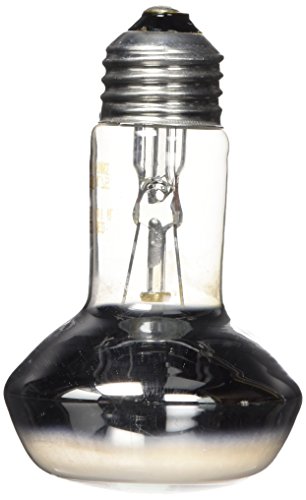
The Fluker's Basking Spotlight is about as basic as reptile gear gets: a cheap incandescent PAR-style bulb that throws a bright white spot of heat and light under a lamp dome. It is the low-friction bulb a first-time keeper grabs to make a warm basking area, and it does that one job for a couple of dollars. No electronics, no proprietary base, nothing to learn. Screw it in, point it at a rock, and there is your hot spot.
Here is the honest part. It works, and the heat it makes is the right kind of heat: an incandescent produces infrared A and B, the deep-penetrating wavelengths that warm an animal the way sunlight does, and a hot filament runs hotter and throws more of that infrared A than a deep heat projector does. But this is old technology. Halogen basking bulbs, Arcadia in particular, do the same job with whiter light, better efficiency, and a longer service life for not much more money, and that is where the community's enthusiasm goes. Keepers treat cheap incandescent spots as interchangeable commodities, and they are not wrong to.
One rule outranks the brand on the box. Any basking bulb has to run on a dimming thermostat or dimmer and be verified with a separate thermometer, because an unregulated incandescent spot will happily push a basking surface past safe temperatures. That is not a knock on this bulb specifically, it is the price of admission for every basking bulb ever made, and it matters far more to your animal than which cheap incandescent you screwed in.
The short version
What's good:
- Dirt cheap. The lowest-friction way to get a bright, focused basking spot under a dome.
- Makes the right kind of heat. Incandescent output carries the infrared A and B that penetrate an animal like sunlight, and a hot filament puts out more of it than a deep heat projector does.
- The bright white light doubles as visible daytime lighting and helps set a day and night rhythm.
- Standard screw base fits any dome fixture. Nothing proprietary, nothing to match.
What's not:
- Dated technology. A halogen basking bulb produces wavelengths closer to sunlight and runs more efficiently for a small step up in price.
- No meaningful UVB, despite packaging that name-drops vitamin D. It is not a substitute for a UVB tube, and new keepers get confused by that.
- An incandescent is a consumable that runs hot and burns out. Plan on replacing it rather than keeping it.
- Useless and unsafe run raw. It needs a dimmer or thermostat, which is a separate purchase.
Which reptiles and setups it fits
Buy it for:
- A basking species that needs a bright, focused hot spot on a tight budget, sitting under a thermostat you already own.
- A cheap, replaceable daytime bulb where you want visible light and heat from the same fixture rather than an invisible emitter.
- A spare to keep in the drawer, so a burned-out basking spot is a five-minute swap instead of a cold day for the animal.
Pick something else if:
- You want the best daytime heat on the shelf and can spend a little more. A halogen basking bulb (Arcadia) is the upgrade keepers reach for: whiter light, wavelengths closer to sunlight, longer life.
- You are trying to provide UVB. This bulb does not, and no white basking spot does. That is a separate UVB tube, full stop.
- You need heat without light at night. A basking spotlight is the wrong tool; that is a ceramic emitter or deep heat projector's job.
The specs that matter
There is not much to a bulb like this, but three things decide whether it is the right buy.
- Incandescent, not halogen or LED. It makes heat and bright white light the old-fashioned way, and that output carries infrared A and B, the deep-penetrating wavelengths keepers want. This is why the community still steers daytime basking toward incandescent or halogen bulbs and away from a deep heat projector: a hot filament runs far hotter than an emitter and so emits more infrared A, and many keepers argue a deep heat projector makes too little of it to carry a primary daytime basking spot. The heat type is genuinely correct here.
- No UVB, whatever the box implies. Some packaging language talks up stimulating vitamin D, and it reliably confuses new keepers into thinking a basking bulb can stand in for a UVB source. It cannot. A white basking spot is heat and visible light only; UVB is a separate tube, and you need one regardless of which basking bulb you buy.
- Wattage is the only lever. Match the wattage to the enclosure size, height, and ambient temperature. Too little and the basking spot never reaches target; too much and you are fighting the thermostat to hold it down. A higher-wattage bulb reaches temperature faster but has to be regulated harder.
How it keeps your animal safe
The safety story of any basking bulb is temperature control, and this is exactly where the brand on the glass matters less than the gear around it. An incandescent spot makes plenty of heat, and left unregulated it will push a basking surface past a safe temperature without hesitation. Every competent setup in the community runs the bulb through a dimming thermostat or dimmer and then verifies the actual surface temperature with a separate infrared thermometer, because the fixture only knows what its own probe is touching and the spot your animal sits on can read several degrees hotter. That regulation, not the logo, is the real safety determinant.
On the heat itself, the community is reassuring about the incandescent approach and pointed about what to avoid. Keepers repeatedly steer new owners toward incandescent or halogen for daytime basking and specifically warn against leaning on a deep heat projector as the primary daytime source, on the argument that it makes too little of the deep infrared that heats an animal effectively. One keeper put it plainly, that an incandescent bulb is ideal since it produces infrared A and B that more closely mimic the sun, while in their reading a DHP produces barely any IRA. Another spelled out why that matters: IRA penetrates bone and muscle, where the surface-only wavelengths do not. Read together, an incandescent basking spot is squarely the correct category of daytime heat. The only asterisk the same voices add is that halogen does it a notch better.
Build quality and living with it
Be honest about what a few dollars buys: a cheap incandescent, and it behaves like one. It runs hot, it is glass, and like every incandescent it is a consumable with a finite life rather than a keep-forever fixture. We did not find a wave of dead-on-arrival complaints for this specific bulb, which is worth saying plainly rather than inventing a durability problem the sources do not report. But the category truth still holds: incandescents burn out faster than halogen or LED, so a spare in the drawer is cheap insurance and the sane way to own one.
Living with it is otherwise uneventful. The base is standard and fits any dome, so there is nothing to match or worry about. Most keepers treat cheap incandescent spots as interchangeable and do not fuss the brand, and that is a fair read of what you are getting: a commodity bulb that does a simple job. The one thing that shapes the experience is the regulation gear you pair it with, not the bulb, which is the recurring theme with this whole category.
The comparison we would not dodge is the hardware store. A plain incandescent flood lamp from a home improvement aisle is, electrically, close to the same device: a filament radiating heat and light. Keepers who have worked this out buy them by the box, and nothing about a reptile label changes the physics. If your enclosure needs a warm bright spot and nothing more, that route works, and we would rather say so than pretend a pet-aisle bulb does something it does not.
Two caveats make the swap go wrong, though, and both are easy to hit. The bulb has to be an actual incandescent or halogen: an LED of the same stated wattage produces almost no usable heat, and keepers do reach for one by mistake. And the fixture has to be rated for the wattage and the heat, which is where the saving quietly goes if you need a better lamp to hold it. The reptile-branded bulb's real advantages are predictable beam shape and a wattage range built for enclosure distances, not any special quality of heat.
How it compares
- Versus a halogen basking bulb (Arcadia): the upgrade the community leans toward. Keepers describe halogen as producing wavelengths closer to actual sunlight and objectively a step better, and some go further and treat halogen plus a UVB tube as the only daytime setup worth running. Halogen also runs more efficiently and lasts longer. For a small step up in price it is the better overhead bulb, and if the budget stretches, it is the one to buy.
- Versus the Zoo Med Repti Basking Spot: functionally the same product a tier over. It is another cheap incandescent white basking spot from a bigger name, and there is no meaningful daylight between them. Cross-shop on price and stock rather than brand, and run whichever you buy on the same dimmer either way.
- Versus a deep heat projector: not the same job, and not the better daytime pick. A DHP makes heat without visible light and works as a night or supplemental tool, but keepers specifically warn it is not ideal as the primary daytime basking source, arguing it makes far less of the penetrating infrared A than a hot filament does. For a daytime basking spot, the incandescent, or the halogen, is the right call.
The order you tune things in matters more than the wattage you start with. Set the basking platform at the right distance from the UVB first, because that distance is fixed by the UV requirement and not negotiable, and only then work on surface temperature by changing wattage, height or dimmer setting. Keepers who do it the other way round end up with the right basking temperature at the wrong UV exposure, and have to redo both.
Expect to iterate rather than calculate. Enclosure size, substrate, how high the basking surface sits and the room's own temperature all move the answer, so the same wattage lands in different places in different setups. As a rough calibration point, keepers running a 100 watt daytime bulb plus a separate lightless source for ambient heat in a four-by-two-by-two report basking surfaces in the low 90s with a cool end holding around 80, which is the shape you are aiming for: a defined hot spot and a genuine gradient, not a uniformly warm box.
Setting it up
Screw it into a dome rated for the wattage, then do the part that keeps an animal safe. Put the bulb on a dimming thermostat or dimmer, and dial the basking surface to your target with a separate infrared thermometer rather than trusting the thermostat's own probe reading, because the probe knows one point and the surface your animal sits on can read several degrees different.
Mount the dome so the hot spot lands on a basking rock or branch, not spread across the whole floor, so the animal can move in and out of the heat. Keep a spare bulb on hand, because an incandescent will burn out eventually and rarely at a convenient moment. And add a UVB tube separately if the species needs it, because this bulb does not provide it. The wider logic of probe placement, cutoffs, and failsafes is covered in our reptile thermostat guide.
The bottom line
For a few dollars, the Fluker's Basking Spotlight does the one thing it claims: a bright, focused basking spot that makes the correct kind of heat. The incandescent approach is not outdated in the way people sometimes assume. It runs hot enough to put out more of the deep infrared than a deep heat projector does, and the community still points new keepers toward incandescent or halogen for daytime basking. As a cheap, replaceable bulb to sit under a thermostat you already own, it is a perfectly honest buy.
Just know what you are buying and what you are not. It is not a UVB source, whatever the box implies, and it is not the best basking bulb on the shelf. A halogen (Arcadia) gives you whiter light, better efficiency, and wavelengths closer to sunlight for not much more. And it is only ever as safe as the dimmer or thermostat you run it on. Put it on regulated power, verify the surface temperature, keep a spare, and add UVB separately, and a cheap incandescent spot is genuinely all it needs to be. Skip the thermostat and it is just a bulb that gets things too hot.
Our Ratings
Overall score
A cheap incandescent behaves like one: it runs hot, it is glass, and it is a consumable with a finite life rather than a keep-forever fixture. We did not find a wave of failure reports for this specific bulb, which is worth stating plainly rather than inventing a defect, but the category truth stands, incandescents burn out faster than halogen or LED, so a spare in the drawer is cheap insurance. Standard base, fits any dome, nothing proprietary. Most keepers treat cheap incandescent spots as interchangeable and do not fuss the brand, which is a fair read of what you are getting.
The heat itself is the right kind: incandescent output carries the infrared A and B that penetrate like sunlight, and keepers specifically steer daytime basking toward incandescent or halogen over a deep heat projector. Reliability, though, lives outside the bulb. An incandescent spot makes plenty of heat and will overshoot a safe basking temperature if left unregulated, so it must run on a dimming thermostat or dimmer and be verified with a separate infrared thermometer, never the dome alone. Regulated, it holds a steady, correct basking spot; run raw, it is a hazard. That caveat, not the brand, is the safety story.
Its strongest axis. For a few dollars it delivers a bright, focused basking spot that makes genuinely appropriate daytime heat, which is more than the price suggests. The value only wobbles against its nearest upgrade: a halogen basking bulb costs a little more and gives whiter light, better efficiency, and a longer life, so the cheapest bulb is not automatically the best spend. Treat it as the honest budget option, keep a spare, and pair it with the thermostat it requires, and it earns its keep.
Fluker's Basking Spotlight Bulb on Amazon.
The Evidence Behind Our Verdict
The community is calmer about this bulb than its bargain price might suggest, because the debate keepers actually have is not about brand but about heat type. The recurring message is that daytime basking should come from an incandescent or halogen bulb rather than a deep heat projector, since incandescent output carries the infrared A and B that penetrate an animal the way sunlight does. On that count a cheap incandescent spot is squarely the right category of heat.
Where opinion tilts is the upgrade: several keepers describe halogen as producing wavelengths closer to actual sunlight and objectively a step better, and a few go further and treat halogen plus a UVB tube as the only daytime setup they would run. No keeper we found reports this specific bulb failing, so the honest read is mild approval of the tech with a clear nudge toward halogen for those who can spend up. Two cautions recur, and both matter more than the logo: a white basking bulb provides no meaningful UVB despite packaging that talks up vitamin D, and a new keeper visibly confused it for a UVB source, so plan a separate UVB tube; and every safe setup runs the bulb on a dimmer or thermostat and checks the basking surface with an infrared thermometer rather than trusting the fixture.
Read together, the verdict is that a cheap incandescent spot is a legitimate, correct-category basking bulb, best treated as a commodity, upgraded to halogen when budget allows, and never run unregulated.
Our rating above is our own editorial call. What follows is the field evidence we weighed to reach it: first-hand reports from keepers on Reddit and dedicated reptile forums, which we lean on more than manufacturer-influenced published reviews because unsponsored owners tend to be the more candid signal.
What Reddit Is Saying
“Keep in mind that DHPs aren’t ideal for the primary heat source. An incandescent bulb is ideal since they produce levels of infrared A and B that more closely mimic the sun. DHPs produce barely any IRA (this is the wavelength that heats them most effectively).”View thread →
“That why many people in the hobby go with either incandescent or halogen basking lamps. IRA specifically provides heat that deeply penetrates their bone and muscle. IRB and IRC don’t provide that level of heat penetration.”View thread →
“I mostly just use the Fluker incandescent basking bulbs. Should work better to raise the ambient temp instead of mostly directly under the light and they're $5-$6 on Amazon.”View thread →
“I use a 100w halogen for daytime/basking heat and a RHP for ambient/night heat, both on dimmers. My enclosure size is the same as yours and daytime temps are a 88-89° with the basking spot hitting 92° and nighttime temps staying at 88° with my setup.”View thread →
“Halogen bulbs provide wavelengths that are closer to actual sunlight. They are objectively better but it's not an emergency issue.”View thread →
“DHPs are not suitable as a daytime heat source and I can explain the science why if you’d like. Halogen bulb(s) + T5 UVB are the only way to go for daytime heat”View thread →
“The bulb says it’s supposed to stimulate vitamin d but would a uvb be better or is this pretty similar?”View thread →
“So i just checked and its actually a 125 watt "heat emitter" bulb from home depot. 9.99. So I have three things total. A large uvb light, a 125 watt large bulb for heat and light, and a ceramic heat emitter just for heat.i buy them in bulk from home depot. Just make sure you dont get an led. Those wont emit heat.”View thread →
“Focus on the distance the basking platform is from the UVB first, that's the distance that matters. Once your basking platform is the correct distance from the UVB is when you'll work on the basking surface temperature.”View thread →
Frequently asked questions
Is the Fluker's Basking Spotlight Bulb worth it?
Its strongest axis. For a few dollars it delivers a bright, focused basking spot that makes genuinely appropriate daytime heat, which is more than the price suggests. The value only wobbles against its nearest upgrade: a halogen basking bulb costs a little more and gives whiter light, better efficiency, and a longer life, so the cheapest bulb is not automatically the best spend.
How is the Fluker's Basking Spotlight Bulb built?
A cheap incandescent behaves like one: it runs hot, it is glass, and it is a consumable with a finite life rather than a keep-forever fixture. We did not find a wave of failure reports for this specific bulb, which is worth stating plainly rather than inventing a defect, but the category truth stands, incandescents burn out faster than halogen or LED, so a spare in the drawer is cheap insurance. Standard base, fits any dome, nothing proprietary.
Is the Fluker's Basking Spotlight Bulb safe to use?
The heat itself is the right kind: incandescent output carries the infrared A and B that penetrate like sunlight, and keepers specifically steer daytime basking toward incandescent or halogen over a deep heat projector. Reliability, though, lives outside the bulb. An incandescent spot makes plenty of heat and will overshoot a safe basking temperature if left unregulated, so it must run on a dimming thermostat or dimmer and be verified with a separate infrared thermometer, never the dome alone.
What do real owners say about the Fluker's Basking Spotlight Bulb?
The community is calmer about this bulb than its bargain price might suggest, because the debate keepers actually have is not about brand but about heat type. The recurring message is that daytime basking should come from an incandescent or halogen bulb rather than a deep heat projector, since incandescent output carries the infrared A and B that penetrate an animal the way sunlight does. On that count a cheap incandescent spot is squarely the right category of heat.
Options Worth Checking Out

Arcadia Halogen Heat Lamp 35W
The overhead upgrade keepers reach for. Halogen throws wavelengths closer to sunlight than a plain incandescent, runs more efficiently, and lasts longer, so you get whiter basking light and deeper heat for a small step up in price.
Zoo Med Repti Basking Spot Lamp
The equivalent-tier swap. Another cheap incandescent white basking spot, functionally the same bulb from a bigger name, so there is no real daylight between the two. Cross-shop on price and stock rather than brand, then run it on the same dimmer.
You Might Also Need
Accessories worth grabbing alongside your purchase

