Spyder Robotics
Herpstat Thermostat Reviews + The Gold-Standard Verdict
By ReptileGearLab · Updated October 2026
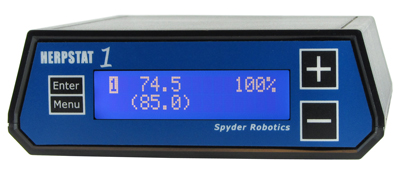
Verdict
The community reveres it. Keepers call Spyder Robotics the gold standard and reach for the Herpstat first when someone asks what to trust with an animal's heat. The recurring themes are consistent: dependable with simple controls, flexible across models and probe counts, and named alongside Vivarium Electronics as the two brands worth buying when cheaping out could cost lives. Owners routinely run several across a rack and report going years without an issue, and higher models add multiple independent probes, each with its own day and night pair, for per-zone control. Keepers also pass on the usage rules that come with a serious unit, for example never plugging a splitter into a Herpstat because it modulates everything downstream, with one keeper noting he has seen enclosure fires from exactly that. The knocks are narrow and they are always the same two: price and availability. A single-probe unit costs several times a budget Amazon controller and the multi-output models several times again, it is sold direct rather than on Amazon so there is no Prime, and buyers outside the US report both a higher price and poor availability in stores. That is why the same threads that crown it also point budget keepers at an Inkbird or a cheap dimmer-plus-failsafe setup. Read together the verdict is unusually clean for community sentiment: if you can afford it and want the unit you will not have to think about again, it is the Herpstat, and the only real question is whether the premium price and direct-only availability fit your setup.
Read full take ↓Similar thermostats
Ask a room of experienced keepers what thermostat to trust with an animal's heat and one name comes up first: the Herpstat, made by Spyder Robotics. Keepers call it the gold standard, reach for it before any other brand, and routinely run several across a rack for years without a thought. It is the unit people name when a cheap controller fails and melts a tub.
There is one honest catch, and it is not the hardware. The Herpstat is a premium product sold direct by the manufacturer, not on Amazon. That means no Prime shipping, occasional stock waits, and a price that runs well past the cheap controllers by keeper accounts. We point you at it anyway because it is the right answer, and then give you the cheaper thermostats keepers buy when a Herpstat is out of reach.
The short version
What's good:
- The community's default answer for a thermostat you can trust with an animal's life.
- Keepers report both pulse-proportional and dimming control, so one unit fits mats, emitters, and dimmable bulbs alike.
- Higher models add multiple independent probes, each with its own day and night setpoints, for per-zone control across a whole rack.
- Owners commonly run several for years and describe them as dependable with simple controls.
What's not:
- Premium price. A single-probe unit costs several times what the budget Amazon controllers do, and the multi-output models several times again.
- Sold direct by Spyder Robotics, not on Amazon, so there is no Prime and stock can mean a wait.
- Availability is patchy outside the US, and keepers in Canada report it being hard to find in stores.
- The price alone rules it out for a lot of single-enclosure, budget setups, and keepers say so plainly.
Which reptiles and setups it fits
Buy it for:
- A multi-enclosure rack, where one higher-tier Herpstat with several independent probes, each with its own day and night setpoints, replaces a drawer full of cheap controllers.
- A valuable animal or a mission-critical setup, where the community consensus is to spend up rather than gamble on the cheapest option.
- A mixed heat setup, since keepers report it handling both dimming and pulse-proportional loads, so the same unit covers a dimmable bulb and a mat.
Pick something else if:
- You are running one heat mat on a tight budget, where a rock-solid on/off Inkbird is genuinely enough and the Herpstat premium is money you do not need to spend.
- You need it shipped fast or live outside the US, where direct-only availability becomes a real obstacle.
- You only want proportional dimming and cannot stretch the budget, in which case a cheap dimming thermostat gets you the feature at a fraction of the cost, with the tradeoffs that come with it.
The specs that matter
The Herpstat is a line, not a single product. The range runs from an entry unit up through multi-output models, and keepers refer to them by number, for example a Herpstat 2 or a Herpstat 4. Two things keepers consistently flag as the reasons to buy in.
- Both control types in one unit. Keepers report the Herpstat does both dimming and pulse-proportional control, which is the practical advantage over a controller that only does one. It means the right unit fits any heat source, and a multi-output model, a Herpstat 2 or above, can run two independently controlled loads at once, say a dimmable bulb and a ceramic emitter, where a cheaper thermostat forces you to match one unit to one heat source.
- Probes and independent setpoints scale. Higher models add outputs and probes, and keepers describe setting separate day and night temperatures per probe. One keeper runs a Herpstat 2 with a probe for each of two heat sources and day and night settings for both. That is what a rack keeper is paying for.
How it keeps your animal safe
A thermostat exists to stop a heat source from cooking an animal, so reliability is the product, not a bonus feature. This is the axis where the Herpstat's reputation is strongest and where keepers are least hedged.
In the community it is named right alongside Vivarium Electronics as one of the two brands worth buying when cheaping out could cost an animal's life. Keepers describe owning several and going years without an issue, and the recurring verdict on longevity is that these units simply keep working. That track record is the whole reason the reverence exists, and it is why the same threads that flag the price still land on the Herpstat for anything critical.
One safety note keepers stress is a usage rule rather than a fault. Do not plug a power splitter into a Herpstat. The unit modulates its output by probe temperature, so everything downstream of a splitter sees that same modulated power and cannot be controlled independently, and one keeper reports seeing enclosure fires from exactly that mistake. It is a caution about how you wire it, not a knock on the unit, and it applies to any proportional thermostat.
Build quality and living with it
Keepers treat the Herpstat as the last thermostat they buy, and the ownership reports read that way: dependable, straightforward controls, quietly doing its job across years and multiple units. No keeper we found describes a Herpstat failing, which is not something you can say about the cheap end of the category.
The practical friction is all on the buying side, not the using side. It is sold direct, so getting one is a manufacturer order rather than a Prime click, stock can mean waiting, and keepers outside the US regularly find availability a problem. Because a failed unit is not a same-day replacement, the sensible move on a critical setup is to keep a spare or a cheap failsafe on hand, which is exactly what experienced keepers advise for any thermostat.
One habit worth copying from owners running several of these: do not spend a channel on a light. Keepers describe putting the Herpstat on heat only and handing the lighting to a cheap timer or a smart outlet, because a lamp that needs a schedule does not need proportional control, while a heat source does. On a two-channel unit that is the difference between covering one enclosure and covering two.
For a concrete configuration, one keeper running a 4x2x2 PVC enclosure holds the cool-side ambient at 80F around the clock with a 90W heat panel on one channel and brings the hot spot to 90F during the day with a halogen on the other, and reports it holding through a winter with the room dropping into the low 60s. That is the shape to copy if you are heating a large enclosure in a cold house: one channel maintaining the floor, the other producing the day.
How it compares
- Versus Vivarium Electronics: the other US gold standard, and the brand keepers name in the same breath. Both are trusted without an asterisk and both are largely sold direct rather than on Amazon. Which one you land on tends to come down to availability and personal preference, not a clear quality gap. This is not a Herpstat-versus-cheap-brand comparison; it is two premium units keepers respect equally.
- Versus an Inkbird ITC-308: a different class of tool, not a rival. The Inkbird is a rock-solid on/off dual-stage controller and the correct, cheap choice for a heat mat. It cuts power fully at the setpoint, so it will strobe a dimmable bulb and cycle bulbs harder. For one mat it is genuinely enough. For a rack or a dimmable heat source it is not what the Herpstat is.
- Versus a cheap dimming thermostat: the honest budget substitute for the Herpstat's proportional control, from brands like REPTIZOO or Hygger. It gets you dimming for a fraction of the price, which matters, but community reports on these are split and none carry the Herpstat's proven longevity. The keeper move at that budget is to back it with a spare or a failsafe rather than trust it alone.
Setting it up
Match the model to the job first: a single enclosure is fine on an entry unit, a rack wants the multi-probe models keepers use for per-zone day and night control. Then place each probe where the checklist for any thermostat says, a couple of inches from the heat source it regulates, not dangling in open air and not where the animal can block it.
Tune the setpoint against a separate thermometer rather than trusting the display, because the controller only knows what its probe is touching. A cheap infrared temp gun to spot-check surface temperatures is the natural companion, and the wider logic of probe placement, control types, and failsafes is covered in our reptile thermostat guide. Confirm any basking bulb is rated dimmable before running it on a dimming output.
A caveat that comes from satisfied owners rather than critics, and we would rather print it than pretend otherwise: the feature set is well beyond what most keepers will configure. One owner says plainly that it seems to be doing a good job and that they still do not fully understand it. That is a tolerable place to be, since the defaults are safe and the animal is the point, but if you want a device you fully comprehend after an evening, this is not it and a simpler dimming thermostat will not shame you.
The price verdict is consistent enough to be the summary: keepers call it amazing and expensive in the same sentence. Nobody we read regrets buying one, several own more than one, and the objection is always the cost rather than the hardware.
The bottom line
If you can afford it and you want the thermostat you will not have to think about again, this is it. Keepers do not agonize over the Herpstat the way they do over cheap controllers; they buy it, run it for years, and buy another. For a rack or a valuable animal, that peace of mind is the whole point, and the price is worth it.
The only real question is fit, not quality. It is a premium unit sold direct, not on Amazon, so it costs more and takes more effort to get, and for a single mat on a budget that math genuinely favors a cheaper controller. It is the best unit here, and plenty of keepers are right to buy something cheaper anyway. The picks below are those cheaper options, honestly framed.
Our Ratings
Overall score
Keepers treat the Herpstat as the last thermostat they buy. The ownership reports read that way: dependable, simple controls, quietly working across years and multiple units, and no keeper we found describes one failing. The hardware reputation is the whole point. The one honest asterisk is not the build, it is that this quality is sold direct by Spyder Robotics at a premium, not on Amazon, so getting one takes more money and more effort than grabbing an Inkbird.
The axis that matters most for a thermostat, and the one keepers rate highest here. The Herpstat is named right alongside Vivarium Electronics as one of the two brands you buy when cheaping out could cost an animal's life. Keepers report it handling both dimming and pulse-proportional loads, higher models add multiple independent probes, each with its own day and night setpoints for per-zone rack control, and owners describe running several for years without an issue. The only reliability-adjacent knock is availability: sold direct with no Prime, so a failed unit is not a same-day replacement, which is exactly why keepers say to keep a spare.
The honest weak axis, and the reason this is not a straight ten. The unit is excellent, but it is a premium price, with a single-probe unit costing several times a budget Amazon controller and the multi-output models several times again, and it is sold direct rather than on Amazon, so there is no Prime shipping and stock can mean a wait. Keepers openly weigh that cost and plenty land on a cheaper Amazon controller instead. It earns its price for a critical or multi-enclosure setup. For one mat on a budget, the value math genuinely favors an Inkbird, and the community says so.
The Evidence Behind Our Verdict
The community reveres it. Keepers call Spyder Robotics the gold standard and reach for the Herpstat first when someone asks what to trust with an animal's heat. The recurring themes are consistent: dependable with simple controls, flexible across models and probe counts, and named alongside Vivarium Electronics as the two brands worth buying when cheaping out could cost lives.
Owners routinely run several across a rack and report going years without an issue, and higher models add multiple independent probes, each with its own day and night pair, for per-zone control. Keepers also pass on the usage rules that come with a serious unit, for example never plugging a splitter into a Herpstat because it modulates everything downstream, with one keeper noting he has seen enclosure fires from exactly that. The knocks are narrow and they are always the same two: price and availability.
A single-probe unit costs several times a budget Amazon controller and the multi-output models several times again, it is sold direct rather than on Amazon so there is no Prime, and buyers outside the US report both a higher price and poor availability in stores. That is why the same threads that crown it also point budget keepers at an Inkbird or a cheap dimmer-plus-failsafe setup. Read together the verdict is unusually clean for community sentiment: if you can afford it and want the unit you will not have to think about again, it is the Herpstat, and the only real question is whether the premium price and direct-only availability fit your setup.
Our rating above is our own editorial call. What follows is the field evidence we weighed to reach it: first-hand reports from keepers on Reddit and dedicated reptile forums, which we lean on more than manufacturer-influenced published reviews because unsponsored owners tend to be the more candid signal.
What Reddit Is Saying
“I’m in love with my herpstat thermostat and probably won’t buy anything else. Dependable, lots of options depending on the model, and straightforward, simple controls.”View thread →
“Uv lights would just be better on a smart plug freeing thetmastat spots. I would recommend the herpstat syderwebs. I have 3 and have been pleased with them.”View thread →
“Herpstat and Vivarium Electronics VE. Cheaping out on a thermostat can cost lives.”View thread →
“So far I've used a herpstat 2 (herpstat 1 is the single version) and a ranco industrial thermostat, quite pleased with the herpstat. Ranco leaves a bit to be desired.”View thread →
“You can use a Herpstat 2. A separate probe for each of the two heat sources and you can set day and night temp settings for both. Of course as was mentioned already you can just use timers on the heat sources with either a cheap thermostat or dimmer switch to control temps”View thread →
“I'm late to the thread but my herpstat 2 works great for my RHP and basking. I use a smart outlet for the lighting so the herpstat is focused on heating Works great, I love them and have a herpstat managing every enclosure of mine.”View thread →
“Herpstat 2 with DHP and 90w heat panel here, 4x2x2 Kages pvc. The heat panel is set to maintain the cool side temperature at 80f 24x7 and halogen is set for the hot side to reach 90f during the day. Works great for me, room temperatures down to low 60s during the winter.”View thread →
“I have the Herpstat Spyderweb and will recommend it to anyone who will listen. I absolutely love it.”View thread →
“Do not use a splitter plugged into a Herpstat or VE. They are not rated for such a thing. The herpstat controls it's output to the plug on the device by probe (for temp). It will modulate the input to the splitter and everything plugged into the splitter with see the modulated output. Impossible to control temps in such a way. I have seen enclosure fires from doing things like this.”View thread →
“I've been looking into different thermostats to use with racks other than the herpstats (the basic 1 probe is around $150-$200 in Canada and not in many reptile stores), and came across inkbird thermostats.”View thread →
“I have the herpstat 2 and I think it's good. Imma be honest I still don't really understand it but it seems to be doing a good job, my snake is not toast”View thread →
“I found the Spyder robotics herpstat and it's amazing, but quite expensive.”View thread →
Frequently asked questions
Is the Spyder Robotics Herpstat Thermostat worth it?
The honest weak axis, and the reason this is not a straight ten. The unit is excellent, but it is a premium price, with a single-probe unit costing several times a budget Amazon controller and the multi-output models several times again, and it is sold direct rather than on Amazon, so there is no Prime shipping and stock can mean a wait. Keepers openly weigh that cost and plenty land on a cheaper Amazon controller instead.
How is the Spyder Robotics Herpstat Thermostat built?
Keepers treat the Herpstat as the last thermostat they buy. The ownership reports read that way: dependable, simple controls, quietly working across years and multiple units, and no keeper we found describes one failing. The hardware reputation is the whole point.
Is the Spyder Robotics Herpstat Thermostat safe to use?
The axis that matters most for a thermostat, and the one keepers rate highest here. The Herpstat is named right alongside Vivarium Electronics as one of the two brands you buy when cheaping out could cost an animal's life. Keepers report it handling both dimming and pulse-proportional loads, higher models add multiple independent probes, each with its own day and night setpoints for per-zone rack control, and owners describe running several for years without an issue.
What do real owners say about the Spyder Robotics Herpstat Thermostat?
The community reveres it. Keepers call Spyder Robotics the gold standard and reach for the Herpstat first when someone asks what to trust with an animal's heat. The recurring themes are consistent: dependable with simple controls, flexible across models and probe counts, and named alongside Vivarium Electronics as the two brands worth buying when cheaping out could cost lives.
Options Worth Checking Out

Inkbird ITC-308 Digital Thermostat
The cheap default keepers name when a Herpstat is out of reach. Solid on/off dual-stage control the community trusts on a mat or ceramic emitter. It cuts power fully at the setpoint, so it strobes a basking bulb and cycles bulbs harder.
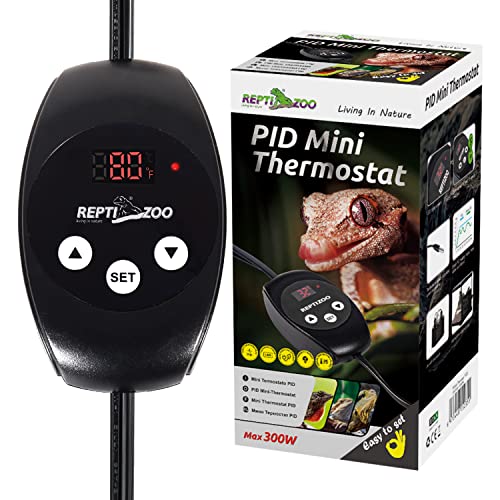
REPTIZOO PID Dimming Thermostat
The budget route to proportional dimming, the one thing that most sets a Herpstat apart. It feathers heat instead of cycling, so it suits emitters and dimmable bulbs. Owner reports are split and longevity is unproven, so keep a spare.

Inkbird ITC-306T Day/Night Thermostat
Heat only, but it adds the built-in day and night timer a Herpstat gives you, for far less money. Good for a single emitter that needs a nighttime drop. Still on/off, so it cycles a bulb instead of dimming, with fewer safety layers.