Inkbird
Inkbird ITC-308 Reviews: Real Keeper Reports + Our Verdict
By ReptileGearLab · Updated August 2026

Verdict
Across reptile forums and subreddits the mood is consistent and warm, on the order of 4.5 out of 5 in the reptile-focused reviews (Mr. Amphibian, Reptile Direct, All Turtles). Keepers like the accuracy, the low price, and how little the thing asks of them once it's running. Complaints cluster on three points: the single outlet, the dim display, and on/off-only control. The dual-stage cooling side, handy if you run a fan in a bioactive build, mostly sits idle. Read together, that's a unit whose flaws are all inconveniences and whose strength is the one that keeps an animal alive, which is why we'd still buy it.
Read full take ↓Similar thermostats
An unregulated heat mat doesn't stop. The mat or ceramic bulb you just bought will run at full power until something gives, and the surface can climb well past a safe temperature with your animal sitting right on it. A thermostat is the little box that cuts power before that happens. Any heater in an enclosure needs one.
Ask "which thermostat should I get" in any reptile group and you'll have the same answer within three replies: the Inkbird ITC-308. It's what experienced keepers hand to beginners, and it's earned that status honestly. The box is homely and the menus are fussy. Neither matters much when the unit holds your setpoint and kills the heater when it's supposed to, for roughly the price of a couple bags of substrate. Below: what you get, where it falls short, and how it stacks up against the units keepers cross-shop.
The short version
What's great
- Holds close to your target and fails safe, cutting power at the setpoint so the heater cannot run away
- Plug-and-play: pre-wired plugs on both ends, nothing to wire
- Dual-stage, so it can run a heater and, if you ever need it, a cooling fan
- Keepers routinely report years of trouble-free use
- Costs a fraction of a pulse-proportional controller
What to keep in mind
- On/off control, so the temperature bobs gently around your target instead of holding a flat line
- One heated outlet, so running a mat and a ceramic emitter means buying two units
- The display is dim and the setup menus are fiddlier than they should be
Which reptiles (and setups) it fits
The 308 works with any heat source that switches cleanly on and off. So what you're heating with matters more here than which animal you keep.
Where it's a great fit
- Leopard geckos and other ground geckos on a heat mat
- Ball pythons, corn snakes, kingsnakes and other snakes on a mat or ceramic emitter
- Crested geckos and arboreal geckos running a low-wattage ceramic emitter
- Blue tongue skinks and most beginner lizards heated with a mat or ceramic emitter
- Any species' nighttime or ambient heat from a ceramic heat emitter
Pick something else if
- You run a bright basking bulb (common for bearded dragons and other baskers): cycling it on and off makes the light visibly flicker, so manage that bulb by wattage and height, or use a dimming thermostat instead
- You're incubating eggs, or keeping a species where you want the tightest possible hold: step up to a pulse-proportional Herpstat or Habistat
- You want to check temps and get failure alerts from your phone: the Inkbird ITC-308 WiFi does the same job with app control
The specs that matter
- Control type: on/off, dual-stage (separate heating and cooling outlets)
- Accuracy: roughly plus or minus 1 degree, with 0.1 degree resolution
- Max load: 1100 watts at 110V (2200 watts at 220V)
- Outlets: one switched heating outlet, one switched cooling outlet
- Display: dual readout showing current and target temperature at once
- Setup: fully pre-wired and plug-and-play, no electrical work required
How it keeps your animal safe
The 308 is an on/off thermostat, and that's the first thing to understand about it. It runs the heater at full power until the probe hits your target, cuts it dead, waits for the temperature to sag, then switches back on. Your temperature bobs a degree or two around the setpoint instead of holding a razor-flat line. That's how it has worked for years, and it's why the thing is still on everyone's shortlist.
For a heat mat or a ceramic emitter, that's fine, and it's how most keepers run one. What matters for safety is what happens at the setpoint: power goes off, so the heater physically cannot cook the enclosure the way an unregulated one can. Keepers commonly report it tracking within about half a degree Fahrenheit in real use, and plenty are still running the same unit years on without drama (Mr. Amphibian; Reptile Direct).
Two honest limits. It drives a single heater, so a mat plus a ceramic emitter means two 308s. And no controller replaces checking your own work: the thermostat only knows what its own probe is touching, so a cheap infrared temp gun or a second digital probe is what tells you what's happening at the animal's level. Incubating eggs, or babysitting a species with tight requirements? That's where a pulse-proportional thermostat, which feathers the power for a steadier hold, earns the extra money.
Build quality and living with it
Small plastic box, two sturdy pre-wired cords (mains in, heater out), probe on a reasonable lead. Nothing to assemble and very little to fail. Owners consistently call it solid for the money and easy to place.
The gripe that comes up over and over is the display. It's dim, and clicking through the menus to change a setting is fiddlier than it should be. You'll set it once and mostly forget it, but that first configuration earns a few choice words. None of it touches how safely the unit does its job.
How it compares
The 308 is good. Whether you need to spend more is a separate question, and here's how it lines up against the three units keepers most often cross-shop.
- Versus a pulse-proportional Herpstat or Habistat: those feather the power for smoother, tighter control and are the right call for egg incubation or delicate species, but they cost several times as much. Most mat and ceramic-emitter setups don't need that precision.
- Versus a budget WILLHI controller: the current WILLHI (the WH2408) is a cheaper single-outlet on/off unit. Same core job with fewer refinements, so it comes down to a few dollars and brand preference.
- Versus the Inkbird ITC-308 WiFi: identical control, plus app monitoring and temperature alerts on your phone. If you want to watch temps remotely or get warned about a failure, the small premium is easy to justify.
Spend up on a pulse unit if you're incubating or chasing the tightest possible hold. Otherwise the base 308 covers the safety that matters, and the WiFi version is the one upgrade most keepers will use.
Setting it up
Most of the "my Inkbird isn't working" posts you'll see are probe-placement problems. The probe measures wherever you put it, so it has to sit on the surface you care about instead of dangling in mid-air.
For an under-tank mat, tape the probe to the mat beneath the substrate and keep that substrate layer thin, because piling it on insulates the mat and lets it overheat. For an overhead bulb or ceramic emitter, rest the probe on the basking surface directly under the heat, pushed to one side so you still keep a warm end and a cool end. Set your target in heating mode. Then confirm the real temperature with a separate thermometer before you trust it, and again any time you change the setup.
Give it a day before you walk away happy. Check the basking surface with an infrared temp gun at a few points across the warm end, morning and evening, and watch how far the reading drifts between the heater kicking off and coming back on. If the surface keeps overshooting your setpoint, move the probe closer to the heat rather than dropping the target number, since the probe is what the unit believes. A room that swings overnight will show up here too, and that's worth knowing before your animal is the one testing it.
Our call
For most keepers, most of the time, the Inkbird ITC-308 is the right buy. Accurate, fails safe, proven over years, and a fraction of the cost of the fancier options. Get it if you're heating with a mat or a ceramic emitter and you want proven safety without spending proven-safety money.
Step up only if you have a specific reason: a pulse-proportional unit for incubation or a delicate species, a multi-zone controller if you're running several heat sources, or the WiFi version if remote monitoring matters to you. For the other 90 percent of setups, nothing beats it for the money.
Our Ratings
Overall score
Sturdy pre-wired hardware with nothing to assemble and very little to fail. The gripe is the dim display and the fiddly setup menus, neither of which touches how safely it works.
On/off control that fails safe at the setpoint and keeps running for years, held back by a single outlet and on/off-only operation. Fine for mats and ceramic emitters. Step up to a pulse thermostat for incubation or delicate species.
Roughly a third the price of a pulse-proportional controller, for the safety that matters most. The sensible default for most keepers, which is why the hobby keeps recommending it.
Inkbird ITC-308 on Amazon.
The Evidence Behind Our Verdict
5 out of 5 in the reptile-focused reviews (Mr. Amphibian, Reptile Direct, All Turtles). Keepers like the accuracy, the low price, and how little the thing asks of them once it's running.
Complaints cluster on three points: the single outlet, the dim display, and on/off-only control. The dual-stage cooling side, handy if you run a fan in a bioactive build, mostly sits idle. Read together, that's a unit whose flaws are all inconveniences and whose strength is the one that keeps an animal alive, which is why we'd still buy it.
Our rating above is our own editorial call. What follows is the field evidence we weighed to reach it: first-hand reports from keepers on Reddit and dedicated reptile forums, which we lean on more than manufacturer-influenced published reviews because unsponsored owners tend to be the more candid signal.
What Reddit Is Saying
“I have the inkbird. It runs a CHE that helps keep our enclosure from getting too cold overnight during the winter months (old house, no insulation). It does a great job. I've had it for years, no issues.”View thread →
“I also use an inkbird. They work off of a plug so as long a you get the right plug for your region it will be compatible”View thread →
“I just got another inkbird for my second reptile that's coming soon and my brain forgot how to set it lmao I had to jog my memory but it's pretty easy”View thread →
“Inkbird is pretty decent for most things, the stat listed above is what I use”View thread →
What Reptile Forums Say
“Any type of radiant oil heater would be my vote. I’d also be sure to run it on an independent thermostat; not just the one on the unit. Something like a inkbird high power style thermostat.”Source →
“Each level has its own heat tape . Two levels are controlled by a double inkbird thermostat.”Source →
“The very hottest part of the inside of the enclosure should be 90*F, so often you will need to set the thermostat a bit higher. The best way to measure temperatures is with an infrared thermometer.”Source →
“The bins melting sounds like a combination of bad heat tape and the thermostat not working properly. I would recomend getting a thermostat like the Herpstat or VE thermostat.”Source →
“I’ve got a couple of these. The issue I run into with any of these type of thermostats are their trigger thresholds. What I always recommend for anyone using these, hydro farm, or jumpstart thermostats are that they test them out with a calibrated thermometer. If the threshold for on/off is more than 5 degrees I contact the vendor and ask for a replacement as the unit is defective.”Source →
“I have a few of those but only use them on roaches and for my hermit crabs. So they’re on non-light emitting sources so the up and down temps from the on/off style of heating isn’t a problem”Source →
“Thats sorda what I thought honestly; we were using an inkbird but if that could be having issues then I think we’re definitely switching to one of the others.”Source →
Frequently asked questions
Is the Inkbird ITC-308 worth it?
Roughly a third the price of a pulse-proportional controller, for the safety that matters most. The sensible default for most keepers, which is why the hobby keeps recommending it.
How is the Inkbird ITC-308 built?
Sturdy pre-wired hardware with nothing to assemble and very little to fail. The gripe is the dim display and the fiddly setup menus, neither of which touches how safely it works.
Is the Inkbird ITC-308 safe to use?
On/off control that fails safe at the setpoint and keeps running for years, held back by a single outlet and on/off-only operation. Fine for mats and ceramic emitters. Step up to a pulse thermostat for incubation or delicate species.
What do real owners say about the Inkbird ITC-308?
5 out of 5 in the reptile-focused reviews (Mr. Amphibian, Reptile Direct, All Turtles). Keepers like the accuracy, the low price, and how little the thing asks of them once it's running.
Options Worth Checking Out
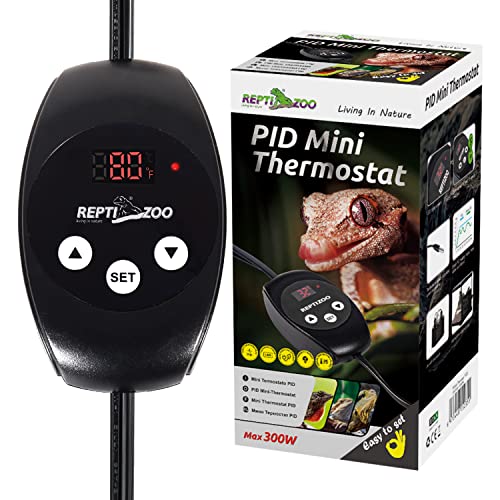
REPTIZOO Dimming Thermostat (PID)
Proportional (dimming) output, meant for a basking bulb that flickers on the ITC-308 or an emitter you want feathered. Cheap. Keepers split on it, so pair it with a failsafe for anything critical.

Inkbird ITC-308 WiFi
Same accurate dual-stage control as the base unit, plus app monitoring and drift alerts on your phone. Worth it if you travel or keep animals in a room you don't check daily. Owners warn the alarm is loud with no volume control.

WILLHI WH2408
The cheaper single-outlet on/off alternative. Same core job as the ITC-308 with fewer refinements, so it comes down to a few dollars and brand preference if the Inkbird is a stretch.
You Might Also Need
Accessories worth grabbing alongside your purchase

Etekcity Infrared Thermometer
Buy it alongside the thermostat. A temp gun spot-checks surface temperatures and confirms the ITC-308 is holding your basking zone, because the thermostat only knows what its own probe is touching.

iPower 8x12 Reptile Heat Mat
The heat source the ITC-308 controls, and a bare mat with no controller of its own, so you're not paying twice. Size it to your enclosure and run it through the thermostat, never straight to the wall.