Hydrofarm
JumpStart by Hydrofarm Thermostat Reviews + Budget Verdict
By ReptileGearLab · Updated July 2026

Verdict
Sentiment leans critical, and the critique is specific rather than dismissive. A couple of keepers vouch for it plainly, noting that plenty of YouTubers run JumpStart units with no issue and that theirs works fine off Amazon for around twenty dollars. That's the honest positive case: cheap, simple, and adequate for a heat mat. The larger current of comments is a set of caveats. Keepers repeatedly flag that these are on/off thermostats and not super accurate, that on a ceramic heat emitter the cycling shortens bulb life and causes temperature fluctuations, and that a bulb wants a pulse-proportional or dimming stat instead. Accuracy complaints show up too, usually as overshoot, and the recurring cause is probe placement: one keeper watched the setpoint sail past with the probe tucked under a shelf liner above the mat rather than secured in the hot spot the animal uses. The most useful setup advice in the reports are that same point, put the probe inside the enclosure in the center of the hot spot and secure it. A couple of owners also report a unit faulting, including an E3 error on a fresh setup from a keeper whose first unit had been fine. Our read of the evidence tracks the community's: a legitimate cheap on/off thermostat for a mat, the wrong tool for a bulb, accuracy that rewards careful probe placement, and for about the same money the dual-stage Inkbird is the unit more keepers recommend.
Read full take ↓Similar thermostats
The JumpStart by Hydrofarm isn't a reptile product. It's a seed-starting thermostat, built to hold a germination heat mat at temperature, and it costs about what a couple of bags of substrate do. Reptile keepers found it anyway, because it does the one thing a heat mat needs: it plugs inline, reads a probe, and cuts power when the target temperature is reached. For a keeper who just learned that running a heat mat straight off the wall can cook an animal, it's often the cheapest way to fix that today.
That's the appeal, and there isn't much more to it. An on/off, single-stage controller with a seed-starting pedigree, not a reptile-tuned instrument. It works for a mat, it's priced like an impulse buy, and keepers do use it. But it isn't accurate to a fraction of a degree, it's the wrong tool for a dimmable bulb, and for a dollar or two more the Inkbird ITC-308 gives you real dual-stage control. This review covers where the JumpStart earns its keep and where the small step up is worth taking.
The short version
What's good:
- Cheap, usually in the mid-twenties to low-thirties, which is why keepers reach for it at all.
- Dead simple: plug the heat mat into it, set a target, drop the probe in the hot spot, done.
- Correct control type for a heat mat, where on/off switching is what you want.
- A real thermostat where a keeper might otherwise run a mat unregulated, which is the dangerous mistake it prevents.
What's not:
- On/off single-stage only. It switches heat fully on or fully off and can't cool, so it strobes a dimmable bulb and cycles a ceramic emitter hard.
- Not built for reptiles. It's a seed-mat controller, and the accuracy keepers report is "good enough for a mat," not precise.
- Keepers report accuracy quirks and overshoot, usually tied to probe placement, and a couple describe a unit throwing a fault.
- At its buy-box price it often costs the same as or more than the dual-stage Inkbird ITC-308, which does more.
Which reptiles and setups it fits
Buy it for:
- A single under-tank heat mat on a tight budget, where on/off control is the right tool and you want a thermostat on it today.
- A keeper currently running a mat with no thermostat at all, where any working controller is a large safety upgrade over none.
- A backup or a second enclosure, where a cheap on/off unit is enough and you'd rather not spend Inkbird money twice.
Pick something else if:
- Your heat source is a bulb, a ceramic emitter, or a deep heat projector. On/off switching strobes and cycles those, and a dimming thermostat is the right tool.
- You want dual-stage control, room to add a cooling device, or a day and night setpoint, where a similarly priced Inkbird ITC-308 is the better buy.
- The setup is a valuable animal or otherwise critical, where keepers spend up to a Herpstat or Vivarium Electronics rather than trust the cheapest option.
The specs that matter
Two things about this controller decide whether it fits your setup, and both come straight from what it is.
- On/off, not proportional. It switches the heat source fully on until the probe hits the target, then fully off. For a heat mat that's perfect, because a mat is slow and forgiving. For a bulb it's wrong: the bulb visibly flickers as it cycles, which stresses the filament and annoys the animal. Keepers draw that line constantly, and it separates a great cheap mat thermostat from a lamp controller nobody should buy.
- Single-stage, heat only. It controls one heat device and can't run a cooling stage. Fine for the mat it was built for, but it leaves you no headroom: no fan, no second output later. A dual-stage unit like the Inkbird ITC-308, at roughly the same price, gives you that second stage and a wider, more precise feature set, which is why the JumpStart reads as a floor rather than a value.
How it keeps your animal safe
A thermostat exists to stop a heat source from cooking an animal, and that job isn't optional. Running a heat mat straight off the wall is how tubs melt and animals get burned, so a working thermostat is mandatory, full stop. On that most basic axis the JumpStart delivers. It's a real controller, and for a keeper with an unregulated mat it's a large safety upgrade.
The caveats are about precision and fit, not about whether it works at all. Keepers report it overshooting the setpoint, and the recurring cause is probe placement rather than a broken unit. One keeper set the target to 82 and watched the mat climb past it with the probe tucked under a shelf liner above the mat, which is the classic mistake: the probe has to sit in the hot spot the animal uses, secured in place, not sandwiched against the mat where it reads the wrong number. Placed right, it holds a mat well enough. Placed wrong, the display and the reality diverge and the keeper blames the thermostat.
Two failure notes belong here for balance. On/off cycling shortens the life of a ceramic heat emitter and produces real temperature swings, so keepers who run it on a CHE report worse results than on a mat. And a couple of owners describe a unit itself faulting, one throwing an E3 error on a fresh setup while noting an earlier unit had been fine. That's the budget tier: cheap enough to be worth it, and cheap enough that a spare or a step up makes sense on anything you can't afford to have fail.
Build quality and living with it
Physically it's what the price says: a light plastic box, a simple digital display, a set of buttons, and a six-foot probe on a water-resistant lead. It reads in Celsius or Fahrenheit and it's easy to set. Nobody buys this for the hardware, and the reports match. Most keepers describe it quietly doing its job on a mat for a long time, with the complaints clustering on accuracy and the odd faulting unit rather than on the plastic.
Living with it comes down to two habits. Secure the probe in the hot spot, ideally with a suction cup and aquarium-safe adhesive, because a loose or misplaced probe sits behind most of the overshoot reports. And check the temperature it's holding against a separate thermometer rather than trusting the display, because the controller only knows what its probe is touching. Do both and it behaves. Skip them and you get the accuracy complaints keepers post about.
How it compares
- Versus the Inkbird ITC-308: the comparison that matters most, because they cost about the same. The Inkbird is a dual-stage on/off controller keepers trust widely: a second output, tighter control, and more precision for roughly the JumpStart's price. Both are on/off, so neither suits a bulb, but on a mat the Inkbird is the better on/off unit for the money. The JumpStart's case is when it's clearly cheaper or already in the cart.
- Versus a dimming thermostat like the REPTIZOO PID: a different job. If your heat source is a dimmable bulb, an emitter, or a deep heat projector, on/off cycling is the wrong behavior and a proportional dimming unit is what you want. The JumpStart is for mats. A dimming thermostat is for the flicker-sensitive loads it strobes.
- Versus a Herpstat or Vivarium Electronics: the premium proportional units keepers name for a valuable animal or a whole rack. Several times the price, sold largely direct, and trusted without an asterisk. The JumpStart sits at the opposite end of the market, the cheapest way to put any thermostat on a mat, with the tradeoffs that price implies.
Setting it up
Plug the heat mat into the JumpStart, not the wall. Put the probe in the center of the warm spot inside the enclosure, secured so it can't shift, rather than pinned under the mat or dangling loose. That placement is the difference between it holding temperature and it overshooting.
Then dial the setpoint against a separate thermometer instead of trusting the display, and confirm the surface where the animal sits is where you want it. A cheap infrared temp gun to spot-check that surface is the natural companion, and the wider logic of probe placement, on/off versus proportional control, and failsafes is covered in our reptile thermostat guide. Never run this, or any on/off thermostat, on a dimmable bulb.
Where we land
As the cheapest way to get a working thermostat onto a heat mat, the JumpStart does the job, and a keeper moving from an unregulated mat to this one has made a real safety upgrade. On/off is the correct control type for a mat, it's simple to run, and with the probe in the right spot it holds temperature well enough.
Know what you're buying, though: a single-stage, on/off, seed-starting controller that isn't reptile-tuned, is the wrong tool for a bulb, and often costs the same as the dual-stage Inkbird ITC-308 that does more. It earns a spot as an honest budget pick for a mat, especially when it's clearly the cheaper of the two. If the prices are level, or your heat source is anything but a mat, take the small step up.
Our Ratings
Overall score
A light plastic seed-mat controller with a simple display, buttons, and a six-foot water-resistant probe, which is what the price implies. Most keepers describe it quietly holding a mat for a long time. Docked because it's a seed-starting build rather than a reptile-tuned one, the accuracy is "good enough for a mat" and no better, and a couple of owners report a unit itself faulting, one throwing an E3 error on a fresh setup while noting an earlier unit had been fine.
The axis that matters most for a thermostat, and the JumpStart clears the basic bar: it's a real controller, and putting one on a previously unregulated mat is a large safety upgrade. Docked hard on fit and precision. It's on/off single-stage, correct for a mat but wrong for a bulb it would strobe, keepers report overshoot that traces to probe placement, and on a ceramic emitter the cycling shortens bulb life and swings temperatures. Used as intended and placed right, it works. Misuse it, or mount the probe wrong, and the display and reality diverge.
The reason keepers reach for it: usually mid-twenties to low-thirties, the cheapest way to put any thermostat on a heat mat today. The value only half-holds, though, because at its buy-box price it often costs about the same as the dual-stage Inkbird ITC-308, which adds a second output and tighter control for the money. A real bargain when it's clearly the cheaper of the two or already in the cart, and a false economy when it's priced level with the better on/off unit.
JumpStart by Hydrofarm Thermostat on Amazon.
The Evidence Behind Our Verdict
Sentiment leans critical, and the critique is specific rather than dismissive. A couple of keepers vouch for it plainly, noting that plenty of YouTubers run JumpStart units with no issue and that theirs works fine off Amazon for around twenty dollars. That's the honest positive case: cheap, simple, and adequate for a heat mat.
The larger current of comments is a set of caveats. Keepers repeatedly flag that these are on/off thermostats and not super accurate, that on a ceramic heat emitter the cycling shortens bulb life and causes temperature fluctuations, and that a bulb wants a pulse-proportional or dimming stat instead. Accuracy complaints show up too, usually as overshoot, and the recurring cause is probe placement: one keeper watched the setpoint sail past with the probe tucked under a shelf liner above the mat rather than secured in the hot spot the animal uses.
The most useful setup advice in the reports are that same point, put the probe inside the enclosure in the center of the hot spot and secure it. A couple of owners also report a unit faulting, including an E3 error on a fresh setup from a keeper whose first unit had been fine. Our read of the evidence tracks the community's: a legitimate cheap on/off thermostat for a mat, the wrong tool for a bulb, accuracy that rewards careful probe placement, and for about the same money the dual-stage Inkbird is the unit more keepers recommend.
Our rating above is our own editorial call. What follows is the field evidence we weighed to reach it: first-hand reports from keepers on Reddit and dedicated reptile forums, which we lean on more than manufacturer-influenced published reviews because unsponsored owners tend to be the more candid signal.
What Reddit Is Saying
“Essentially what Mother_of_Snakes said. I know a lot of youtubers use JumpStart with no issue, and I use another brand of seed germination thermometer.”View thread →
“I use the jump start off of Amazon they work great and like 20 bucks.”View thread →
“The Jumpstart probe should be inside the enclosure and in the center of the hot spot. It's best to secure it, typically with a suction cup and aquarium safe epoxy. There's no purpose in having a probe on the outside of the heat mat.”View thread →
“I bought the Jump Start thermostat and I have it hooked up to my UTH, no matter what I set it to, it goes past the set temperature. Am I doing something wrong? I have the probe underneath the shelf liner above the UTH. I set it to 82 just now and it's going up and up, I just plugged it in and it's at 83. When I had it set to 90 it climbed to 93...”View thread →
“My Jump start! rheostat is blinking E3 in a new setup for a 2nd gecko I got from my GM at work. I never had problems with the first one. Anyone know anything about it?”View thread →
“Most of the jump start stats I've seen are for mats. They'll blow your CHE you need a pulse prop or dimming stat”View thread →
“You can, but it will shorten the life of your CHE and because Jump Start Thermostats are on/off thermostats and not super accurate, you'll have temperature fluctuations. A dimming thermostat would be better”View thread →
Frequently asked questions
Is the JumpStart by Hydrofarm Thermostat worth it?
The reason keepers reach for it: usually mid-twenties to low-thirties, the cheapest way to put any thermostat on a heat mat today. The value only half-holds, though, because at its buy-box price it often costs about the same as the dual-stage Inkbird ITC-308, which adds a second output and tighter control for the money. A real bargain when it's clearly the cheaper of the two or already in the cart, and a false economy when it's priced level with the better on/off unit.
How is the JumpStart by Hydrofarm Thermostat built?
A light plastic seed-mat controller with a simple display, buttons, and a six-foot water-resistant probe, which is what the price implies. Most keepers describe it quietly holding a mat for a long time. Docked because it's a seed-starting build rather than a reptile-tuned one, the accuracy is "good enough for a mat" and no better, and a couple of owners report a unit itself faulting, one throwing an E3 error on a fresh setup while noting an earlier unit had been fine.
Is the JumpStart by Hydrofarm Thermostat safe to use?
The axis that matters most for a thermostat, and the JumpStart clears the basic bar: it's a real controller, and putting one on a previously unregulated mat is a large safety upgrade. Docked hard on fit and precision. It's on/off single-stage, correct for a mat but wrong for a bulb it would strobe, keepers report overshoot that traces to probe placement, and on a ceramic emitter the cycling shortens bulb life and swings temperatures.
What do real owners say about the JumpStart by Hydrofarm Thermostat?
Sentiment leans critical, and the critique is specific rather than dismissive. A couple of keepers vouch for it plainly, noting that plenty of YouTubers run JumpStart units with no issue and that theirs works fine off Amazon for around twenty dollars. That's the honest positive case: cheap, simple, and adequate for a heat mat.
Options Worth Checking Out

Inkbird ITC-308 Digital Thermostat
The upgrade that usually costs about the same. A dual-stage on/off controller keepers trust widely: a second output and tighter control than the JumpStart for the money. Still on/off, so it too strobes a bulb, but on a mat it's the better buy.
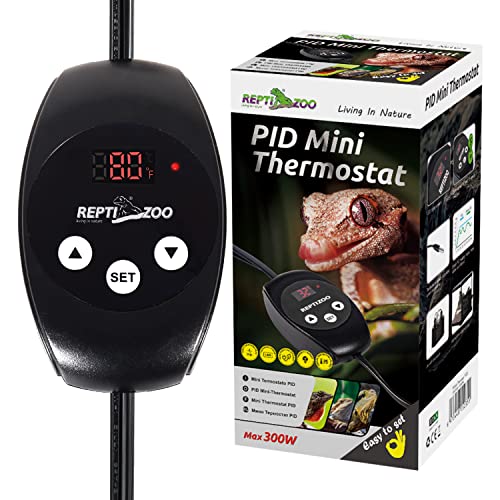
REPTIZOO PID Dimming Thermostat
Buy this instead if your heat source is a bulb, a ceramic emitter, or a deep heat projector. It feathers power up and down rather than cycling fully on and off, the flicker the JumpStart causes on those loads. Reports are split, so keep a spare.
You Might Also Need
Accessories worth grabbing alongside your purchase
