SensorPush HT.w Review: The Research-Grade Reptile Hygrometer
By ReptileGearLab · Updated October 2026
Verdict
Keepers who own the SensorPush talk about it the way people talk about gear they have stopped worrying about. The recurring themes are trust and time: one describes running the sensors for three to four years and valuing that it logs everything and lets you refer back to the data, contrasting it directly with the cheap stick-on gauges that are "not worth the plastic they are made with." Another uses it in 100 percent humidity egg boxes and across enclosures, exactly the wet, high-stakes placement where a non-water-rated gauge would fail. The praise is consistently about the instrument being right and durable, not about being cheap. The criticism keepers raise is about fit and cost rather than the sensor failing. The limitation they surface themselves is that it is Bluetooth only until you add the WiFi gateway, as one put it plainly, you need the gateway to see the data outside of Bluetooth range. And the value question comes up openly, with a longtime owner eyeing Inkbird sensors at about half the price and wondering whether the premium is worth it. That is the right tension to sit with: the SensorPush is the sensor to buy when accuracy, sealing, and logged history matter, and our advice tracks the community's, most keepers with one stable enclosure will be happier saving the money on a Govee, while wet, breeding, and multi-enclosure setups are where the HT.w clearly earns it.
Read full take ↓Similar monitors
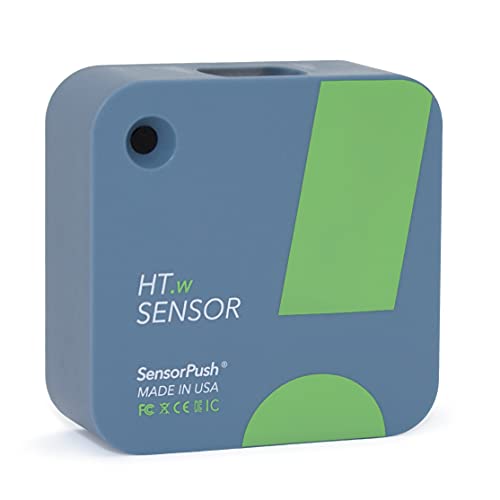
The SensorPush HT.w is the sensor keepers name when they have outgrown a cheap hygrometer and want an instrument they can trust. It is small, splash-resistant, runs for years on a coin cell, and logs temperature and humidity every minute so you can scroll back through exactly what the enclosure did overnight. Where a bargain gauge gives you a number, this gives you a record.
It is also the one we tell most keepers they do not need. At around seventy dollars it costs roughly five times a Govee, and on its own it talks to your phone over Bluetooth only, so watching the tank from work or on holiday means adding the hundred-dollar WiFi gateway on top. For a single well-run enclosure a Govee is already accurate enough. The HT.w earns its price in the harder cases: a heavily misted tropical setup, an egg box you cannot afford to let swing, or a rack of enclosures you want to watch from one app. Here is the full picture.
The short version
What's good:
- Research-grade accuracy: SensorPush rates it to about a third of a degree Fahrenheit and roughly two percent humidity in the normal range, tighter than any cheap gauge.
- It logs a reading every minute and stores over a month on the sensor itself, so you can see the overnight swings a glance-value display hides.
- Splash- and rain-resistant by design, with an o-ring-sealed body keepers run in 100 percent humidity egg boxes.
- One coin battery lasts over two years, and keepers report the same units still going after three or four.
What's not:
- The price. Around seventy dollars for the sensor, against ten to thirteen for the Govee most enclosures are fine with.
- Bluetooth only on its own, roughly house-range. Monitoring while you are away from home needs the separate WiFi gateway, another hundred dollars.
- SensorPush publishes no formal IP rating, so "water resistant" means splash and mist, not submersible; do not sit it in standing water.
- Overkill for one basic enclosure, which is exactly why we recommend the cheaper Govee for most first setups.
Which reptiles and setups it fits
Buy it for:
- Heavily misted tropical setups, crested geckos, dart frogs, tropical snakes, where a sensor lives in constant high humidity and a non-water-rated gauge would not last.
- Breeding and incubation, where an egg box sitting near 100 percent humidity has no margin for a sensor that lies or dies.
- Keepers running several enclosures who want one app, one logging history, and, with the gateway, alerts from anywhere.
Pick something else if:
- You keep a single, stable enclosure and just want an accurate number and phone alerts. A Govee does that for a fraction of the price and we say so plainly.
- You will never scroll back through logged data or leave home for long. You would be paying for precision and history you will not use.
- You need remote monitoring but do not want to buy a second box. Budget for the gateway up front, or choose a sensor with WiFi built in.
The specs that matter
- Accuracy is the reason to spend up. SensorPush publishes about a third of a degree Fahrenheit and roughly two percent relative humidity in the normal keeping range. That is the tier the hobby means by "research grade," and it is why keepers reach for it when the reading has to be right, like an incubating egg box.
- It logs, and that is the feature people fall in love with. A reading a minute, stored over a month on the sensor and graphed in the app, so a drying-out or overheating enclosure shows up as a trend line rather than a nasty surprise. One longtime keeper's whole verdict was that it logs everything and lets you refer back to the data.
- Bluetooth, with WiFi only via the gateway. On its own the HT.w reaches about 325 feet line of sight and backfills the app when you come home. To see it from outside that range you add the SensorPush G1 gateway, which relays readings to the internet. Keepers are blunt that this is a two-purchase system if remote alerts are the goal.
- Water resistance, honestly stated. SensorPush calls it splash and rain proof with o-ring seals but gives it no formal IP rating, so treat it as mist-safe, not waterproof. That is still a real step past the Govee, which carries no water rating at all.
How it keeps your animal safe
A monitor cannot hurt or help an animal directly; its job is to tell you the truth in time, and humidity is one of the readings reptile-vet guidance ties most directly to disease. Chronically low humidity drives incomplete sheds and dehydration; humidity kept too high in stagnant air is a well-documented setup for scale rot and respiratory infection. You cannot see either coming without a gauge you believe, and the cheap stick-on hygrometers keepers warn about are exactly the ones that read a flat, wrong number for weeks.
This is where the HT.w's accuracy and logging stop being luxuries. Because it records a reading a minute, a slow drift out of the safe band shows up as a slope on the graph days before it would be obvious by eye, and with the gateway the app can alert your phone the moment a reading leaves the range you set. The catch is the same one a keeper flagged for us: without the gateway those alerts only reach you inside Bluetooth range, so if a days-long absence with a fragile, high-humidity setup is your real scenario, treat the gateway as part of the purchase, not an upsell.
Build quality and living with it
It is a small sealed puck that runs on a single CR2477 coin cell for over two years, and the community's lived experience runs longer: keepers describe the same sensors still reporting after three and four years, which is not something anyone says about a five-dollar gauge. The o-ring sealing is what lets it survive a misted tank, and it is the reason the HT.w, not a plain Govee, is the one people put inside an egg box.
Two practical notes. First, calibration: every humidity sensor drifts eventually, and SensorPush lets you apply an offset in the app, so check it against a known reference once a year and correct it. Second, placement, which is universal to every sensor: keep it where the animal sits and out of the direct beam of a heat lamp, or it reads the bulb's radiant heat instead of the true ambient air. Neither is a flaw in the unit, but both decide whether the excellent numbers it produces are the numbers you need.
How it compares
- Versus the Govee H5075: the honest default for most keepers, and a third of the price. The Govee is accurate enough for a stable single enclosure and logs to a phone too. The HT.w pulls ahead on tighter accuracy, water resistance, and years of stability, which matter in wet or breeding setups and matter less in a plain dry tank.
- Versus adding the SensorPush gateway: not an either-or but a stepladder. The sensor alone is a superb local logger; the gateway is what turns it into true from-anywhere monitoring with alerts. Buy the gateway only if watching the tank while you are away is a real need, because it roughly doubles the outlay.
- Versus an Inkbird sensor: the value question keepers raise, one noting Inkbird runs about half the price and wondering aloud whether it is worth the SensorPush premium. If budget is the deciding factor and you do not need the sealing or the tightest accuracy, that is a fair place to look; the HT.w's case is precision and durability, not being cheapest.
Worth separating two different arguments here, because they get conflated. The first is whether a digital sensor beats a cheap stick-on gauge, and that one is settled: keepers routinely find the bargain dials stuck on a single reading for weeks, then discover the real humidity is more than thirty points away once a working sensor goes in. If you are moving off an analogue dial, almost any decent digital unit is a large upgrade, and you do not need this one to get it.
The second argument is the one this product sits in, which is accuracy and reliability among digital sensors. That is a narrower contest and the evidence is mixed rather than lopsided. Keepers report consumer smart sensors disagreeing with each other by around ten points of humidity and a few degrees, which is the problem: when two units differ you cannot tell which to believe without a reference. They also report drift over months, which is why the ability to recalibrate matters more than the number in the spec sheet. And a minority report outright failures, units dropping their connection at household range or going dead after a few months.
So the case for paying more here is not that the cheaper sensors cannot read a tank. It is that you are buying a tighter tolerance, a sealed body that survives a misted enclosure, and a longer service life, on an instrument whose whole job is to be the thing you trust when the others disagree. Keepers who end up running a reference sensor alongside their cheap ones have effectively paid for both; buying the accurate one first is the cheaper version of that lesson.
Setting it up
Pair it to the SensorPush app, set your target temperature and humidity range, and place the sensor where the animal experiences the air, typically the cool end, out of the heat lamp's direct line. If you want alerts from outside the house, add and pair the gateway. Verify it once against another gauge, apply a calibration offset if needed, and recheck yearly. It reads air; for the surface temperature of a basking spot you still want an infrared temp gun, a different tool we cover in our temp gun guide. The wider case for measuring humidity at all, and the cheaper way in, is in our reptile hygrometer guide.
Our call
Buy it for the hard cases and buy it with clear eyes. If you keep a misted tropical setup, incubate eggs, or run several enclosures you want to watch from one app, the HT.w is the sensor worth its price: accurate to a tier cheap gauges never reach, sealed enough to live in the wet, and logging every minute so problems show as trends instead of emergencies. Keepers who have run them for years talk about them the way you talk about a tool you have stopped worrying about.
For everyone else, we will point you at the cheaper answer without flinching. A stable single enclosure does not need research-grade precision, and a Govee delivers an accurate, app-logged reading for a fraction of the cost. Spend the difference on the HT.w only when the enclosure, or the thought of leaving it unwatched for days, calls for it, and if remote alerts are the point, budget for the gateway from the start.
Our Ratings
Overall score
A small o-ring-sealed puck that runs over two years on one CR2477 coin cell, with keepers reporting the same units still going after three or four. The sealing is what lets it live in a misted tank or an egg box, the setups a non-water-rated gauge cannot survive. No formal IP rating, so mist-safe rather than submersible.
Its strongest axis, and the reason to spend up. SensorPush rates it to about a third of a degree Fahrenheit and roughly two percent humidity in the normal range, and it logs a reading a minute for over a month on the sensor, so drift shows as a trend before it becomes an emergency. With the gateway it alerts your phone anywhere; without it, only within Bluetooth range.
Its weakest axis, honestly. Around seventy dollars for the sensor and another hundred for the gateway that makes it a remote monitor, against ten to thirteen for a Govee that is accurate enough for a stable single enclosure. The price is fair for what it is and hard to justify unless the setup, wet, breeding, or multi-tank, calls for it.
SensorPush HT.w on Amazon.
The Evidence Behind Our Verdict
Keepers who own the SensorPush talk about it the way people talk about gear they have stopped worrying about. The recurring themes are trust and time: one describes running the sensors for three to four years and valuing that it logs everything and lets you refer back to the data, contrasting it directly with the cheap stick-on gauges that are "not worth the plastic they are made with." Another uses it in 100 percent humidity egg boxes and across enclosures, exactly the wet, high-stakes placement where a non-water-rated gauge would fail. The praise is consistently about the instrument being right and durable, not about being cheap.
The criticism keepers raise is about fit and cost rather than the sensor failing. The limitation they surface themselves is that it is Bluetooth only until you add the WiFi gateway, as one put it plainly, you need the gateway to see the data outside of Bluetooth range. And the value question comes up openly, with a longtime owner eyeing Inkbird sensors at about half the price and wondering whether the premium is worth it. That is the right tension to sit with: the SensorPush is the sensor to buy when accuracy, sealing, and logged history matter, and our advice tracks the community's, most keepers with one stable enclosure will be happier saving the money on a Govee, while wet, breeding, and multi-enclosure setups are where the HT.w clearly earns it.
Our rating above is our own editorial call. What follows is the field evidence we weighed to reach it: first-hand reports from keepers on Reddit and dedicated reptile forums, which we lean on more than manufacturer-influenced published reviews because unsponsored owners tend to be the more candid signal.
What Reddit Is Saying
“I use SensorPush in 100% humidity egg boxes and in enclosures. Ties into your Wi-Fi and can be accessed anytime/anywhere”View thread →
“I am a fan of the SensorPush bluetooth temp/humidity sensors, but they are a bit more then $25. I have been using them 3-4 years now. I like that it logs everything and you can refer back to the data if needed and it has a nice interface. The cheap stick on thermometers/hygrometers are not worth the plastic they are made with, in my opinion. I have been interested in trying the Inkbird sensors since they are like 1/2 the price of SensorPush, but I have not yet.”View thread →
“Thanks! Did wind up going with SensorPush monitoring...really like it...”View thread →
“You can also recalibrate the hydrometer. Hydrometers drift over time becoming inaccurate/useless so great that it can be recalibrated when necessary.”View thread →
“SensorPush. You need the gateway to see the data outside of Bluetooth range however.”View thread →
“Yes, I was stupid to buy the cheapest thermometer/hygrometer set I could find. I noticed they were stuck at 66% for like a month so I replaced them with the govee ones I've seen recommended and my humidity was at 30%.”View thread →
“I noticed my Govee was reading oddly high and compared with my ThermPro it was reading 10% higher humidity and like 4 degrees higher, which is worrying for my BPs' conditions.”View thread →
“The connection reach barely reaches across the house, and the govees only worked for a few months before they'd shut off and become unusable. I bought four different pairs before finally trying something else, I think the humidity screwed with them.”View thread →
“I recently got a ball python, the humidity and thermometer gauge I bought to keep track of temp and hum. is very inaccurate ( Thrive Reptile Thermometer & Hydrometer Combo ) so I bought an electric thermometer to keep track of the temperature and so far it seems to be accurate.”View thread →
Frequently asked questions
Is the SensorPush HT.w worth it?
Its weakest axis, honestly. Around seventy dollars for the sensor and another hundred for the gateway that makes it a remote monitor, against ten to thirteen for a Govee that is accurate enough for a stable single enclosure. The price is fair for what it is and hard to justify unless the setup, wet, breeding, or multi-tank, calls for it.
How is the SensorPush HT.w built?
A small o-ring-sealed puck that runs over two years on one CR2477 coin cell, with keepers reporting the same units still going after three or four. The sealing is what lets it live in a misted tank or an egg box, the setups a non-water-rated gauge cannot survive. No formal IP rating, so mist-safe rather than submersible.
Is the SensorPush HT.w safe to use?
Its strongest axis, and the reason to spend up. SensorPush rates it to about a third of a degree Fahrenheit and roughly two percent humidity in the normal range, and it logs a reading a minute for over a month on the sensor, so drift shows as a trend before it becomes an emergency. With the gateway it alerts your phone anywhere; without it, only within Bluetooth range.
What do real owners say about the SensorPush HT.w?
Keepers who own the SensorPush talk about it the way people talk about gear they have stopped worrying about. " Another uses it in 100 percent humidity egg boxes and across enclosures, exactly the wet, high-stakes placement where a non-water-rated gauge would fail. The praise is consistently about the instrument being right and durable, not about being cheap.
Options Worth Checking Out
SensorPush HT.w Temperature & Humidity Sensor
The sensor itself: about a third of a degree and two percent humidity accuracy, a reading logged every minute and stored a month on the device, and a sealed body keepers trust in 100 percent humidity egg boxes. Years on one coin cell.

Govee Hygrometer Thermometer H5075
The cheaper answer most keepers should start with. Around a tenth of the price, still accurate enough for a single stable enclosure, with app logging and phone alerts. You give up research-grade precision and water resistance, not the essentials.
You Might Also Need
Accessories worth grabbing alongside your purchase
