Vivarium Electronics
Vivarium Electronics Thermostat Review + Keeper Verdict
By ReptileGearLab · Updated August 2026

Verdict
Keepers hold VE in the top tier, but the sentiment is more mixed than the near-unanimous reverence the Herpstat gets, and that gap is the story. VE is named right alongside the Herpstat as one of two brands worth buying when cheaping out could cost an animal's life, owners describe it running radiant heat panels without issue, and more than one points to a lifetime warranty as a reason to trust it long term, a real edge on a safety device. The proportional line is what keepers reach for on lamps: they report the VE-200 carrying pulse, dimming, and on/off modes and the VE-300 doing dimming and pulse, with a 300x2 variant built to run two heat sources at once. The knocks are consistent and keepers are frank about them. Owners of both brands repeatedly give the Herpstat the edge, one saying a VE feels two generations old after switching and another calling the Herpstat clearly better on quality and features for close to the same money, though interface opinion is split, since at least one keeper who runs both prefers the neater VE display. VE also isn't failure-proof: one keeper reports a VE-100 that wouldn't power on overnight and left temperatures dropping. One buying note matters most, because the unit Amazon sells is the entry VE-100 and it's on/off only, not a dimmer, so anyone wanting dimming needs a proportional VE-200 or VE-300, mostly a direct order. Our read: VE is a premium brand with a standout warranty, a notch behind the Herpstat on interface and features, and worth matching carefully to the right model number.
Read full take ↓Similar thermostats
Two thermostats sit in the top tier we'd trust with an animal's heat: the Herpstat, and Vivarium Electronics. VE is the other US name in that top tier, the one people put in the same sentence as the Herpstat when the advice is don't cheap out on the device standing between a heat source and your animal. Long track record, a proportional line that dims rather than just switching, and a lifetime warranty keepers bring up on its behalf.
One thing to get straight before you buy. The unit Amazon sells is the entry VE-100, and it's an on/off thermostat, not a dimmer. The proportional VE-200 and VE-300 that keepers name for dimming are the flagships, and those are mostly a direct-order affair. So read it as two products in one brand: a solid, warrantied on/off VE you can Prime today, and a dimming line that costs more and takes more effort to get. Below is the VE case, the knocks keepers raise, and the cheaper Amazon thermostats worth a look if a VE is more than your setup needs.
The short version
What's good:
- One of two US brands keepers name at the very top, put right alongside the Herpstat for a device you trust with an animal's life.
- Keepers report a lifetime warranty on VE units, a real edge over rivals for a safety-critical purchase.
- The proportional line does dimming and pulse, not just on/off, so a VE-200 or VE-300 suits emitters and dimmable bulbs an on/off unit would strobe.
- Long history, and owners describe VE running radiant heat panels without drama.
What's not:
- The Herpstat ranks a notch above, and one owner says a VE feels two generations old after switching.
- Premium price. The Amazon VE-100 is about $100, and that entry unit is on/off only, not a dimmer.
- The dimming VE-200 and VE-300 are the models keepers want for lamps, and those are mostly bought direct rather than on Amazon.
- Not immune to failure. One keeper reports an overnight VE-100 that wouldn't power on at all.
Which reptiles and setups it fits
Buy it for:
- A keeper who wants a trusted premium brand with a lifetime warranty behind it, buying for the long term rather than the lowest price.
- A dimmable basking bulb or an emitter that an on/off thermostat would flicker, where the proportional VE-200 or VE-300 is the model to match, not the on/off VE-100.
- A radiant heat panel setup, which is the use owners most often describe VE handling well.
Pick something else if:
- You're running one plain heat mat on a budget, where a rock-solid on/off Inkbird does the job for a quarter of the price.
- You want the most feature-rich premium unit and interface, where several keepers who own both give the edge to the Herpstat.
- You need proportional dimming shipped fast and cheap, in which case a budget dimming thermostat gets you the feature at a fraction of the cost, with the tradeoffs that come with it.
The specs that matter
VE is a line, not a single product, and the model number decides what you're buying. That matters more here than with most brands, because the cheap Amazon unit and the dimming flagships are different tools.
- On/off versus proportional. The VE-100 that Amazon lists is an on/off thermostat: it cuts power at the setpoint, which is correct for a mat but will strobe a dimmable bulb. Keepers report the VE-200 carrying pulse, dimming, and on/off modes, and the VE-300 doing dimming and pulse as well, so those are the units to match to a lamp or emitter. If you want dimming, the model number has to be a 200 or 300, not a 100.
- Multi-zone options. Keepers describe a VE-300 variant, referred to as the 300x2, built to run two heat sources on one unit for a dual hot spot setup. That's the direction VE scales. Confirm the exact model against your number of heat sources before buying, since a single-output unit runs one device.
How it keeps your animal safe
Reliability is the one thing a thermostat has to get right, and it's where VE earns its reputation, and where keepers admit it sits a step behind the Herpstat.
On the strong side, VE gets named right alongside the Herpstat as one of two brands worth buying when cheaping out could cost an animal's life. Keepers report it running radiant panels without issue, and more than one points to a lifetime warranty as a reason to trust it long term. That warranty is a real reliability signal for a safety device, and it's a point in VE's favor that the Herpstat threads don't always match.
On the honest side, VE isn't flawless and keepers don't pretend otherwise. One reports an overnight where a VE-100 wouldn't power on and left temperatures dropping until it was sorted out, a reminder that any single thermostat can fail. Others who own both brands say plainly they've had fewer issues with Herpstats than with VE. Which leads to the advice experienced keepers give for every thermostat, VE included: keep a spare or a cheap failsafe on hand.
Build quality and living with it
VE reads as a serious, long-lived piece of kit, and the ownership reports back that up. Keepers describe units running radiant panels and holding up, and the lifetime warranty tells you the maker expects them to last. Nobody calls VE cheap or flimsy.
The friction shows up against the Herpstat. Keepers who own both consistently give the Herpstat the edge, one saying a VE feels two generations old after switching, another calling the Herpstat clearly better on quality and features for close to the same money. Interface reception is split rather than one-sided: a keeper who runs both prefers the VE display, calling it neater and easier to use, and the shapes differ, with Herpstats being flat and stackable. If a modern interface and the deepest feature set are what you're paying for, several keepers point at the Herpstat. If a trusted brand with a lifetime warranty is the priority, VE holds its ground.
How it compares
- Versus a Herpstat: the other US brand keepers put at the top, and the one named in the same breath. Owners of both tend to give the Herpstat a slight edge on interface and features, and one calls a VE two generations old by comparison. VE's counter is a lifetime warranty and, for at least one keeper, a neater display. Two premium units in the same tier, not a premium-versus-cheap gap, and close enough that availability and warranty can decide it.
- Versus an Inkbird ITC-308: a different class of tool, not a rival. The Inkbird is a rock-solid on/off dual-stage controller and the correct cheap choice for a heat mat, at roughly a quarter of the VE-100 price. It cuts power fully at the setpoint, so it strobes a dimmable bulb and cycles bulbs harder, and it lacks VE's proven longevity and lifetime warranty. For one mat it's enough.
- Versus a cheap dimming thermostat: the budget substitute for a proportional VE-200 or VE-300, from brands like REPTIZOO. It gets you dimming for a fraction of the price, which matters. Community reports on these are split, none carry VE's warranty or track record, and the keeper move at that budget is to back it with a spare or a failsafe rather than trust it alone.
Setting it up
Match the model to the job first. A plain mat is fine on an on/off VE-100. A dimmable bulb or an emitter wants a proportional VE-200 or VE-300, because an on/off unit will flicker a dimmable lamp. Then place the probe the way you would for any thermostat: a couple of inches from the heat source it regulates, not dangling in open air and not somewhere the animal can block it.
Tune the setpoint against a separate thermometer rather than trusting the display, because the controller only knows what its probe is touching. A cheap infrared temp gun for spot-checking surface temperatures is the natural companion, and the wider logic of probe placement, control types, and failsafes is in our reptile thermostat guide. Confirm any basking bulb is rated dimmable before running it on a proportional output.
Our call
VE is a top-tier thermostat brand, named with the Herpstat and backed by a lifetime warranty keepers value. If that warranty and a trusted name matter most to you, it's an easy unit to recommend, and the Amazon VE-100 puts a real VE within a Prime click at about a hundred dollars.
Two caveats keep it from a clean sweep. That Amazon VE-100 is on/off only, so if you want dimming you need a proportional VE-200 or VE-300, and those are mostly a direct order rather than a same-day Amazon buy. And on interface and features, the Herpstat leads. VE is the right call for plenty of setups. It just isn't the automatic pick its warranty alone might suggest. The cheaper Amazon options below cover the budgets a VE overshoots.
Our Ratings
Overall score
VE reads as a serious, long-lived unit, and the reports back it up: keepers run VE on radiant panels without drama and point to a lifetime warranty as proof the maker builds them to last. Nobody calls it cheap or flimsy. It falls just short of a clean top mark because keepers who own both brands consistently hand the Herpstat the edge on interface and features, with one saying a VE feels two generations old by comparison. Premium build, a small step behind the class leader.
Reliability is what you're buying in a thermostat, and it's where VE earns its reputation while sitting a step below the Herpstat. It's named right alongside the Herpstat as one of two brands you buy when cheaping out could cost an animal's life, keepers report it running radiant panels reliably, and the lifetime warranty is a real signal for a safety device. The temper: one keeper reports a VE-100 that wouldn't power on overnight, and owners of both brands say they've had fewer issues with Herpstats. Keep a spare or a failsafe, same as with any unit.
Price is the one axis where VE gives ground. The Amazon VE-100 runs about $100, and that entry unit is on/off only, not the dimmer many buyers assume they're getting, so the proportional VE-200 and VE-300 cost more and are mostly bought direct. Against a roughly $28 Inkbird for a mat, a VE is several times the price. The lifetime warranty and top-tier reputation earn back a lot of that premium on a long-term or safety-critical buy. For one mat on a budget, the math favors a cheap on/off controller, and keepers say so.
Vivarium Electronics Thermostat on Amazon.
The Evidence Behind Our Verdict
Keepers hold VE in the top tier, but the sentiment is more mixed than the near-unanimous reverence the Herpstat gets, and that gap is the story. VE is named right alongside the Herpstat as one of two brands worth buying when cheaping out could cost an animal's life, owners describe it running radiant heat panels without issue, and more than one points to a lifetime warranty as a reason to trust it long term, a real edge on a safety device. The proportional line is what keepers reach for on lamps: they report the VE-200 carrying pulse, dimming, and on/off modes and the VE-300 doing dimming and pulse, with a 300x2 variant built to run two heat sources at once.
The knocks are consistent and keepers are frank about them. Owners of both brands repeatedly give the Herpstat the edge, one saying a VE feels two generations old after switching and another calling the Herpstat clearly better on quality and features for close to the same money, though interface opinion is split, since at least one keeper who runs both prefers the neater VE display. VE also isn't failure-proof: one keeper reports a VE-100 that wouldn't power on overnight and left temperatures dropping.
One buying note matters most, because the unit Amazon sells is the entry VE-100 and it's on/off only, not a dimmer, so anyone wanting dimming needs a proportional VE-200 or VE-300, mostly a direct order. Our read: VE is a premium brand with a standout warranty, a notch behind the Herpstat on interface and features, and worth matching carefully to the right model number.
Our rating above is our own editorial call. What follows is the field evidence we weighed to reach it: first-hand reports from keepers on Reddit and dedicated reptile forums, which we lean on more than manufacturer-influenced published reviews because unsponsored owners tend to be the more candid signal.
What Reddit Is Saying
“I have both, I like Herpstats because they are flat and stackable, and VE's because the interface is a little neater and easier to use. If you're just using one for a single tank, the herpstat intro can be attractively incorporated to a stand or canopy, if that's something you're interested in.”View thread →
“I've heard they're the gold standard of thermostats, but I do like that VE has a lifetime warranty. Looks like the original herpstat is hard to find and it's this new spyderweb one with wifi capabilities, so I was curious with all the new bells and whistles if it's causing any issues for people with setup, etc.”View thread →
“I have only used VE so I cannot attest to Herpstat. VE has worked fine for using radiant heat panels, but I'd trust what shrike is saying for sure!”View thread →
“The VE-200 has pulse, dimming, and on/off modes. I prefer the Herpstat 1 myself but either is fine.”View thread →
“I thought VE-200 had dimming and pulse modes? If not, the VE-300 most certainly does.”View thread →
“I'm not 100% certain, but the proportional setting on my VE-200 will turn on and get up to temp, and then pulse after that, even if it gets a little under the temp setting. The manual that came with it does say that proportional setting is not recommended for incandescent bulbs, and halogens are a type of incandescent bulb.”View thread →
“Vivarium electronics 300x2 is their duel hot spot model. Idk about herpstat but VE comes with a lifetime warranty.”View thread →
“so it's 3am and i went to check temps before going to bed and my thermostat isn't on ???? like won't work at all. currently it is unplugged for a bit before i try it again but my girls temps are WAYYY too low.”View thread →
“Herpstat. I have both and I'll never buy VE again. After using Herpstat, VE feels two generations old.”View thread →
“Herpstats are almost the same price as ve thermostats with much better quality and features.”View thread →
Frequently asked questions
Is the Vivarium Electronics Thermostat worth it?
Price is the one axis where VE gives ground. The Amazon VE-100 runs about $100, and that entry unit is on/off only, not the dimmer many buyers assume they're getting, so the proportional VE-200 and VE-300 cost more and are mostly bought direct. Against a roughly $28 Inkbird for a mat, a VE is several times the price.
How is the Vivarium Electronics Thermostat built?
VE reads as a serious, long-lived unit, and the reports back it up: keepers run VE on radiant panels without drama and point to a lifetime warranty as proof the maker builds them to last. Nobody calls it cheap or flimsy. It falls just short of a clean top mark because keepers who own both brands consistently hand the Herpstat the edge on interface and features, with one saying a VE feels two generations old by comparison.
Is the Vivarium Electronics Thermostat safe to use?
Reliability is what you're buying in a thermostat, and it's where VE earns its reputation while sitting a step below the Herpstat. It's named right alongside the Herpstat as one of two brands you buy when cheaping out could cost an animal's life, keepers report it running radiant panels reliably, and the lifetime warranty is a real signal for a safety device. The temper: one keeper reports a VE-100 that wouldn't power on overnight, and owners of both brands say they've had fewer issues with Herpstats.
What do real owners say about the Vivarium Electronics Thermostat?
Keepers hold VE in the top tier, but the sentiment is more mixed than the near-unanimous reverence the Herpstat gets, and that gap is the story. VE is named right alongside the Herpstat as one of two brands worth buying when cheaping out could cost an animal's life, owners describe it running radiant heat panels without issue, and more than one points to a lifetime warranty as a reason to trust it long term, a real edge on a safety device. The proportional line is what keepers reach for on lamps: they report the VE-200 carrying pulse, dimming, and on/off modes and the VE-300 doing dimming and pulse, with a 300x2 variant built to run two heat sources at once.
Options Worth Checking Out

Inkbird ITC-308 Digital Thermostat
The cheap on/off default when a VE is overkill, about a quarter of the VE-100 price. Rock-solid dual-stage control keepers trust on a mat or emitter. It cuts power fully at the setpoint, so it cycles a bulb harder, and it lacks VE's warranty and longevity.
REPTIZOO PID Dimming Thermostat
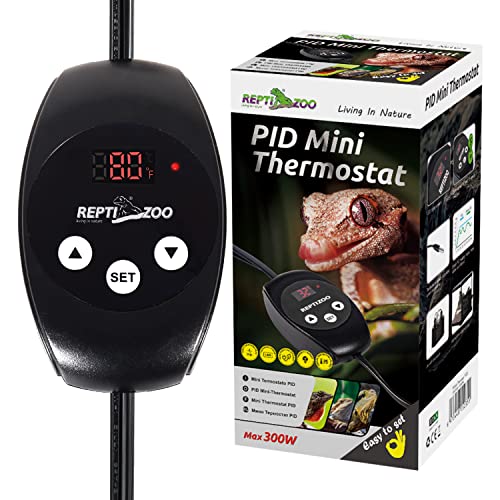
The budget path to the proportional dimming a VE-200 or VE-300 gives you. It feathers heat instead of cycling, so it suits emitters and dimmable bulbs. Owner reports are split and longevity is unproven, so keep a spare behind it.

Inkbird ITC-306T Day/Night Thermostat
Heat only, but it adds a built-in day and night timer for far less than a VE. Good for a single emitter that needs a nighttime drop. Still on/off, so it cycles a bulb instead of holding it steady, with none of VE's warranty or track record.