Best Blue Tongue Skink Enclosure: How Big, and What Material?
By ReptileGearLab · Updated July 2026
Quick Take
A blue tongue skink needs floor space, and a lot of it. We'd call 4 by 2 feet, about 8 square feet of floor, the traditional minimum and still a defensible size. But the standard is climbing and we'd climb with it: ReptiFiles now recommends closer to 6 by 2, and keepers who upgrade a big or active skink to a 6 by 2 report the pacing and wall-surfing easing, one describing it stopping the day her northern finally had a six-foot run. Floor area is the number to chase, not height. These are ground-dwelling lizards that barely use vertical space; 15 to 18 inches tall is plenty, and more height just makes the enclosure harder to heat. If you can house and heat a 6 by 2, especially for a big northern, we'd do it. A smaller Indonesian skink fits a 4 by 2 more comfortably.
The catch is that a bigger enclosure is harder to keep warm and humid, so a well-run 4 by 2 beats a struggling 6 by 2, and we'd make that case for a 4 by 2 paired with plenty of out-of-enclosure time. Buy the biggest one you can maintain. For material, we'd choose PVC over glass: PVC is light, durable, and holds heat and humidity, while glass is heavy and sheds heat, so move off it as soon as you can. Babies go straight into the adult enclosure, no small starter needed. Whatever you buy, clutter it heavily so the skink feels secure.
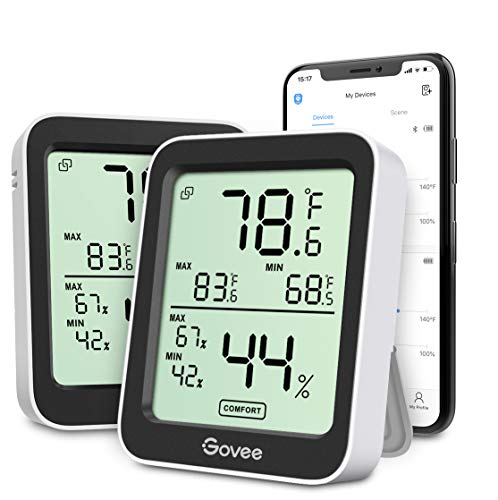
Below: the 4 by 2 PVC enclosure that meets the accepted minimum, a name-brand alternative in the low profile we prefer, a 6 by 2 for the skink that needs the room, and the hygrometer that tells you whether a bigger box is holding its humidity. Our picks: See picks ↓

Almost every blue tongue skink enclosure question is a size question, and the target keeps moving, because the accepted minimum has been climbing for years. Buy too small and you get a bored, pacing skink and an upgrade bill. Buy bigger than you can heat and humidify and you fight the enclosure every day.
The answer we keep landing on: the largest enclosure you can keep at the right temperature and moisture, floored wide rather than built tall, and made of PVC rather than glass. Which subspecies you keep moves the number, and so does how much time your skink spends roaming the house.
How big: 4 by 2 is the floor, and the standard is climbing to 6 by 2
Start with the number everyone argues about. The long-standing minimum for an adult blue tongue is 4 by 2 feet of floor, roughly 8 square feet, and plenty of keepers house healthy skinks in exactly that. The recommendation has been rising, though. ReptiFiles moved its guidance toward about 12 square feet, a 6 by 2, and the community has largely followed, with keepers describing the old 4 by 2 as a bare minimum rather than a target. The reason isn't abstract. One keeper described a clear behavioral change: a northern that paced and wall-surfed constantly in a 4 by 2 stopped once it had a six-foot run and a proper temperature gradient. That's one keeper's experience rather than a guarantee, but it fits the wider sense in the threads that these active lizards use the extra room.
So 4 by 2 is the floor you shouldn't go below, and 6 by 2 is where the standard is heading and where a big, active skink is happiest. Bigger still gets used: keepers with 8-foot enclosures report the skink working every corner and burrowing in different spots through the year. Babies don't need a small starter enclosure first. Put a baby straight into the adult-size enclosure, cluttered heavily, rather than buying twice.
Floor space, not height
A blue tongue is a ground animal, and that changes what "big" means. They forage, dig, and roam across the floor. They'll climb a little given the chance, but they're nothing like a bearded dragon and don't use vertical space in any serious way. So height is close to irrelevant and can work against you: a taller enclosure takes more power to bring the basking floor up to temperature, and it gives the skink nothing it wants. Experienced keepers run enclosures as low as 15 inches and watch their skinks ignore the height they do have.
Aim your budget and your space at length and width. Fifteen to eighteen inches of height is plenty for a blue tongue once you account for several inches of deep substrate for digging and room for a caged overhead light. Choosing between a taller 4 by 2 and a longer, lower 5 by 2 for similar money? Take the longer, lower one.
Two footnotes. Not every authority treats height as negligible: the Federation of British Herpetologists sets a stricter, taller standard, so if you have the room, extra height with climbing structure does no harm. It just isn't where a ground-dwelling skink needs you to spend first. And there's a safety catch with a low enclosure. If the heat and UVB lights mount inside it, a standing skink can reach a bulb sitting close to the substrate, so on a 15-to-18-inch build either cage the lights well or run a screen top and sit the fixtures on top of it.
The tradeoff: bigger is better, until you cannot heat it
The loudest "go bigger" advice tends to skip this, and it's real. A larger enclosure is harder to keep warm and humid, and a skink in a well-run 4 by 2 is better off than one in a 6 by 2 that never holds its temperature or moisture. Keepers who have fought this say it plainly: a 6 by 2 can be a constant battle with humidity and temperature regulation, and there's nothing wrong with a 4 by 2 you can dial in, especially if you give the skink meaningful time out of the enclosure. Others counter that they can't afford to start over after a minimum change and that a 4 by 2 with daily enrichment is not a bad home.
The resolution isn't a number, it's a question about you. Buy the biggest enclosure you can maintain at the right conditions. If you can heat and humidify a 6 by 2, buy it. If a 6 by 2 would leave you chasing a humidifier and a dropping basking temperature all winter, a 4 by 2 you keep dialed in is the more honest choice, paired with out-of-enclosure roaming to make up the space.
Subspecies moves the answer
Which blue tongue you keep shifts the size math. The Australian northern is one of the biggest and most active blue tongues in the hobby, and it's the one keepers most often say needs the jump to a 6 by 2. A big Merauke is similar. The smaller Indonesian skinks, Halmahera and kei island types among them, fit a 4 by 2 footprint more reasonably, being less enormous even if still active. None of that makes a 4 by 2 wrong for a northern. It does mean a big northern is the animal most likely to visibly outgrow it, and a smaller Indo the one most comfortable staying in it. Match the enclosure to the adult size of your specific skink, not to a generic minimum.
PVC over glass: light, and it holds heat and humidity
Material matters more than beginners expect. The community consensus favors PVC: light, durable, and good at holding both heat and humidity, which is what a big skink enclosure needs. Glass is the material to move away from, since it's heavy, awkward at these sizes, and sheds heat, and keepers advise upgrading off a glass tank as soon as you can. Wood and DIY melamine builds also work and are how many keepers afford a larger size, as long as you seal the corners with aquarium-grade silicone to hold humidity in. Front-opening designs are preferred for easy, low-stress access. The premium and custom routes keepers name, Dubia, Toad Ranch, Cryptic Creations, and DIY grow-tent builds, get you the bigger footprints that pre-made enclosures rarely stock. Pair whatever you buy with a deep, moisture-holding substrate and the right UVB.
So what should you get?
For an adult blue tongue skink, treat 4 by 2 feet of floor as the minimum and 6 by 2 as the target the standard is moving toward, especially for a big, active northern. A smaller Indonesian skink is comfortable in a 4 by 2. Spend on floor space, not height, since 15 to 18 inches is all a ground-dwelling skink needs. Choose PVC for its light weight and its grip on heat and humidity, skip glass, and seal a DIY build well.
And buy the biggest enclosure you can keep warm and humid, not the biggest you can fit through the door. Clutter it heavily, put a baby straight into it, and give the skink time to roam outside it.
Recommended
Products related to this guide.


What owners say
Real owner reports from the threads and editorial sources we drew on for this guide.
“Also I wouldn't get a blue tongue with the intention of upgrading to a bigger tank that you don't have lined up. They grow pretty quick and an adult blue tongue should really be housed in a 4ftx2ft minimum. The standard really should be even bigger though, Reptifiles recommends a 6ftx2ft as the minimum for an adult bluetongue.”
— r/bluetongueskinks / BusStock3801
“just giving you the minimum requirements of 4x2x2 (in feet) anything smaller is a no go, babies can go straight into an adult enclosure, no need for a small one for 4 months before they outgrow it and need a proper size anyway”
— r/bluetongueskinks / NinPan512
“It's never too big. 4x2x2 was the minimum requirement for blue tongues, so that's what I got. However that requirement has kinda changed to 5x2x2 or even 6x2x2, and I can see why because my skink has grown too big for her 4x2x2. You can tell she's cramped and uncomfortable. I'm in the process of building an 8x2x2 which is huge, but I know she'll love it”
— r/bluetongueskinks / Chomasterq2
“Absolutely agree with 6x2 being the minimum. My northern was wall surfing and pacing constantly in her 4x2, and getting a good temp gradient was impossible. Switched her over to the 6x2 and all the pacing and surfing immediately stopped. Makes perfect sense, I'd be claustrophobic stuck in a box barely twice my length too. I'd love to get her in an 8x3 someday, but I just don't have the space.”
— r/bluetongueskinks / OneGayPigeon
“Bigger is always better, but I'd say go no smaller than 4x2x2. That's what I have my boy in, and it does the job. You can always upgrade later. One thing to consider tho, glass is heavy, and it lets more heat out. PVC is light, durable and it holds humidity and heat pretty well. I'd also look into adding a substrate layer. I cut (poorly) a piece of clear acrylic. 15-20 cm of substrate will give them space to dig, which they love. And make sure to seal the corners with aquarium-grade silicone, leaks suck.”
— r/bluetongueskinks / Professional-Day6155
“I disagree that the enclosure needs to be 2ft tall minimum. Most of mine are 15" but we have a variety of sizes. They're not using the extra height and more height means more power to heat the enclosure properly”
— r/bluetongueskinks / Daves_Skinks
“I'd say go with the 4x2x2 then. It's plenty of space. Since the 6x2x2 has humidity and temperature regulation problems it'd probably just be a pain in the ass in the long run”
— r/bluetongueskinks / exclusive_skimask
“It is a bare minimum size. I have 30 blue tongues and I wholeheartedly agree they will utilize larger enclosures. They definitely need stimulation. Constant pacing is not good - look up zoochosis. Zoochosis hasn't been confirmed in reptiles to my knowledge, but it does give a deeper look into enclosures that are too small (and usually improper in those cases.)”
— r/bluetongueskinks / FolkvangExotics
“I would say a 6 foot would be a better minimum for a northern. Indonesians arent as huge and a 4x2x2 might be okay, but theyre very active.”
— r/bluetongueskinks / hivemind5_
“Depends on the species. Smaller ones like Halmaheras, kei islands, etc, fit more reasonably in the 4x2 footprint than the really large sp like Meraukes. Upgraded my Merauke to a 5L x 3D x 2T and he's much happier in it.”
— r/bluetongueskinks / Raptormann0205
“Obviously bigger is better in this case. However, I just upgraded to a 4x2x2 right before the minimum was raised and I can't afford to start all over. My skink gets daily enrichment, time out of his enclosure, etc. If you can break up the monotony of captivity I think a 4x2x2 isn't a terrible enclosure size”
— r/bluetongueskinks / Grouchy-Transition93
“I think it is probably fine if you can give your skink plenty of time outside of the tank. I've only had my skink for less than a month and they're not even an adult but I can see how much they enjoy exploring outside compared with their tank, a lot of Australian keepers keep them outside all year long and it's not hard to see how much they can benefit from a larger area.”
— r/bluetongueskinks / squashedbird