Best Blue Tongue Skink UVB: Do They Need It, and Which T5?
By ReptileGearLab · Updated July 2026
Quick Take
Yes, in our view a blue tongue skink needs UVB. They're day-active lizards that use UVB to make vitamin D3, and without it they're at risk of metabolic bone disease. Occasional trips outside do not reliably prevent that. We'd use a linear T5 HO fluorescent tube, not a coil or compact bulb and not a mercury-vapor bulb, because only the linear T5 tubes reliably put out the UV they claim. The two brands we trust are Arcadia and Zoo Med ReptiSun. How strong depends on how you mount it: a 10.0, or 12 percent, bulb sitting on top of a mesh screen, since the mesh blocks roughly half the UV, or a 5.0, or 6 percent, bulb mounted inside the enclosure closer to the skink. A 14 percent bulb is too strong for a blue tongue.
Mount the tube over the basking area so the UVB and the heat overlap, and run it about half to two-thirds the length of the enclosure so your skink gets a UVB gradient it can move out of. We'd replace the tube every six to twelve months even though it still lights up, because the UV output fades long before the bulb dies. A minority of breeders skip UVB using D3 supplements and real outdoor sun and report healthy animals, so it isn't the only path. For almost everyone, we'd call a T5 tube the simple, safe choice.
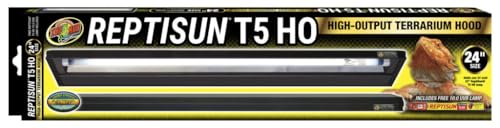
Below: the reliable T5 HO kit we'd default to, a lower-strength option for mounting inside, the Arcadia fixture keepers rank highest, and the meter that tells you your skink is getting the UV. See picks ↓

Blue tongue skink UVB generates a lot of anxious questions, and most of them come down to three things: whether you need it at all, which bulb, and how strong. The community is unusually clear on all three, once you get past the pet-store advice and the cheap bulbs that don't do what their boxes say.
Yes, you need it. A linear T5 tube is the only reliable kind. And the strength you want depends less on which subspecies you have than on how you mount the light.
Do blue tongue skinks need UVB? Yes
Start with the settled part. Blue tongues are diurnal, active in daylight, and like nearly every day-active reptile they use UVB to synthesize vitamin D3, which they need to use calcium and keep their bones healthy. Deprive them of it and the risk is metabolic bone disease, a serious and often irreversible condition. Keepers are blunt that a linear UVB tube is not optional, and that taking a skink outside now and then is a nice supplement but no replacement, because winter, cloud, and glass all get in the way of reliable sun.
There's an honest minority view worth stating plainly. Some experienced breeders keep blue tongues without a UVB bulb, relying on carefully dosed D3 supplements and genuine outdoor sun, and report animals that live full lives; roughly fifteen minutes of direct, unfiltered sunlight is often cited as worth about a day of an artificial bulb. That path works in the right hands. It also demands supplementation discipline and real sun, and it's easy to get wrong. For almost every keeper, a UVB tube is the lower-risk, lower-effort choice, and skinks given a good one are seen basking under it by preference.
Linear T5 HO only, never coil or mercury vapor
Buy a linear T5 HO fluorescent tube. The coil and compact UVB bulbs that screw into a dome are the ones keepers warn about, because their output is unreliable, sometimes higher and sometimes lower than the label, and it drops off so fast that they need replacing every few months. The other type to avoid without special care is a mercury-vapor bulb, which combines heat and UVB in one unit. Keepers report burns from them because they get placed too close, and they should only be used if you own a UV meter to set the distance. The standard safe setup is a separate heat bulb for warmth and a linear T5 tube for UVB, overlapping at the basking spot.
Which strength: mounting decides it
This is the question that confuses everyone, and the answer keepers give is refreshingly consistent. The strength you need depends mostly on how you mount the light. If the fixture sits on top of a mesh screen, use a 10.0, sold by Arcadia as a 12 percent Desert bulb, because the mesh absorbs roughly half the UV on its way through. If you mount the fixture inside the enclosure, closer to the animal with no mesh in between, step down to a 5.0, Arcadia's 6 percent Forest bulb. Distance matters too. The farther the tube sits from the basking surface, the weaker it lands.
Two cautions on strength. A 14 percent bulb exists, but it's meant for species with very high UV demand like uromastyx, and keepers consider it too strong for a blue tongue unless you're fighting an unusually large distance. And subspecies matters less here than the internet implies: an Australian northern and an Indonesian skink both want moderate UVB, and the mounting distance drives your bulb choice far more than which blue tongue you own. When in doubt, a 10.0 over a mesh top or a 6 percent inside, with the basking surface about a foot below the tube, is the safe middle. Keepers run these tubes roughly 8 to 16 inches from the animal, not right on top of it.
The brands that deliver their rated output
Brand matters here, because a bulb that claims a number and doesn't deliver it is worse than useless: it lets you believe your skink is covered when it isn't. The two brands keepers trust to put out their rated UV are Arcadia and Zoo Med ReptiSun. Arcadia is the one keepers rank first, praised for delivering its numbers, running without flicker, and lasting well. ReptiSun is the reliable co-standard, and usually the easier of the two to buy. What keepers steer away from are the cheap combo kits and off-brands, including some sold at prices that are too good to be true, whose real output doesn't match the label.
Placement: over the basking zone, and a gradient
Where you put the tube matters as much as which one you buy. Mount it over the basking area so the UVB and the heat overlap, because a skink loads up on both at once while basking, and UVB off in a cool corner the animal never uses is wasted. Don't light the whole enclosure evenly, either. Run the tube across about half to two-thirds of the length so the skink has a UVB gradient, a strong zone by the basking spot and a shaded end it can retreat to, the same way you'd build a temperature gradient. Keepers commonly zip-tie or wire the fixture to the mesh, or drill small holes in the fixture ends to hang it, and position the basking surface roughly a foot below the tube, around 8 to 16 inches depending on the bulb's strength, never right up against it.
Replace it on a schedule, and verify with a meter
A UVB tube stops delivering useful UV long before it stops making light, so replace it on a schedule, every six to twelve months, and write the date on it. That's the most common way a well-meaning setup quietly fails: the light is on, the skink looks fine, and the UV has faded to nothing. The way to know rather than guess is a Solarmeter 6.5, the handheld UV-index meter keepers name repeatedly. It tells you the real UVI reaching the basking spot, confirms how much a mesh top is stealing, and it's what makes a mercury-vapor bulb safe to position at all. Pair the UVB with the right basking heat and a properly sized enclosure, and the lighting side of blue tongue care is handled.
What we'd buy
A linear T5 HO tube from Arcadia or Zoo Med ReptiSun, never a coil bulb or an unmetered mercury-vapor lamp. Match the strength to your mount: a 10.0 or 12 percent bulb sitting on a mesh top, a 6 percent bulb mounted inside, and skip the 14 percent unless distance forces it. Run the tube over the basking zone across half to two-thirds of the enclosure, replace it every six to twelve months, and check it with a UV meter if you want to be certain. That's the light your skink evolved to live under.
Recommended
Products related to this guide.


What owners say
Real owner reports from the threads and editorial sources we drew on for this guide.
“A linear T5 uvb bulb is mandatory, please don't trust sources that tell you otherwise. Getting some natural sunlight every now and then can be a nice extra bit it's not a substitute for a uvb bulb.”
— r/bluetongueskinks / TheBelovedCountOlaf
“Yes, they need UVB. If they don't they will develop MBD. Now UVB bulbs vs no UVB bulbs is a very divisive topic. There are breeders who never use UVB bulbs and get by giving them D3 supplements and natural sun. Others will argue this is not good for them and that UVB bulbs are necessary. For a happier lizard, I'm one to advocate for a UVB bulb. But as long as you are providing D3 and sunlight, there's evidence through breeder experience they'll still live full lives.”
— r/bluetongueskinks / Yazkin_Yamakala
“They definitely need UVB Without it they will get Metabolic Bone Disorder Taking them outside is not enough”
— r/bluetongueskinks / Relevant_Demand7593
“UVB is a must for all reptiles! Arcadia and zoomed reptisun linear T5 bulbs are the only truly reliable bulbs.”
— r/bluetongueskinks / maligatormom93
“No. non t5 bulbs (coil or otherwise) can have an unreliable output. they can either be higher than they say or lower. they also need to be replaced every 3 months because the uvb gets so low so quick. Also uvb produces a tiny bit of heat bulb or t5 bulb but isn't enough to supplement heating”
— r/bluetongueskinks / Calm-Method6514
“Normally I'd use a 10.0/12% bulb for a 2' tall enclosure if it's sitting on a mesh top, and a 5.0/6% bulb if the light is mounted inside the enclosure. It does also vary a bit based on how far the light is from the basking area.”
— r/bluetongueskinks / ParticularWolf4473
“You want the UVB light to be half the length of the enclosure so in your case the 24 inch one is perfect. The 6 percent strength is adequate only if the light is mounted on the inside (I personally do this with steel wire by wrapping it around each end of the light and slotting it through the holes of the mesh on top of the enclosure to tie it secure). I feel that setup works incredibly well. If you want to place the bulb on top of the mesh you will need 10 percent strength instead because the mesh blocks about half of the light. Arcadia also makes a 12 percent "desert" light instead of forest on the box, which would work too.”
— r/bluetongueskinks / MyTestesAreTesty
“Arcadia, I don't know which one for blue tongued skinks. The t5 fixture and t5 bulbs. They're the best quality and work great, without flickering. The bulbs have lasted longer than expected but you are supposed to replace them every six months for optimal health.”
— r/bluetongueskinks / CD274
“Mercury vapor bulbs are not safe to use unless you have a Solarmeter 6.5 to measure the UVI output. Without it, its often placed too close and we see quite a variety of burns as a result. Its recommended to provide an incandescent or halogen heat bulb, then provide linear UVB overlapping with the basking zone.”
— r/bluetongueskinks / FolkvangExotics
“I would use a UVB meter to make sure your getting enough through the screen, and move the UVB to the heat spot”
— r/bluetongueskinks / Osniffable
“Your uvb needs to be next to your heating, not covering the whole tank, add leds if you just want general lighting”
— r/bluetongueskinks / Own_Handle6629
“15 minutes of direct sunlight a day is equivalent to a full day of the artificial bulb. So if you're doing an outdoor enclosure, you do not also need artificial light”
— r/bluetongueskinks / Daves_Skinks