Best Leopard Gecko Hide: Why You Need Three (Warm, Cool, and Moist)
By ReptileGearLab · Updated August 2026
Quick Take
A leopard gecko needs at least three hides, not one. Warm hide on the warm side of the tank, cool hide at the cool end, and a moist hide (also called a humid hide) somewhere in between, so the gecko can pick its temperature without ever leaving cover. Give it one hide and it has to choose between the temperature it wants and feeling safe. It picks safe, and sits at the wrong temperature.
The moist hide is the one most new keepers get wrong, and it's the one we'd never skip, because it prevents shedding problems. It's any enclosed hide packed with damp sphagnum moss or a wet paper towel, kept humid so your gecko has somewhere soft to loosen old skin off its toes and tail. Keep all of them snug and cave-like rather than big and open. Leopard geckos want to feel the walls, and a hide they barely fit under beats a roomy one they ignore.
Below: the enclosed caves keepers reach for, the dedicated moist hide that fixes bad sheds, and the cheap DIY option worth knowing about. See picks ↓

Most hide advice for leopard geckos is one idea said three times: give the gecko a choice. These are terrestrial, crepuscular lizards that spend the day wedged into a tight space, and a proper setup lets them pick their temperature and their humidity independently, without ever stepping out into the open. Which is why the answer is never a single decorative cave.
Three hides minimum: warm, cool, and moist. Snug rather than spacious, sized to the animal, and spread across the temperature gradient so the gecko never has to trade cover for temperature. Here's how that works in practice, and which hides keepers keep coming back to.
Why a leopard gecko needs three hides, not one
Three is the baseline, placed so the gecko can move between them without leaving cover. A warm hide sits over the warm side of the enclosure, a cool hide sits at the cool end, and a moist hide gives it humid shelter for shedding. A leopard gecko is constantly picking where to be based on temperature and how exposed it feels, and with one hide those two needs collide. With three, it can be warm and hidden, or cool and hidden, or humid and hidden, whenever it wants.
Some keepers run more than three, adding a second cool hide or a hide on both ends. That's fine. Three is the floor, not the ceiling. What doesn't work is treating the humid hide as optional, or counting a food bowl and a plant as hides. A hide is an enclosed space with a roof and close walls that the gecko can back into and feel covered on all sides.
The warm hide and the cool hide
Two of your three are dry hides, and they exist so the gecko can thermoregulate under cover. The warm hide goes on the side of the tank sitting over your heat source, so the gecko can reach belly warmth while staying hidden. The cool hide goes at the opposite end, giving it a way to cool down without breaking cover. Same snug, enclosed style for both. The gecko should feel the walls close around it.
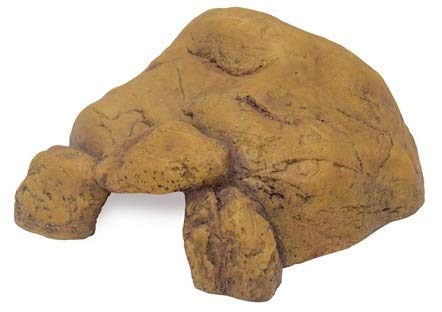
This is where the classic molded-resin caves earn their reputation. The Exo Terra Gecko Cave gets named on the leopard gecko forums more than almost anything else, described as a favorite the gecko uses almost exclusively. A hollow half-log works too, especially pushed against the back glass so it reads as fully enclosed. Fit matters more than looks.
The moist hide is the one that prevents shed problems
The third hide is what separates a clean shed from stuck skin on toes and tail tips. It's any enclosed hide you keep humid inside, usually by packing it with damp sphagnum moss or laying in a wet paper towel and re-dampening it every day or two. When your gecko is about to shed it parks itself in there, and the moisture softens the old skin so it comes off cleanly.
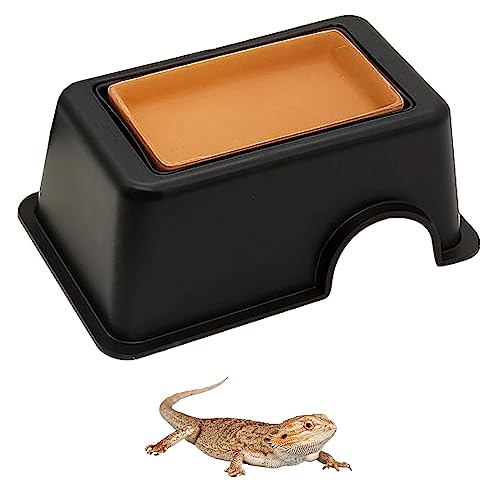
Keepers who fight musty smells are usually leaving the moss too wet or letting it sit dirty. Damp, not soaked. Refresh the moss when it starts to funk. One popular style of dedicated humid hide is a covered box you top up with water from above, which keeps the inside humid without turning the substrate underneath into a swamp.
Snug and enclosed beats big and open
The most common hide mistake is going too big and too open. A leopard gecko isn't looking for a roomy den. It wants pressure on its back and sides, the way a rock crevice would give it. A wide, airy hide with a tall ceiling gets ignored, while a tight cave gets used constantly. One keeper described the Zilla rock lair as a favorite you can't bribe them to leave.
Fit still has to match the animal. A hatchling wants a small hide, and an adult needs a medium or large one it can get its whole body under. The popular caves come in sizes, so buy for the size of your gecko rather than grabbing the first one on the shelf.
The DIY humid hide keepers swear by
You don't have to buy the moist hide at all. The cheapest answer, and one plenty of experienced keepers prefer, is a plastic tub: take a tupperware container or a deli cup, cut a doorway in the side or lid, sand the edges smooth, and pack it with damp sphagnum moss. Solid plastic traps humidity better than most store-bought hides, and it costs close to nothing.
The knock on the tub is that it looks like a tub. If a naturalistic setup matters to you, that's a real reason to buy a molded hide instead, and the picks below cover that. But don't skip a moist hide because the store version is out of stock or over budget, not when a food container and a handful of moss does the same job.
Placement: put the hides across the temperature gradient
Where you put the hides matters as much as which ones you buy. This only works if your enclosure has a temperature gradient, warm at one end and cool at the other, so the three hides give the gecko a real menu. Warm hide over the heat, cool hide at the far end, and the moist hide usually on the warm half, since a little warmth helps it hold humidity and geckos tend to shed on the warm side.
Keep every hide on the ground, backed against glass or clutter so it feels enclosed, and check that the gecko can get fully inside each one. Swapping a hide for an identical dry version won't confuse anyone. Geckos find the humid one by feel when a shed is coming, so a matching spare is fine.
The brands and shapes keepers name
A few names come up over and over. The Exo Terra Gecko Cave and the Zilla rock lair are the two most-cited molded-resin hides, both praised as enclosed enough that geckos basically live in them. For the moist hide, keepers use dedicated humid-hide boxes, half-logs, and the DIY tub. One naming trap worth flagging: REPTI ZOO and Zoo Med are two different companies despite the almost identical name, so if a keeper recommends one, don't assume they mean the other.
The shapes all converge on the same requirements. Enclosed, snug, correctly sized, and at least three of them spread across the gradient. Stuck sheds and hiding out in the open are usually a symptom of one of those being missing.
What we'd buy
Three hides, not one: warm, cool, and moist, all enclosed and snug enough that your gecko feels the walls. Put the moist one on the warm side and keep it packed with damp sphagnum moss or a wet paper towel so sheds come off clean. Match hide size to your gecko, lean toward tight caves over open shelters. If money is tight, a tupperware tub full of moss is a moist hide plenty of experienced keepers use by choice. The picks below are the buyable versions of each.
Recommended
Products related to this guide.



What owners say
Real owner reports from the threads and editorial sources we drew on for this guide.
“These are my fav I have two. They come in a couple different sizes too. I fill the top up with water twice a day, my girl sheds so quick and easy I think these help a lot. I have moss in them too”
— r/leopardgeckos / asscheeks4000
“I have the exo terra cave and it's my girls favorite hide. She uses it almost exclusively.”
— r/leopardgeckos / Pentavious-Jackson
“The ExoTerra cave and zilla rock lair are gecko favorites. You can get both on Amazon.”
— r/leopardgeckos / violetkz
“Enclosed hides are their favorite. It's well recorded on this sub that the Zilla rock lair is a favorite that you can't bribe them to leave. Adults need a medium size tho.”
— r/leopardgeckos / ImAnNPCsoWhat
“I use a hollow half log pushed against the back of the enclosure to make it enclosed, that way the wood can hold moisture, and it looks naturalistic and nice :). My girl really loves it.”
— r/leopardgeckos / GalacticLeopard
“I use this one and just make sure there's damp spaghnum moss inside. Works great!”
— r/leopardgeckos / [deleted]