Arcadia
Arcadia Deep Heat Projector Review + Keeper Verdict
By ReptileGearLab · Updated July 2026

Verdict
Keepers are positive on the Arcadia DHP for the job it's for, and unusually clear about what that job is. Near-unanimously they describe it as a supplemental and nighttime heat source rather than a basking source, because it emits almost no visible light and reptiles orient to brightness when they bask. The most-cited framework, from an exotic-lighting consultant's write-up that keepers pass around, ranks a halogen flood as the best daytime basking source (closest to sun-like energy), a ceramic emitter as ambient heat, and the DHP as a supplementary source whose edge is more penetrating IR-B and downward, object-warming heat. Several keepers flag that DHP marketing about deep skin penetration is repeated hype rather than established fact. Against a plain CHE the verdict is that they are "not that different," and the DHP costs about three times the budget two-pack, so it's an upgrade you buy deliberately rather than by default. Reliability reports are quietly reassuring: multi-year use on a corn snake, success with crested geckos, no pattern of failures. The one strong warning is about misuse, namely making it a bearded dragon's only daytime heat. Our read: buy it for cold-room nights, lightless species and supplemental warmth, pair it with a halogen where basking is needed, and run it on a dimming thermostat as Arcadia recommends.
Read full take ↓Similar heat emitters
The Arcadia Deep Heat Projector is a lightless radiant heater. It warms your animal and the surfaces around it with almost no visible light, at most a faint element glow in a dark room. On Amazon it's listed as the "Deep Heat Emitter," reportedly because trademark reasons keep Arcadia from using the Projector name there, but it's the same bulb keepers mean when they say DHP.
It's a good piece of kit for one job and the wrong buy for another. Keepers go wrong expecting it to be a basking bulb. It can't be one: reptiles pick a basking spot by brightness, and this produces almost none. Sort out that distinction and the rest of the decision is easy.
The short version
What's good:
- Lightless heat, so it warms a cold enclosure overnight or in a dim room without wrecking a day-night cycle.
- Projects heat downward and warms objects, not just air. A plain ceramic emitter does that less well.
- Emits shorter, deeper-penetrating infrared than a ceramic emitter does: a meaningful share of IR-B plus a little IR-A, where a ceramic gives almost entirely surface-level IR-C. Measured output is still majority IR-C, so treat the sun-like marketing with caution.
- Long service records: keepers report years of use on snakes and crested geckos without drama.
What's not:
- Not a basking source. Almost no visible light, so a diurnal basker like a bearded dragon won't recognise it as a basking spot.
- Roughly three times the price of a budget ceramic-emitter two-pack, for a benefit the community calls real but modest.
- Experts rate halogen bulbs as closer to real sunlight, and say some DHP marketing oversells it.
- Has to run on a thermostat, and Arcadia recommends a dimming type. An on/off unit is a stopgap and shortens its life.
Which reptiles and setups it fits
Buy it for:
- Night or supplemental heat in a cold room, where a lightless source holds temperatures up without a glow keeping the animal awake.
- Crepuscular and nocturnal species: crested geckos, many snakes, leopard geckos, none of which need a bright overhead basking zone.
- A setup that already has a proper daytime basking bulb and needs steady background warmth on top of it.
Pick something else if:
- You're heating a bearded dragon or another sun-basking species for the day. That job wants a halogen flood bulb. The DHP can't do it, because it emits almost no light.
- You only need cheap ambient warmth and don't care about directional or IR-B heat. A ceramic emitter does nearly the same thing for less.
- You want the best daytime heat source, full stop. Consensus says that's a halogen.
The specs that matter
- It's lightless. That one property drives everything else, good and bad: no light pollution at night, and no way to signal a basking spot.
- It heats objects, downward. A ceramic emitter mostly heats air. A DHP projects infrared down onto the animal and the surfaces it sits on. That directional, surface-warming behaviour is its functional advantage.
- Wattage to enclosure size. The 50W reviewed here suits a typical enclosure; keepers with large or tall vivaria step up to the 80W. Size it to the space and let the thermostat handle the rest.
How it keeps your animal safe
Same safety story as any heater. It must never run unregulated, and it has to be doing the job you need done.
Regulation first. This runs on a thermostat, always, and Arcadia recommends a dimming thermostat, which eases power up and down instead of slamming it and gives you accurate control of the gradient. The dimming unit in our picks below is the matching controller. Keepers add a nuance worth knowing if you're caught between orders: because the bulb is lightless, cycling it on and off causes no visible flicker, so an on/off stat will still keep the animal safe and won't break the DHP. It just shortens the element's life next to a dimmer. Run one while the right controller is in the post, not as the setup you settle on.
Then the job itself. Community consensus, backed by an exotic-lighting consultant's write-up that keepers pass around, says a lightless heater can't serve as a basking source for a species that needs to bask, because those animals orient to light. Put a DHP over a bearded dragon as its only daytime heat and you can hit the right air temperature while still failing the animal. It won't settle and thermoregulate under a source it can't see. The bulb isn't defective. It's a mismatch, and it's the most common way this product gets misused.
Build quality and living with it
Well-regarded hardware, and the reports turned up no pattern of failures. For a heat source, that quiet is the report you want. The standout long-term note is a keeper running one on a corn snake for two years with no issues and recommending it without reservation; crested gecko keepers describe them working well too. Nobody in the sources is complaining that the thing broke.
Two frictions, both about ownership rather than hardware. Cost is the first: a DHP runs roughly three times the price of a budget ceramic-emitter two-pack, more still per emitter, and one experienced view is that the two are "not that different" apart from the DHP's extra IR-B. You're paying a premium for a real but modest technical edge. The second is the buying journey. Arcadia gear moves heavily through specialist reptile dealers, and keepers often mention buying their DHP from a shop like Pangea rather than a general retailer. If you want the convenience of Amazon, confirm you're getting the genuine Arcadia unit and not a lookalike.
How it compares
- Versus a ceramic heat emitter (CHE): the closest rival, and the value question. A keeper's blunt summary is that the two are "not that different, and produce similar forms of IR, except that DHP produces more IR-B," and that the DHP also projects heat downward onto objects while a CHE mostly heats air. Real advantages, modest ones, and the DHP costs about three times as much as the budget two-pack below. If you just need lightless warmth, a CHE is the budget answer.
- Versus a halogen flood bulb: different jobs, not a competition for daytime heat. Halogens emit visible light and sun-like infrared and are the consensus best basking source; the DHP emits neither. A good beardie setup uses a halogen to bask and a DHP for supplemental or night heat.
- Versus the marketing: keepers who've read the lighting literature point out that a lot of DHP hype about penetrating deeper into the skin is repeated marketing rather than established fact, and that a halogen is closer to real sunlight. Buy it for what it verifiably does, lightless directional heat.
Setting it up
Mount it over the area you want warmed, in a fixture rated for its wattage, and put it on a dimming thermostat, the type Arcadia recommends, with the probe placed to regulate the heat rather than dangling where the animal can block it. The element runs burn-hot. Keep it out of reach or behind a lamp guard.
Then confirm the temperatures with a separate thermometer and a quick surface check, because the controller only knows what its probe reads. A cheap infrared temp gun is the natural companion. If this is your night or supplemental heat and a halogen is doing the daytime basking, our leopard gecko heating guide and reptile thermostat guide cover how the pieces fit together.
Where we land
Bought for the right job, this is a fine bit of kit: reliable, lightless heat that warms your animal and its surroundings, good for cold-room nights and for species that don't need to bask under a bright light. The keepers running them for years have reason to be happy.
Buy it for that job only. It isn't a basking bulb and can't become one, a halogen is the better daytime source, and a plain ceramic emitter does most of what it does for less. Match it to lightless, supplemental, object-warming heat and it earns its price. Put it over a bearded dragon as the basking sun and the animal is the one that pays.
Our Ratings
Overall score
Well-regarded hardware, and the reports show no pattern of failures. For a heat source that quiet is what you want. The standout is a keeper running one on a corn snake for two years with no issues, plus crested gecko owners describing them working well. Nobody in the sources reports a unit that broke. The frictions here are cost and application, not build.
As lightless, object-warming heat it does the job reliably and safely on a thermostat. Arcadia recommends a dimming type, though being lightless it tolerates an on/off controller as a stopgap better than a basking bulb would. Why it isn't higher: the biggest real-world safety failure is misuse. Keepers put it over a basking species as the only daytime heat, where it hits the air temperature but can't signal a basking spot, because it emits almost no light.
The weak axis. It costs roughly three times the price of a budget ceramic-emitter two-pack, and the experienced-keeper view is that the two are "not that different" apart from the DHP's extra IR-B and its downward, object-warming heat. Those advantages are real but modest, so the premium only makes sense if you specifically want directional lightless heat rather than plain ambient warmth.
Arcadia Deep Heat Projector on Amazon.
The Evidence Behind Our Verdict
Keepers are positive on the Arcadia DHP for the job it's for, and unusually clear about what that job is. Near-unanimously they describe it as a supplemental and nighttime heat source rather than a basking source, because it emits almost no visible light and reptiles orient to brightness when they bask. The most-cited framework, from an exotic-lighting consultant's write-up that keepers pass around, ranks a halogen flood as the best daytime basking source (closest to sun-like energy), a ceramic emitter as ambient heat, and the DHP as a supplementary source whose edge is more penetrating IR-B and downward, object-warming heat.
Several keepers flag that DHP marketing about deep skin penetration is repeated hype rather than established fact. Against a plain CHE the verdict is that they are "not that different," and the DHP costs about three times the budget two-pack, so it's an upgrade you buy deliberately rather than by default. Reliability reports are quietly reassuring: multi-year use on a corn snake, success with crested geckos, no pattern of failures.
The one strong warning is about misuse, namely making it a bearded dragon's only daytime heat. Our read: buy it for cold-room nights, lightless species and supplemental warmth, pair it with a halogen where basking is needed, and run it on a dimming thermostat as Arcadia recommends.
Our rating above is our own editorial call. What follows is the field evidence we weighed to reach it: first-hand reports from keepers on Reddit and dedicated reptile forums, which we lean on more than manufacturer-influenced published reviews because unsponsored owners tend to be the more candid signal.
What Reddit Is Saying
“I only have the one but I use a dhp for my corn snake and have had her 2 years on it. As long as theyre getting the right temps for basking and the right humidity theres no reason to change what youre doing.”View thread →
“It's fine. It's not as high quality as a halogen but cresties do well with deep heat projectors Plus your.uvb helps alot”View thread →
“I use DHP for all my snakes as it gets fairly cold in the house at night and it's a bit easier for me.”View thread →
“Deep heat projectors are a lightless heat source that emit mainly Infrared B, they would be ok for night heat but only if your house got below 60. Reptiles recognize basking spots based on brightness which is why a halogen flood lamp is best. Deep heat projectors are good at heating the substrate from above. Ceramic heat emitters heat air and not “things” they also do not project heat downwards.”View thread →
“DHP and CHE are not that different, and produce similar forms of IR, except that DHP produces more IR-B. Neither are as good as a heat lamp.”View thread →
“halogens basically emit closer to sun-like energy than DHPs. A lot of DHP "info" that tends to be spread is more just people repeating marketing (ie the "it penetrates further into their dkin" sort of stuff). Halogens are good for basking, CHEs are good for ambient/supplementary heating, DHPs are best as a supplementary day source.”View thread →
“Yes, it is the same as a DHP due to legal issues they cannot call it a deep heat projector.”View thread →
“To the best of my knowledge, an on/off thermostat will not break a DHP, it’s just not ideal for the equipment.”View thread →
Frequently asked questions
Is the Arcadia Deep Heat Projector worth it?
The weak axis. It costs roughly three times the price of a budget ceramic-emitter two-pack, and the experienced-keeper view is that the two are "not that different" apart from the DHP's extra IR-B and its downward, object-warming heat. Those advantages are real but modest, so the premium only makes sense if you specifically want directional lightless heat rather than plain ambient warmth.
How is the Arcadia Deep Heat Projector built?
Well-regarded hardware, and the reports show no pattern of failures. For a heat source that quiet is what you want. The standout is a keeper running one on a corn snake for two years with no issues, plus crested gecko owners describing them working well.
Is the Arcadia Deep Heat Projector safe to use?
As lightless, object-warming heat it does the job reliably and safely on a thermostat. Arcadia recommends a dimming type, though being lightless it tolerates an on/off controller as a stopgap better than a basking bulb would. Why it isn't higher: the biggest real-world safety failure is misuse.
What do real owners say about the Arcadia Deep Heat Projector?
Keepers are positive on the Arcadia DHP for the job it's for, and unusually clear about what that job is. Near-unanimously they describe it as a supplemental and nighttime heat source rather than a basking source, because it emits almost no visible light and reptiles orient to brightness when they bask. The most-cited framework, from an exotic-lighting consultant's write-up that keepers pass around, ranks a halogen flood as the best daytime basking source (closest to sun-like energy), a ceramic emitter as ambient heat, and the DHP as a supplementary source whose edge is more penetrating IR-B and downward, object-warming heat.
Options Worth Checking Out

Arcadia Optimal Heating Pack (75W Halogen + 50W DHP)
The complete answer for a basking species: this same DHP for night and supplemental heat, plus the halogen flood the DHP can't replace for daytime basking. Heating a bearded dragon? Buy the pairing, not the DHP on its own.

LUCKY HERP 100W Ceramic Heat Emitter (2-Pack)
This budget two-pack costs about a third of a single DHP. Keepers call a CHE and a DHP "not that different" apart from the DHP's extra IR-B and downward heat. If you need ambient night warmth and not directional heat, it does the job for less.
You Might Also Need
Accessories worth grabbing alongside your purchase
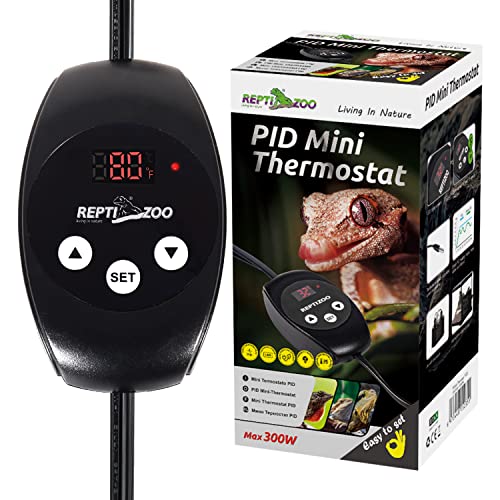
REPTIZOO PID Dimming Thermostat
The controller a DHP needs, and the dimming type is kinder to the bulb than on/off cycling. It's a budget unit keepers are split on, so back it with a failsafe on anything critical. Never run any DHP straight off the wall.

Etekcity Infrared Thermometer 774
Buy it alongside any heat source. It spot-checks the real surface temperature under the DHP, which the thermostat can't know: its probe reads one point. Cheapest way to confirm the enclosure sits where you set it.


