Do Leopard Geckos Need a Heat Mat? What Keepers Use Instead
By ReptileGearLab · Updated August 2026
Quick Take
We wouldn't, at least not as the main heat source. A heat mat is outdated husbandry for a leopard gecko. We'd run an overhead halogen flood bulb on a dimming thermostat instead, which is what most experienced keepers do, and the reason has less to do with safety gadgets than with what the heat does once it reaches your animal.
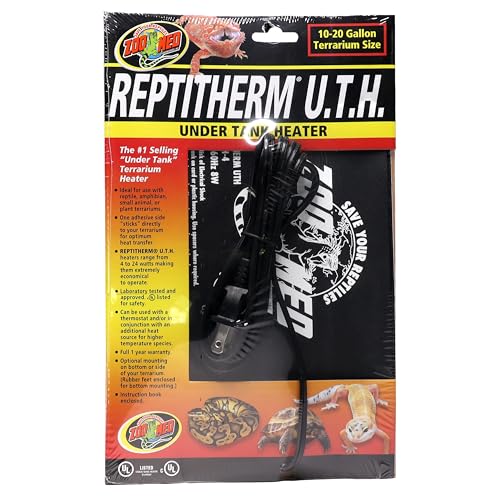
We won't say a mat is banned outright, because that skips a step. If you've got a tall enclosure, a cold room, or a gecko that stays underground all day, keep one as supplemental belly heat, always on a thermostat. Supplemental, though. Never the main event. And no mat of any brand is safe plugged straight into the wall.
Our picks run from the halogen setup that replaces the mat to the dimming thermostat it can't work without: See picks ↓

Search for a heat mat for your leopard gecko and you'll find a tidy shelf of them, most under twenty dollars, all promising the belly heat every caresheet from 2010 told you the animal needs. Then you ask keepers, and the mood changes.
"Heat mats are not recommended for use," is a typical reply. "That's because heat mats suck and shouldn't be used," is a blunter one. Leopard gecko husbandry moved on and the products didn't. The mat still sells because it's cheap and because it's what the caresheet said.
Why keepers moved off heat mats
Two objections, and the second one is what changed the community's mind.
Start with risk. A mat sits under the glass your gecko is lying on, so if it misbehaves, the animal is already in contact with it. Keepers report the failure modes bluntly: burns, and occasionally fires. The subtler complaint is unevenness. A thermostat probe reading one spot tells you nothing about the spot your gecko picked.
The second objection is that the heat itself is the wrong kind. This is the argument that moved the community, and it goes past "mats are dangerous" into "mats don't do the job." Keepers describe overhead halogen and deep heat projectors as producing infrared A and B, the kind of heat that penetrates tissue the way sunlight does, while mats and ceramic emitters produce infrared C, which warms only the surface of the skin. Treat that as keeper consensus rather than a lab result, because that's what it is. It's still the reasoning behind nearly every recommendation you'll get.
The old justification for belly heat was that leopard geckos are nocturnal and don't bask, so warmth had to come from below. Keepers now dispute the premise. They're crepuscular, most active at dawn and dusk, and they do take heat from above.
What they run instead
The replacement is consistent enough to be a recipe. A halogen flood bulb is the first choice, Arcadia's deep heat projector the usual second, either one on a dimming thermostat.
Which of the two you want comes down to light. A halogen gives off visible light and heat together, which suits a normal day cycle. A deep heat projector produces heat with no light, so it's what you want for an albino gecko whose eyes are light sensitive, or for topping up warmth at night without lighting the room.
- Halogen flood bulb: the default daytime heat source, light plus heat.
- Deep heat projector: no visible light, the pick for albinos or night heat.
- Either one: on a dimming thermostat, never straight to the wall.
If you'd rather buy both and stop thinking about it, the Arcadia Optimal Heating Pack bundles a 75W halogen flood and a 50W deep heat projector, which is the pair most keepers end up owning anyway.
The catch: a halogen needs a dimming thermostat
A lot of first upgrades go wrong right here.
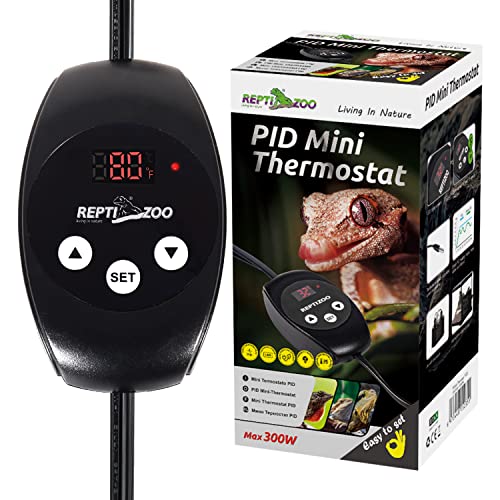
An on/off thermostat, the type that cuts power at your setpoint, is fine for a mat or a ceramic emitter. Put one on a bright basking bulb and it will visibly flicker the light on and off all day. So the Inkbird ITC-308, the unit worth buying for most reptile jobs and the one we recommend in the reptile thermostat guide, is the wrong tool for this particular one. A halogen or a deep heat projector wants a dimming, or proportional, controller that eases the power up and down instead of slamming it on and off.
Keepers state this as a requirement, not a preference. Right bulb, wrong controller is the most common way a half-finished upgrade stalls.
When a heat mat still earns a place
Plenty of experienced keepers do run a mat, and their reasoning holds up.
The clearest case is a tall enclosure. Overhead heat has to cross the height of the tank, and the warmth that lands directly under the bulb doesn't reach a gecko that spends its day underground in a hide. A mat under one end gives the animal somewhere warm to be while it stays hidden. Cold rooms count too, as do geckos that won't come out under a lamp.
Supplemental, not primary. That's the distinction the community keeps drawing, and nobody defending mats argues they should be the only heat source. The argument is that a mat can be a reasonable second heat source on a good thermostat with the probe in the right place.
If you keep the mat, run it like this
None of this is optional and none of it is brand specific.
- On a thermostat. Always.
- Probe taped directly to the surface the mat is heating, touching the glass, not dangling in air.
- Under one end of the enclosure only, so the gecko can always move away from it.
- Sized to the tank, and never buried under thick substrate that traps heat against the glass.
Keepers who trust mats and keepers who don't agree on this list completely. They disagree only about whether a correctly run mat is worth having at all.
Do they need heat at night?
Usually no. This is where people spend money they don't need to spend.
A night time temperature drop is normal and healthy for the species. Keepers put the floor somewhere in the low sixties Fahrenheit. Above that, your gecko needs no supplemental night heat. If your house drops below it, a deep heat projector on a thermostat is the usual answer, since it warms without lighting the enclosure. Leaving a mat running all night, unregulated, to solve a problem you don't have is how this goes wrong.
How to check any of this in five minutes
Your thermostat only knows what its probe is touching, which is not the same as what your gecko is touching. An infrared thermometer settles it. Point it at the basking surface, at the floor of the warm hide, and at the cool end, and within a minute you'll know whether the numbers on the controller mean anything. It's the cheapest piece of gear here.
What we'd buy
Setting up a leopard gecko today: buy the halogen and the dimming thermostat, skip the mat. It costs more than the twelve dollar pad. It's also the setup the people with the most animals and the most years have converged on.
Already own a mat? You don't have to panic and bin it. Put it on a thermostat, demote it to supplemental heat under one end, add overhead heat as the primary source, and nobody in the hobby would argue with what you've got.
Recommended
Products related to this guide.



What owners say
Real owner reports from the threads and editorial sources we drew on for this guide.
“They’re not nocturnal. They’re crepuscular (active primarily during dawn and dusk), and have shown cathemeral behaviour (activity periodically throughout day and night) both in the wild and in captivity. Heat mats are outdated and not a good primary heat source. A halogen flood bulb connected to a dimmer/dimming thermostat is the most natural and beneficial option, Arcadia’s deep heat projector is the second best option. They produce infrared A and B like the sun, heat that penetrates deep into the skin tissue and heats them far more effectively than heat mats. Whereas heat mats only produce IRC, which only heats the surface of their skin.”
— r/reptiles / fionageck
“Heat mats are not recommended for use. Ideally, you want to be using either halogen or incandescent basking lamps paired with linear UVB.”
— r/reptiles / Pentavious-Jackson
“To add, even with a thermostat I don't trust heat pads. Lots of them can develop dead zones or hot spots on them, so depending where your thermostat probe is at in a given time, there might be like burning levels of heat coming from the pad.”
— r/leopardgeckos / TroLLageK
“If you can, swap out the heat mat for a basking lamp, if your gecko is an albino then you can use a dhp instead of a light emitting heat bulb. Heat mats are known to cause burns to your gecko or even start fires”
— r/leopardgeckos / Lowestthree773
“Halogens and DHPs are better because they produce a more beneficial form of heat than heat mats or standard heat bulbs. They actually don’t need heat at night and a nightly temp drop is healthy for them.”
— r/leopardgeckos / Blissful_Altruism
“Most heat mats sold can pose fire and burn risks because the gecko cannot escape the heat it puts out. If something goes wrong, the gecko could cook rather than simply being too warm or too cold.”
— r/reptiles / LemonBoi523
“I prefer overhead heating as UTH is an outdated method. I use a PAR30 halogen from Arcadia with a dimming thermostat.”
— r/reptiles / Ninapants97
“I use an Arcadia Deep Heat Projector on a Dimming thermostat. You need a dimming thermostat for a DHP, and a thermostat for all heat sources, obviously.”
— r/reptiles / _NonExisting_
“Ah ok, you really only need nighttime heat if the tank is dropping below 65F. If not, you don’t need it at all. I would still get the DHP with a thermostat if you do need it though.”
— r/leopardgeckos / LooseGuthix
“The only safe way to do this is either that the gecko can't touch the glass it's adhered to the other side of (like people use them for hermit crabs) or if it's on a thermostat, and the probe must be directly touching the glass and accurately keeping it from getting the glass hot enough to burn the gecko (capping at 95 is a good idea, but nighttime heating should be lower than this).”
— r/leopardgeckos / are-pea
“I use both. My gecko is in a 55 gallon that is 18" tall so the 50watt Arcadia Deep Heat Projector only really warms what is under it directly to about 88F. So I use a Zoo Med heat mat with a thermostat under the tank so he can be warm and hidden if he wants to be.”
— r/reptiles / WerewolfHowls
“Heat mats can be safely used with a high quality thermostat as long as the probe is in the right spot and as long as it’s only a supplemental heat source”
— r/leopardgeckos / Rathoe9070