Reptile Basics
Reptile Basics Radiant Heat Panel Reviews + Verdict
By ReptileGearLab · Updated August 2026

Verdict
The community treats radiant heat panels the way it treats Herpstats: the premium default you name when someone with a solid-topped snake enclosure asks how to heat it, and Reptile Basics is the maker keepers point at, with Vivarium Electronics, Reptile Basics' own in-house panel brand from the same North Carolina manufacturer, named in the same breath. The praise is quiet rather than gushing. Owners describe panels as very reliable, very safe, and easy to use and install, and the threads are dominated by how-to questions rather than complaints. The recurring themes are consistent. A panel needs a solid PVC or wood ceiling, and keepers state flatly that a screen top disqualifies one unless you adapt it, either by replacing the screen with PVC board or with the mounting strips Reptile Basics sells for exactly that. It heats a whole warm side rather than a basking spot, so keepers steer bright-spot baskers to halogens and warn that in a tall enclosure the warmth concentrates near the panel, with a shelf near it running 90F while the floor sits around 80F in one report. Sizing is wattage-to-length, with a keeper-cited rule of thumb starting at 40 watts for a 4 foot enclosure, and keepers note the manufacturer will recommend a wattage if asked. Every mention of running one carries the same requirement: its own thermostat, with proportional units like the Herpstat as the usual pairing, plus a temp gun to verify real temperatures. The knocks are price, the direct-order buying process, a burn-off smell when new, and the mounting care a heavy ceiling-mounted heater deserves, since the one alarming report in the reports are a panel that fell. We read that evidence the way we read the Herpstat evidence: if the enclosure and the budget fit, buy the panel and stop thinking about heat.
Read full take ↓Similar basking bulbs
A radiant heat panel is a flat panel that bolts to the ceiling of an enclosure and radiates gentle, lightless warmth down over the animal and the surfaces below it. Ask snake keepers how to heat a 4x2x2 PVC enclosure and the panel keeps coming up, and the Reptile Basics RHP is the panel the community names first. Owners describe it as reliable, safe, and easy to live with. Threads about heating a ball python or a boa routinely end with someone pointing at it.
There's one catch, the same one we flagged on the Herpstat. Reptile Basics sells direct from reptilebasics.com rather than Amazon, so there's no Prime shipping and you'll order it from them. It's a premium purchase too: the panel costs several times what a screw-in heat bulb does, it has to bolt to a solid ceiling, and it still needs its own thermostat. We're pointing you at it anyway, because it's the right answer for a snake in a solid-topped enclosure, and then giving you the Amazon overhead-heat options keepers buy when a direct-order panel doesn't fit the budget or the enclosure.
The short version
What's good:
- The community default for heating solid-topped PVC snake enclosures, named the way Herpstat gets named for thermostats.
- Warms the whole warm side evenly with zero light, so it never disrupts a day-night cycle.
- Owners call it very reliable, very safe, and easy to use and install.
- The overhead heat keepers switch to after a ceramic emitter wrecks their humidity.
What's not:
- Premium price, sold direct rather than on Amazon, so no Prime and possible stock waits.
- Needs a solid ceiling. Keepers are blunt that a screen top disqualifies a panel unless you adapt it.
- Not a basking source. It raises ambient and surface warmth rather than making a tight, bright hot spot.
- Like every heat source, it has to run on its own thermostat, which adds cost.
Which reptiles and setups it fits
Buy it for:
- A ball python, boa, or other snake in a PVC or wood enclosure with a solid top, where even, lightless warm-side heat is the job.
- A humidity-dependent species whose keeper has already fought the ceramic-emitter dry-out problem. Panels are the overhead heat keepers reach for after that fight.
- Larger arboreal setups, with one caveat keepers stress: in a tall enclosure the panel warms the upper level, so plan a basking shelf near it rather than expecting floor heat, and keep any shelf at least 6 inches from the panel face, the minimum clearance in Reptile Basics' own FAQ.
Pick something else if:
- Your enclosure has a screen top you can't modify. Keepers say plainly that panels are designed to bolt to a solid ceiling, though Reptile Basics does sell mounting strips made for screen tops.
- You keep a high-UVI basker like a bearded dragon. A basking species orients to a bright, hot spot, and a lightless panel can't signal one. That job wants a halogen.
- You need cheap heat now. A ceramic emitter or a deep heat projector ships from Amazon for a fraction of a panel-plus-thermostat order.
The specs that matter
Reptile Basics sells the RHP in a range of wattages and sizes rather than as one unit, so buying it is mostly a sizing decision. Three things keepers consistently flag.
- Size the wattage to the enclosure length. One keeper passes along the sizing rule from the panel brand they use: a 40 watt panel for enclosures up to about 4 feet, stepping up in wattage as the enclosure gets longer. Treat that as a starting point, not gospel. Keepers report panel makers will recommend a wattage for your enclosure if you ask, which is worth doing before you order.
- It mounts to a solid ceiling. The panel screws into PVC or wood. That's the design assumption, and it's why screen-top keepers either replace the screen with a PVC board or buy the mounting strips Reptile Basics sells specifically for screen tops. One keeper whose panel fell learned the hard way that the mounting screws deserve real attention.
- It's a whole-side heater rather than a spot heater. Keepers describe panels as raising the warm side and the surfaces under it instead of producing a focused basking spot. In a tall enclosure the effect concentrates near the panel, with one keeper reporting a shelf near the panel easily reaching 90F while the floor stayed around 80F. Keep any shelf or cage surface at least 6 inches from the panel face, the minimum clearance Reptile Basics publishes.
How it keeps your animal safe
The panel format carries the safety story. No exposed glowing element, no bulb to shatter, and the keepers who own them lean on exactly that word: safe. One boa keeper sums up the ownership experience as very reliable, very safe, and easy to use and install, which is about as good as heat-source praise gets.
The community also pushes back on the idea that a panel's long-wave infrared is somehow lesser heat. One keeper puts it flatly: ectotherms thermoregulate through surface warmth, so surface-level IR-C heating is the mechanism rather than a shortcoming, and a panel avoids the focal burn risk of hotter, brighter sources. We wouldn't go further than the keepers do, but the practical record matches the argument. The reports contain no burn reports from properly mounted panels.
Two rules still apply, and neither is optional. First, every heat source needs its own thermostat, and keepers repeat that for panels as often as for anything else. Reptile Basics itself recommends a proportional thermostat for its panels, such as its own VE-200 or VE-300, and the same keepers who recommend the panel usually recommend a Herpstat to run it. Second, verify real temperatures instead of trusting the dial. One panel owner describes the routine well: a cheap infrared temp gun, regular spot checks, and a thermostat adjustment whenever the readings drift, including seasonally.
Build quality and living with it
Ownership reports are quiet in the way you want heat gear to be quiet. Keepers run panels for years, call them reliable, and don't show up in threads complaining about failures. No moving parts, nothing to burn out on a schedule, and the sentiment shows it.
The friction is around the edges. A brand-new panel gives off a burn-off smell at first, long enough that one keeper was still airing out an enclosure after 24 hours. Unnerving, but manufacturer-acknowledged: Reptile Basics' own FAQ describes a burn-in period of roughly 6 to 24 hours before the smell clears. Mounting deserves care, since a panel is heavy enough that one falling is a scary event, and one keeper reports exactly that after screws they thought were snug let go. Buying it means a direct order from reptilebasics.com, so plan around shipping time rather than a Prime window. One brand note that confuses buyers: Vivarium Electronics is Reptile Basics' own in-house brand, made by the same North Carolina company since the early 2000s, and the panel the community calls the Reptile Basics RHP ships under the Vivarium Electronics name. Keepers note stock at reptilebasics.com cycles back in regularly.
How it compares
- Versus a ceramic heat emitter: the CHE is a screw-in ceramic element that makes an intense point of heat and, by wide keeper consensus, dries the air hard. The panel spreads gentler heat across the whole warm side, and it's what keepers buy after the CHE ruins their humidity. The CHE costs a tenth as much and is fine for arid species, so it survives as the budget answer.
- Versus an Arcadia deep heat projector: the DHP is a screw-in projector that pushes deeper-penetrating infrared down onto a directed area below the fixture. It's the middle option: cheaper than a panel, gentler on humidity than a CHE, but it heats a zone under the bulb rather than a whole warm side, and Arcadia recommends a dimming thermostat for it. For a smaller enclosure it's often enough.
- Versus the generic Amazon panels: Amazon lists flat heat panels from REPTI ZOO, Oiibo, and others at well under half the price, and one of them is our premium pick below for keepers who'd rather buy with Prime than direct-order. Be honest with yourself about the tradeoff. They're a cheaper tier without the track record, and the community reverence attaches to Reptile Basics' panels specifically, sold under its own Vivarium Electronics brand, not to the flat-panel format itself. When Reptile Basics' own Vivarium Electronics panels do surface on Amazon they're the exception, and they sell direct far more reliably than they stay in stock there.
- Versus Pro Products: the other dedicated US panel maker keepers mention, also sold direct. Reports on both are positive, and the choice usually comes down to size availability and lead time rather than a quality gap. The tall-enclosure caveat about floor temperatures applies to any panel, theirs included.
Setting it up
Bolt it to the enclosure ceiling over the warm side, into solid PVC or wood, and check the screws like the panel's fall depends on it. If your top is screen, either replace that section with a PVC board, the route several keepers take, or use the screen-top mounting strips Reptile Basics sells. Run the panel on its own thermostat from day one, with the probe placed to regulate the warm side rather than dangling in open air.
Then verify with instruments. A temp gun to spot-check surfaces, a thermometer on each side, and a look at your hygrometer to confirm the humidity win over a ceramic emitter is real in your setup. Our reptile thermostat guide covers controller choice and probe placement, and panel keepers overwhelmingly point at the Herpstat as the controller worth pairing with a panel this good. Expect a burn-off smell at first and give it time to clear before move-in day.
Our call
For a snake in a solid-topped enclosure, this is the overhead heat you buy once and stop thinking about. Even, lightless warmth across the warm side, no humidity fight, no exposed hot element, and an ownership record that reads as years of quiet reliability. The community treats it as the default for a reason.
The caveats are cost and fit. It's a direct-order premium product that needs a solid ceiling, a thermostat, and careful mounting, and it's the wrong tool for a bright-spot basker. If the budget or the enclosure says no, the Amazon picks below are what keepers use instead.
Our Ratings
Overall score
Panel hardware earns the quiet kind of praise. Keepers call it very reliable, very safe, and easy to use and install, run panels for years, and don't show up complaining about failures. No moving parts, no bulb to burn out. Two living-with-it notes: a burn-off smell when new, which one keeper was still airing out after 24 hours, and mounting that deserves real care, since one keeper's panel fell after screws that seemed snug let go. Both are handling issues, not build flaws.
As even, lightless warm-side heat for snakes in solid-topped enclosures, this is the tool the community measures other overhead heat against. No exposed glowing element, no light to disrupt a day-night cycle, and no ceramic-emitter humidity fight, which is why keepers switch to it. The deductions are fit limits rather than failures. It needs a solid ceiling or Reptile Basics' screen-top mounting strips, it raises a warm side instead of making a bright basking spot, so it's the wrong tool for a high-UVI basker, and in tall enclosures the warmth concentrates near the panel, so plan a shelf. It has to run on its own thermostat, always.
Price is where the panel loses points, and only price. The panel costs several times a ceramic emitter and roughly double a deep heat projector, it's a direct order from reptilebasics.com with no Prime and possible stock waits, and the real setup cost includes a quality thermostat and possibly mounting work. Keepers pay it happily for a snake in a PVC enclosure because the result is set-and-forget. For a small enclosure or a tight budget the value math favors the Amazon alternatives, and plenty of keepers land there.
The Evidence Behind Our Verdict
The community treats radiant heat panels the way it treats Herpstats: the premium default you name when someone with a solid-topped snake enclosure asks how to heat it, and Reptile Basics is the maker keepers point at, with Vivarium Electronics, Reptile Basics' own in-house panel brand from the same North Carolina manufacturer, named in the same breath. The praise is quiet rather than gushing. Owners describe panels as very reliable, very safe, and easy to use and install, and the threads are dominated by how-to questions rather than complaints.
The recurring themes are consistent. A panel needs a solid PVC or wood ceiling, and keepers state flatly that a screen top disqualifies one unless you adapt it, either by replacing the screen with PVC board or with the mounting strips Reptile Basics sells for exactly that. It heats a whole warm side rather than a basking spot, so keepers steer bright-spot baskers to halogens and warn that in a tall enclosure the warmth concentrates near the panel, with a shelf near it running 90F while the floor sits around 80F in one report.
Sizing is wattage-to-length, with a keeper-cited rule of thumb starting at 40 watts for a 4 foot enclosure, and keepers note the manufacturer will recommend a wattage if asked. Every mention of running one carries the same requirement: its own thermostat, with proportional units like the Herpstat as the usual pairing, plus a temp gun to verify real temperatures. The knocks are price, the direct-order buying process, a burn-off smell when new, and the mounting care a heavy ceiling-mounted heater deserves, since the one alarming report in the reports are a panel that fell.
We read that evidence the way we read the Herpstat evidence: if the enclosure and the budget fit, buy the panel and stop thinking about heat.
Our rating above is our own editorial call. What follows is the field evidence we weighed to reach it: first-hand reports from keepers on Reddit and dedicated reptile forums, which we lean on more than manufacturer-influenced published reviews because unsponsored owners tend to be the more candid signal.
What Reddit Is Saying
“I love my Brazilian Rainbow Boa’s RHP. It’s very reliable, very safe, and easy to use and install.”View thread →
“IR-C heating the outer tissues is not a flaw, it’s the mechanism. Ectotherms thermoregulate via surface heating and peripheral circulation, not deep radiative penetration. Radiant heat panels replicate long wave environmental heat and avoid the focal burn risk of IR-A/halogen sources.”View thread →
“if the enclosure has a screen top, you cannot use a radiant heat panel as they are designed to be bolted to a solid enclosure ceiling [pvc or wood].”View thread →
“pretty late to this thread, but reptile basics sells these mounting strips specifically for mounting an rhp to your screen top.”View thread →
“Radiant heat panels are not really designed to produce a basking spot. Maybe build some height there to give it a closer basking spot. Are you using a dimming thermastat?”View thread →
“The RHP won't really reach the floor at that height, you'll need to build a basking shelf or use the shelf already there.”View thread →
“a 40w is generally recommended for up to 4ft (120cm) long, and it goes up in additional 2ft increments per increased RHP wattage (or at least, thats what the brand I use explains).”View thread →
“I would invest in a temp gun, they are like $12 on Amazon! I have a RHP, but I'm not an expert in them so I don't want to give advice about safety. That being said, I use my temp gun and adjust the thermostat connected to the RHP depending on my heat gun readings.”View thread →
“VE is just Reptile Basics to my knowledge and they restock often.”View thread →
“My 120 watt heat panel fell from the top of my 4x2x2. What do I do? Is there a way I can secure it better? Was screwed in snugly, or so I thought.”View thread →
Frequently asked questions
Is the Reptile Basics Radiant Heat Panel worth it?
Price is where the panel loses points, and only price. com with no Prime and possible stock waits, and the real setup cost includes a quality thermostat and possibly mounting work. Keepers pay it happily for a snake in a PVC enclosure because the result is set-and-forget.
How is the Reptile Basics Radiant Heat Panel built?
Panel hardware earns the quiet kind of praise. Keepers call it very reliable, very safe, and easy to use and install, run panels for years, and don't show up complaining about failures. No moving parts, no bulb to burn out.
Is the Reptile Basics Radiant Heat Panel safe to use?
As even, lightless warm-side heat for snakes in solid-topped enclosures, this is the tool the community measures other overhead heat against. No exposed glowing element, no light to disrupt a day-night cycle, and no ceramic-emitter humidity fight, which is why keepers switch to it. The deductions are fit limits rather than failures.
What do real owners say about the Reptile Basics Radiant Heat Panel?
The community treats radiant heat panels the way it treats Herpstats: the premium default you name when someone with a solid-topped snake enclosure asks how to heat it, and Reptile Basics is the maker keepers point at, with Vivarium Electronics, Reptile Basics' own in-house panel brand from the same North Carolina manufacturer, named in the same breath. The praise is quiet rather than gushing. Owners describe panels as very reliable, very safe, and easy to use and install, and the threads are dominated by how-to questions rather than complaints.
Options Worth Checking Out
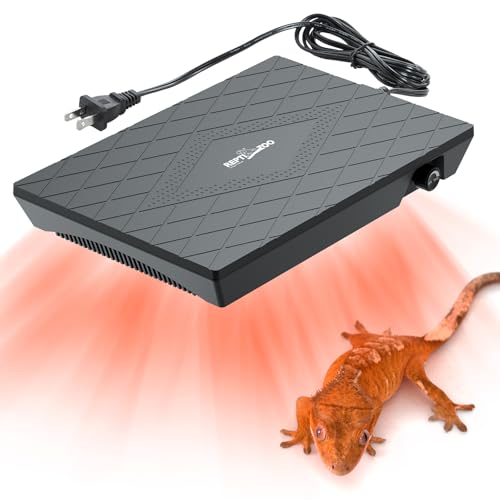
REPTI ZOO Reptile Radiant Heat Panel
The radiant heat panel you can buy on Amazon if you'd rather not direct-order the Reptile Basics RHP. Same overhead, no-light warm-side idea, cheaper, and it ships with Prime. It lacks the RHP's long proven track record, and like any panel it still needs a thermostat.

Arcadia Deep Heat Projector
The screw-in middle path. It projects lightless heat onto a zone under the fixture rather than a whole warm side like a panel, and it's gentler on humidity than a ceramic emitter. Arcadia recommends a dimming thermostat. Good for smaller enclosures.

LUCKY HERP 100W Ceramic Heat Emitter (2-Pack)
The cheap overhead heat, and note it's a 2-pack. A CHE makes an intense point of warmth rather than a panel's even warm side, and keepers warn it dries humidity hard, so it fits arid species only. Needs a ceramic fixture and its own thermostat.