Best Ball Python Heating: Radiant Heat, Heat Mats, and the Thermostat Rule
By ReptileGearLab · Updated August 2026
Quick Take
Heat a ball python from above, not from a bright bulb. The setup most experienced keepers land on is a lightless radiant heat source, a Deep Heat Projector or a ceramic heat emitter, running on a thermostat, giving a warm end around 88 to 92 degrees on the surface of the basking spot and a cool end in the high 70s. Ball pythons are nocturnal ambush predators; they want warmth and a place to hide, not a spotlight.
Two rules are not optional. First, every heat source runs on a thermostat, no exceptions, because an unregulated heat element will cook the animal or start a fire. Second, no colored night bulbs. From there, the exact heat sources and thermostat we recommend are below.

Heating is the most confusing part of setting up a ball python, and the advice online contradicts itself at every turn: heat mat or heat lamp, belly heat or overhead, what temperature, which thermostat, whether you need a night bulb. Most of that confusion comes from applying basking-lizard rules to a nocturnal snake that lives by a different set of them.
Here is what experienced ball python keepers run today: why the community has largely moved from under-tank mats to radiant heat from above, the exact temperatures that keep a snake safe, and the one rule that is never optional.
How ball pythons want their heat
A ball python is a nocturnal, humidity-loving ambush predator from the forest floors and grasslands of West Africa. It spends the day tucked in a burrow and hunts in the dark, so it has no use for a bright basking beam the way a bearded dragon does. What it needs is a warm end it can move into and a cool end it can retreat to, with the air itself warm enough that it never has to choose between the right temperature and staying hidden.
That single fact decides most of the heating debate. Heat that comes with blinding light, or heat that only warms one small patch of floor, fights the way the animal lives. Heat that warms the air from above, quietly, lets the snake thermoregulate on its own terms. So the question is not which brand of bulb; it is where the heat comes from.
Overhead radiant heat is what most keepers land on
Ask a room full of experienced ball python keepers how they heat, and the modern answer is some form of radiant heat from above: a Deep Heat Projector, a ceramic heat emitter, or a flush-mounted radiant heat panel. All three warm the air and surfaces below without producing light, which is exactly right for a nocturnal snake. They create a gentle gradient rather than a harsh hot spot, and because they sit overhead and out of reach, the animal cannot press against the element and burn.
Between them, the Deep Heat Projector is the one we point most keepers to first. It emits the deeper, longer-wavelength infrared that penetrates a little past the skin the way real sunlight does, it runs day and night without any light, and it fits a standard dome-style fixture, so it drops into most setups without new hardware. A ceramic heat emitter does the same lightless job for less money, with a slightly harsher, more surface-level heat. A radiant heat panel is the premium flush-mount option, ideal in a PVC enclosure where it can sit against the ceiling and disappear; we cover one in our radiant heat panel review.
The heat mat question
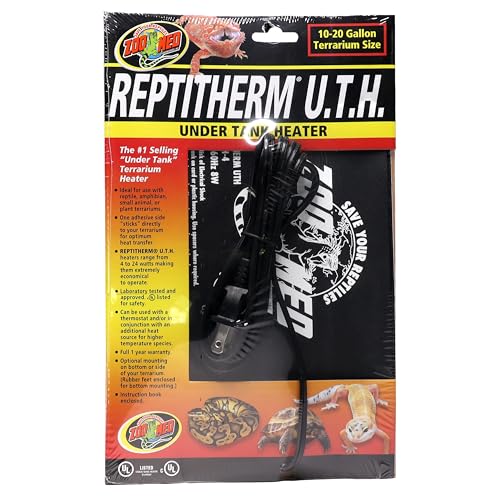
Under-tank heat mats are where new keepers get the most conflicting advice, so here is the straight version. A heat mat provides belly heat through the floor. It helps digestion for a snake resting on it, it produces no light, and it is cheap. Those are real advantages, and plenty of keepers run one successfully, especially in racks and tubs where a mat is the natural fit.
The trade-offs are just as real. A mat warms a small patch of floor, not the air, so in a cool room it cannot hold the ambient temperature a ball python needs, and keepers end up adding an overhead source anyway. It also sits in direct contact with the animal, which makes an unregulated mat the single most common cause of belly burns in this hobby. If you use one, it is a supplement to warm air, never the only heat, and it lives on a thermostat with the probe on the glass above the mat. For most keepers in a glass or PVC tank, overhead radiant heat does the job a mat is trying to do, better.
Skip the bright bulbs and the colored night bulbs
A white basking bulb or halogen flood is the standard for a basking lizard, but for a nocturnal snake the bright light is a downside, not a feature, and it dries the air a ball python works hard to keep humid. Some keepers do run a low halogen for a daytime hot spot, and that is defensible, but it is not the heat we would build a ball python around.
Colored night bulbs, the red and blue ones sold for exactly this animal, are the one thing to actively avoid. Reptiles can see red light, so a red bulb does not give the snake the darkness it needs and disrupts its day-night cycle, and colored bulbs are a weak, uneven heat source on top of it. If your house drops below the low 70s at night, the answer is a lightless heat source, a Deep Heat Projector or ceramic emitter on a thermostat, not a colored bulb.
The one rule nobody breaks: a thermostat
Whatever heat source you choose, it runs on a thermostat. This is not a nice-to-have. Every heating element, mat, emitter, projector, or bulb, runs at full output until something tells it to stop, and full output will push an enclosure past the point that burns or kills a snake, or worse. A thermostat is the cheapest life insurance in the hobby.
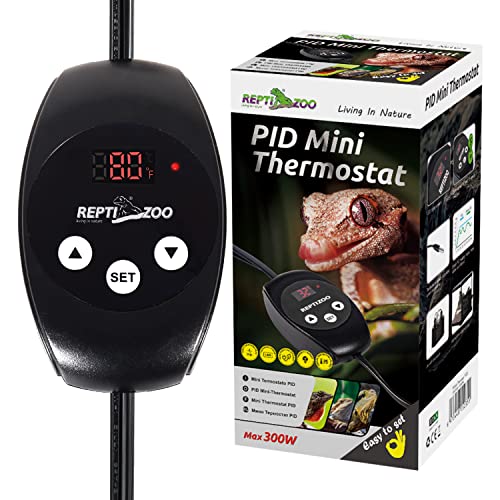
Match the thermostat to the heat source. A simple on-off thermostat is fine for a heat mat or a ceramic emitter. A radiant source like a Deep Heat Projector lasts longer and holds a steadier temperature on a pulse-proportional or dimming thermostat, which eases the element up and down instead of slamming it on and off. Put the probe at the animal's level on the warm side, and verify the reading against a separate thermometer.
The numbers: temperatures, humidity, and how to measure
- Basking surface (warm end): 88 to 92°F. Measure the actual surface of the warm hide or basking spot, and never let it exceed about 95°F. This is a surface reading, which is why you want an infrared temp gun, not just a stick-on dial.
- Cool end: 76 to 80°F. The snake must be able to escape the heat. If the whole tank is warm, there is no gradient and no way to cool down.
- Ambient air: high 70s to low 80s on the warm half. This is the number a heat mat cannot deliver in a cold room, and the reason overhead heat wins.
- Night: down to about 70 to 75°F is fine, and a small drop is natural. Below roughly 70°F, add a lightless heat source. Do not use a colored bulb to hold night heat.
- Humidity: around 60%, rising into the 70s and 80s during a shed. Overhead heat dries the air, so pair it with the right substrate and a hygrometer, and manage humidity deliberately.
Two tools make all of this real: an infrared temp gun for surface temperatures and a hygrometer for humidity. Guessing is how animals get cooked or chilled; measuring is the job.
Our call
Heat from above, with light out of the equation, on a thermostat. For most ball python keepers that means a Deep Heat Projector or a ceramic heat emitter overhead, set to a warm end of 88 to 92 degrees and a cool end in the high 70s, with a lightless source ready if the room gets cold at night. A heat mat can supplement in a rack or a tub, but it is not the heat a ball python in a tank needs, and it is the likeliest thing to burn one.
Spend where it counts: a good thermostat and a way to measure temperatures are worth more than an expensive bulb. Get the heat source overhead, get it regulated, and get a temp gun in your hand, and the rest of ball python keeping gets much easier.
Recommended
Products related to this guide.


What owners say
Real owner reports from the threads and editorial sources we drew on for this guide.
“Heat mats are ineffective at best (especially with the thicker layer of substrate required for bioactive) and dangerous at worst (can cause burns even when regulated by a thermostat).”
— r/ballpython / eomfd2010
“I'd reccomend a deep heat projector instead of a CHE. They're better at keeping ambient temps up and don't dry out the air as much. Just buy one, pop it in and keep it on a dimming thermostat to regulate temps!”
— r/ballpython / Glad_Volume_1141
“Ceramic heat emitters can be on either a pulse-proportional thermostat or a dimming thermostat, but yeah, they have to be on a thermostat! You legit risk burning your house down otherwise 😅”
— r/ballpython / RainyDayBrightNight
“Leave the light off at night, they will be fine. They don’t have to sit at 90F to digest well. If you need night heat (aka if you don’t have about a 75-80 temp range) get a lightless heat source such as a deep heat projector or CHE. Keep the light during the day.”
— r/ballpython / THEJonCabbage
“A dimming thermostat is almost always the superior option as it will not only keep a more consistent temperature, but also extend the life of your heat source since it won't be constantly flicked on/off.”
— r/ballpython / IncompletePenetrance
“With just a heating mat, the air isn't heating up and the air temperature inside the terrarium doesn't rise above 19°C / 66°F.”
— r/ballpython / ShiftGood1602