Best Ball Python Hide (Two Snug Hides Plus Heavy Clutter)
By ReptileGearLab · Updated August 2026
Quick Take
We'd give your ball python at least two snug, enclosed hides, one on the warm side and one on the cool side, and make them identical. Ball pythons are shy, security-driven ambush snakes. They feel safe tucked into a tight, dark cave that touches them on all sides. Two matching hides mean the snake never has to choose between the temperature it needs and the hiding spot it wants, because both sides feel the same.
The mistake we see almost everyone make is buying one big, open, good-looking hide. Too much space inside makes a ball python feel exposed, so it uses the hide less. Snug beats spacious, and a plain dark half-log works better than a roomy decorative cave. Then add heavy clutter, meaning fake plants, cork, and foliage packed across the floor, so the snake has cover the whole way between hides and will come out to explore.
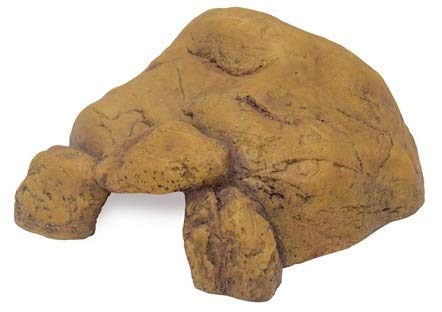
Below is what we'd buy: the cheap snug hide to get two of, a bigger cave for a large adult, and the cork and clutter that makes a bare enclosure usable: See picks ↓

A ball python spends most of its life pretending it doesn't exist. In the wild it wedges into abandoned rodent burrows and termite mounds, sitting coiled and hidden for days, waiting to ambush prey that wanders past. That one behavior drives how you set up its hides. It doesn't want a bedroom. It wants a crack in the earth that closes around it.
Keepers have a well-worn answer here, and most of it runs against what the pet-store shelf is selling you.
Why a ball python wants to feel hidden, not housed
Ball pythons are among the shyest snakes in the hobby. A hide isn't decoration and it isn't a comfort item. It's what keeps the animal out of low-grade stress. A snake that can't get fully out of sight tends to sit tense, refuse food, and glass-surf looking for cover. Give it a proper hide and a lot of that behavior disappears.
Bigger and nicer is worse, which catches people out. A large, airy, open hide leaves the snake as exposed as no hide at all, because a ball python wants to feel pressure on its back and sides. Aim for a tight, dark space it has to squeeze into, where it can coil up and touch every wall.
Two hides, one warm and one cool
The community floor is two hides, not one. Your enclosure has a warm side and a cool side, and your snake needs to move between them to thermoregulate. With only one hide, the snake has to choose between being at the right temperature and being hidden. Most pick hidden, which strands them on the wrong side of the gradient just to feel safe.
One hide on the warm side and one on the cool side removes the conflict. Make them identical, too. If one is a cozy cave and the other a flimsy open dish, the snake favors the nicer one regardless of temperature and you're back where you started. Two matching hides let it pick a side purely on warmth, because security is a constant. Keepers are blunt that two is the minimum and more is better.
Snug beats spacious, and beats pretty
Ignore the ones that look like a cool little cave you'd want on a shelf. Look for the smallest hide your snake can still fully coil inside. It should feel almost too tight to you: the snake should have to nudge in, and once settled its body should be brushing the roof and walls. A single small entrance and a low ceiling beats a wide-mouthed grotto every time.
Which is why the cheapest options often win. A plain half-log or a dark plastic tub with a hole cut in it is snugger, darker, and more secure than most of the expensive naturalistic caves, which tend to be built for the keeper's eye rather than the snake's nerves. Buy a nice-looking hide if you want one. Just check that it's snug first and handsome second.
Add a third humid hide for shedding
Beyond the warm and cool hides, a lot of keepers add a third: a humid hide. It's an enclosed hide packed with damp sphagnum moss, giving the snake a pocket of high humidity to sit in when it's going into shed. You get cleaner, complete sheds, and none of the frustrating stuck-shed problems that come from a dry spot. Optional, cheap, high value. A plastic tub with moss inside will do it.
Clutter matters as much as the hides
Two great hides in an otherwise empty enclosure still leave you a scared snake, because the open floor between them is a no-go zone. Ball pythons won't cross wide bare space, so they stay pinned in whichever hide they started in. Heavy clutter fixes that. Pack the enclosure with fake plants, cork bark, branches, and foliage so there's cover the whole way across. Now the snake can move between hides, hunt, and explore while staying concealed, which is the enrichment a shy snake needs. Clutter is what makes the rest of the ball python enclosure usable. Pair it with the right ball python substrate and the setup is basically done.
DIY hides work, and keepers love them
Some of the best ball python hides cost almost nothing and aren't sold as reptile products at all. Keepers rave about hides made from dark plastic storage tubs, food containers, plant-pot saucers, dollar-store bowls, and even egg cartons, each with a hole cut in the side and the edges smoothed so they can't snag a scale. Snug, dark, cheap, easy to replace or bleach. Same goes for clutter: fake plants from a craft or home store work exactly like the reptile-branded ones.
Two safety notes if you go that route. Melt or sand any cut edge so it's smooth, and wash cheap fake plants before use, since some of the dollar-store ones bleed dye. If you'd rather buy something snake-safe out of the box, the picks below are the buyable versions of the same idea, with no prep needed.
What we'd do
Buy or build at least two snug, enclosed, identical hides, put one on the warm side and one on the cool side, and add a third humid hide for shedding. Keep every hide tight and dark rather than big and pretty. Then bury the space between them in clutter so your snake feels safe crossing the whole enclosure. A naturally nervous animal in that setup settles in fast, eats reliably, and uses the space you gave it.
Recommended
Products related to this guide.



What owners say
Real owner reports from the threads and editorial sources we drew on for this guide.
“Maybe add "minimum" in front of the 2 hides part to let people know they can add as many as they want but have 2 at the very least. The more the better for these shy creatures”
— r/ballpython / Suds08
“imo there should be also a third "humid" hide (for example containing moss or something else that is safe and retrains humidity well), to help with shedding”
— r/ballpython / AlpakaMati
“you can make super cheap hides with plastic bowls and such from any dollar tree, you can also get a bunch of plastic plants from dollar tree too to add more clutter”
— r/ballpython / n3utr4lm1lkh0t3l
“This is what I do. I made a hide out of a Ziploc food container. Cut the hole out of the side, melted the edges with a lighter so they won't hurt him, and then added some sphagnum as well. It goes in upside down and he used it regularly”
— r/ballpython / Kemetic_5486
“You can make cheap hides from black plastic storage containers. Or even large bowls. Then you melt a door hole in the side. Get some vines and fake foliage from micheals. Ikea is a good place for cheap fake plants too. Branches, plastic step stools, and computer riser or tabletop kitchen shelves can make for good climbing opportunities.”
— r/ballpython / eyelovekittens666
“Snake will feel less exposed until you can add fake plants and clutter and get a more permanent surround.”
— r/ballpython / grouchypant
“For make shift hides we use old egg cartons and cut a big enough hole for the snek to get through. It’s a good cheap option”
— r/ballpython / Alternative-Monk4723
“My first hides were just dark plastic bowls and planters that I got from dollar tree that I cut and made sure there wasn't any sharp edges. My snakes loved them.”
— r/ballpython / Shot_Alternative_762
“I use dollar tree plants also, but I would make sure to wash them with soapy water and rinse them off really good (or let them soak in soapy water and rinse). I've found that some of the plants there have dye that leaches out of them.”
— r/ballpython / Edumacated1980
“As far as hides go, you can make one out of just about anything. Just make sure it's sized appropriately.”
— r/ballpython / No-Independent-660