Do Bearded Dragons Need a Heat Mat? A Straight Answer
By ReptileGearLab · Updated October 2026
Quick Take
No. A bearded dragon does not need a heat mat, and in most setups you should not use one. Bearded dragons are heliothermic, meaning they bask in sun from above, and their bodies are built to read heat on their backs rather than their bellies. A mat warms a patch of floor they cannot properly sense, which makes it both ineffective as a heat source and a genuine burn risk.
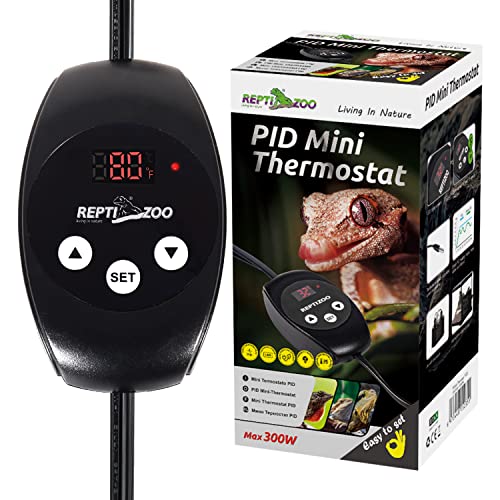
What a bearded dragon needs is overhead basking heat: a white halogen flood over one end, on a thermostat, giving a basking surface of about 105 to 115 degrees for an adult, with a cool end near 76. The bulb, thermostat, and temp gun we recommend are below. Skip heat rocks entirely.

Walk into most pet stores and you will be sold an under-tank heat mat with a bearded dragon setup. It is one of the most common pieces of bad advice in the hobby, and it comes from applying snake logic to a lizard that lives a completely different way.
Here is the straight answer, the biology behind it, and what to run instead.
Why the belly is the wrong place to heat a bearded dragon
Bearded dragons come from arid Australia, where the heat that matters comes from the sun overhead. They evolved to flatten out and angle their backs toward it, and they have a parietal eye on top of the head that helps them judge light and heat from above. Nothing about that animal is designed to take warmth through the floor.
This is not just a preference, it is a safety problem. A dragon senses heat poorly through its stomach, so it will happily lie on a surface that is cooking it without moving away. That is the mechanism behind the belly burns keepers report from mats and, far worse, from heat rocks. A snake that burrows and presses its belly to warm ground is a different animal with a different set of instincts; a bearded dragon is not.
The injury deserves specifics, because "burn" undersells it. A dragon lying on a hot panel does not flinch away the way a mammal would, so the heat keeps going in at one spot for as long as the animal stays there. Keepers who have been through it describe damage below the skin as well as on it, and a faulty pad can kill. The bill that follows runs into the hundreds before you get to whether the animal recovers. That is the asymmetry here: the upside of an under-tank mat is a few degrees of belly warmth the dragon cannot use, and the downside is open-ended.
The other half of the problem: a mat cannot do the job anyway
Even setting the burn risk aside, a mat does not deliver what a bearded dragon needs. These are big, heat-hungry lizards that require a properly hot basking surface and a warm ambient gradient across a four-foot enclosure. A mat warms a small patch of glass; it cannot lift the air temperature of a large tank, and it cannot produce a basking spot anywhere near the surface temperature a dragon needs to digest properly.
So the mat fails twice: it is the wrong kind of heat, and there is not enough of it. Keepers who try to run a dragon on belly heat usually end up with an animal that is sluggish, off its food, and not digesting, because the enclosure never gets warm enough at the top where it matters.
What to use instead: overhead basking heat
The correct setup is a white basking bulb, a halogen flood, mounted over one end of the enclosure and controlled by a dimming thermostat. Halogen gives the bright, focused, sun-like heat a basking lizard is built to use, and it warms a surface rather than just the air. Pair it with the UVB a dragon must have, which is a separate fixture and a separate job, covered in our bearded dragon UVB guide. Our full bulb comparison is in the halogen basking bulb guide.
Mount the bulb outside the enclosure or inside a proper cage guard so the dragon cannot touch it, and put the thermostat probe at basking height. Then verify the actual basking surface with an infrared temp gun, because the number that matters is the temperature of the rock or branch the animal lies on, not the air near the bulb.
The numbers that matter
- Basking surface, adult: about 105 to 115 degrees. Measured on the basking platform itself with an infrared temp gun. Juveniles sit toward the upper end of that band, because they are growing and digesting more.
- Cool end: around 76 degrees. The gradient is the point. A dragon has to be able to walk away from the heat, so the far end of a four-foot enclosure should be substantially cooler than the basking end.
- Warm-side ambient: mid 80s. The air under and around the basking zone, not the surface temperature, so the animal is warm while it moves around rather than only when parked.
- Night: a drop into the 60s is healthy, lights off. A natural cooldown is healthy and no heat is needed in most homes. Dragons are the cold-hardiest of the common pet species and handle dips to about 50 degrees without harm, so we would only add night heat if the enclosure consistently sits below about 55.
Where a mat does belong
None of this makes the mat in your drawer worthless, and we would rather say so than sound dogmatic about it. An under-tank mat is a sensible tool for a snake that spends its day pressed into a warm hide, which is why plenty of keepers run one on a ball python and would not put one under a bearded dragon. The difference is the animal, not the hardware: a burrowing snake takes heat through its belly as a matter of course, and a basking lizard evolved to take it from above.
The other honest use is warming a tub of feeder insects. Dubia roaches and crickets keep and breed better warm, a mat against the side of a bin does that job well, and nothing in the bin is going to lie on it long enough to be hurt. If you already own a mat, that is where we would put it.
Keepers who want some belly warmth without the burn risk sometimes mount the pad on the outside wall of the enclosure rather than underneath it, which at least stops the animal resting directly on the hot surface. We would still not count it as heating: it will not move ambient temperature meaningfully, and the basking lamp is doing the actual work.
The one case people ask about: a cold room at night
Keepers who keep nights cool also report their dragons sleep better for it, and an enclosure held warm around the clock gives the animal no real night at all. So the cooldown is not a compromise you are tolerating; it is part of the setup working.
If your house consistently drops below the mid 50s overnight, the answer is still not a heat mat. Use a lightless overhead source, a ceramic heat emitter or a deep heat projector on a thermostat, which warms the air without producing light that would wreck the day-night cycle. Never use a colored night bulb, and never leave the white basking bulb running after dark.
And a hard no on heat rocks, which combine every problem a mat has with a hot surface the animal wraps itself around. They cause some of the worst burns in the hobby and there is no setup where they are the right answer.
Our call
Skip the heat mat. A bearded dragon takes its heat from above, cannot reliably feel heat through its belly, and needs a hot basking surface plus a warm gradient that a mat cannot produce. Put a halogen flood over one end on a dimming thermostat, aim for about 105 to 115 degrees on the basking surface for an adult and a cool end near 76, and check it with a temp gun rather than trusting the box.
If a store hands you a mat with a dragon, that is a sign to buy the heating elsewhere. The mat is not a cheaper way to do the same job; it is a different, worse job with a burn risk attached.
Recommended
Products related to this guide.



What owners say
Real owner reports from the threads and editorial sources we drew on for this guide.
“Heat mats aren't a good choice for supplemental heating as dragons can't feel heat well from below and can easily become burned. A better and widely used option would be a ceramic heat emitter.”
— r/BeardedDragons / Jenxadactyl
“Bearded dragons don't need a heat pad thats more Leopold gecko bc the heat on the belly helps digest the food”
— r/BeardedDragons / Mort_is_a_sussyboi
“The heat pads won't transfer enough heat and they can be a fire hazard. Go with a heating lamp, or more than one if the temp's not where it needs to be. Make sure your beardie's got a ladder so they can get as close as they want for comfort and get away from the heat if they need to cool down.”
— r/BeardedDragons / PracticalDadAdvice
“Just in case anyone sees this comment in the future. About once a month in clinic I see humans who have fallen asleep on heating pads and burned themselves. If big brained endothermic humans have trouble with this, be careful with the lizards.”
— r/BeardedDragons / Calm_Firefighter_552
“I was always told that the need a warm spot to help digest bugs in their belly’s... and he literally goes to the heat mat after he eats every time and flattens out.”
— r/BeardedDragons / kiannarebecca
“Cause of death was burned skin and internal burns too, resulting from a faulty heating pad mounted under the tank. Got another beardie and converted to a ceramic heat emitter with a digital temperature controller. Will never use another heating pad under a tank.”
— r/BeardedDragons / Odonata_Arthropoda
“I wouldn't use a heating pad. Bearded dragons can't gauge the temperature underneath them, and they could become way too hot without knowing it. All you really need is a basking light on one side, and a UV light on the other sides and a place for him to hide from the light if he needs to.”
— r/BeardedDragons / thebrainstorm215
“I'm using an under tank heat mat for a ball python, I've never used a heat mat for my bearded dragon.”
— r/BeardedDragons / thespacenoodles
“Heat pad won't give the ambient heat they need. But keep in mind they don't need to be completely warm at night. It's totally fine to have them get decently cold, it helps them sleep better. Staying too warm disrupts their ability to sleep and makes them burn more energy than they need to.”
— r/BeardedDragons / Protect_Wild_Bees
“We have a heat pad with a sticky side on the side of his tank so he can't get burned, it also doubles as a heat mat for his bugs I put against it to keep them warm as well.”
— r/BeardedDragons / Griffynni