Exo Terra
Exo Terra Gecko Cave Review
By ReptileGearLab · Updated October 2026

Verdict
Keeper sentiment on this hide is warm and specific, and it splits into one thing it does well and two things buyers learn afterwards. On the first, the reports are consistent: geckos take to it, with owners describing it as the hide their animal loves and the main one it uses. That is the hardest thing for a hide to achieve and it is why this one keeps getting named. The first thing buyers learn afterwards is sizing. A keeper who likes the hide and recommends it still reports needing a bigger one, and attaches the general rule to upgrade as the animal grows rather than treating the first cave as permanent. Another keeper shopping for an adult judged the smaller options plainly inadequate and moved to the large Exo Terra cave. Keepers cross-shopping in a store describe the Exo Terra medium as looking close in size to the small version of the rival Zilla rock lair rather than its medium, and the medium Zilla is the size adult keepers generally say fits, which is a consistent enough direction to plan around even though it is an eyeball comparison rather than a measurement. The second thing is humidity. The most useful single number comes from an owner who likes the product and reports it holding above sixty percent for a day or two before it needs spritzing again, which makes it adequate as a humid hide rather than good, and puts the burden on the moss routine. Mold is the failure that follows a skipped routine, and the keepers who deal with it are specific about cause and cure: poor ventilation, water pooling in the base and water sprayed directly into the shell are what produce it, and scrubbing with diluted vinegar at every moss change, replacing the moss more often, and soaking replacement moss in boiling water before squeezing it out are what prevent it. A final practical note that recurs: retail pricing varies wildly, with one keeper finding it in a chain store for a fifth of what another store was asking.
Read full take ↓Similar hides
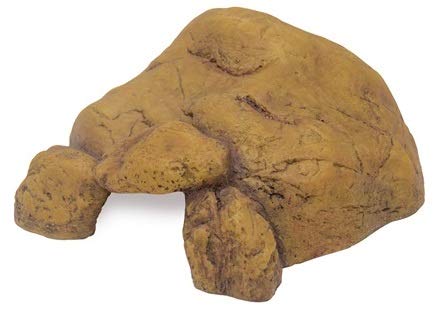
The Exo Terra Gecko Cave is the molded-resin hide that comes up more than any other when leopard gecko keepers talk about what their animal sleeps in. It is a hollow resin shell made to look like rock, with a lift-off top so you can see inside and clean it, and it is usually bought to be the humid hide.
It earns the reputation. The thing nobody tells you at the register is that the size you are shown is the size your gecko grows out of.
What it is, and why geckos use it
A molded resin cave is a cave with one entrance and solid walls, which is the shape a leopard gecko wants. These are crepuscular, burrow-sheltering animals that feel safe when their back and sides are touching something, so an enclosed shell beats an open arch or a half log by a wide margin. That is the whole design argument, and it is why keepers report the same behavior over and over: the gecko picks this hide and then more or less lives in it.
We say the same thing in our leopard gecko hide guide, where this is the hide we point most keepers at first. What this review adds is the part you only learn after buying one.
The lift-off top is the genuinely good design decision. A one-piece cave has to be tipped over to inspect or clean, which means disturbing an animal that may be mid-shed. Being able to take the roof off and look, or lift it out and scrub it, turns the maintenance from an event into a thirty-second job. If you are using it as a humid hide, and most buyers are, that matters more than it sounds, because the maintenance is the part people skip.
The size problem: buy for the adult, not the gecko you have
This is the finding that should change what you put in the cart. The sizing on this line runs small against what an adult leopard gecko needs, and the medium that looks generous next to a hatchling is the one keepers come back to replace. A keeper who likes the hide and recommends it still reports needing a bigger one, and pairs that with the general advice to upgrade hides as the animal grows rather than assuming the first purchase is permanent. Another, shopping for an adult, went to the large Exo Terra cave after finding the smaller options plainly inadequate.
Set that against the competing product keepers cross-shop, the Zilla rock lair. The medium Zilla is the size adult keepers consistently say fits, while the small Zilla is widely called too tiny for a grown leopard gecko. Keepers comparing the two in the store report the Exo Terra medium looking about the size of the small Zilla rather than the medium. We would not treat that as a precise measurement, but the direction is consistent enough to plan around.
So the practical rule: if your gecko is an adult or close to it, skip the medium. Buy the large Exo Terra cave, or buy the medium Zilla. If you are setting up for a hatchling and you want the smaller one now, accept that you are buying twice.
One nuance worth keeping, because it cuts the other way. Leopard geckos like to be tight, and a hide the keeper thinks is too snug is often exactly what the animal wants. Keepers regularly report geckos preferring a smaller hide over a roomier one they were just given. The test is not whether it looks cramped to you; it is whether the animal can turn around and whether it is going in. If your adult is wedged in and using it daily, it is not too small.
As a humid hide, it is only adequate
Most people buy this to be the moist hide, so this is the axis that decides the score. It works, and it does not work as well as the marketing around resin caves implies. The honest number from a keeper who likes the product: packed with damp moss it holds above sixty percent for a day or two, then wants spritzing again.
That is a real finding rather than a complaint. It means this is not a hide you set up and forget, and it means the humidity you measured on the day you built it is not the humidity your gecko gets on day three. A solid-walled resin shell with a removable lid is less sealed than it looks, and the moisture leaves through the gap.
Two things follow. First, put it on a schedule instead of waiting to notice, the same discipline that fixes a stuck shed. Second, judge it by the animal rather than the room gauge: a humid hide is a pocket, and a probe sitting out on the substrate will never tell you what is happening inside it.
Mold, and the maintenance that prevents it
The failure mode in humid use is mold, and it is a maintenance problem rather than a product defect. The pattern keepers describe is consistent: moss left in too long, water pooling in the base, and water sprayed straight into a closed shell with nowhere to go. The fixes are equally consistent and worth doing before you have a problem.
- Change the moss on a schedule. Mold shows up when moss sits for a long time rather than at some fixed humidity, so replacing it regularly is the single most effective habit.
- Scrub the shell when you change it. A soak and scrub with diluted vinegar when the moss comes out is what keepers who stay ahead of it describe doing.
- Do not let water pool in the base. Standing water in a closed resin cave is the condition mold wants. Damp moss, not a puddle.
- Do not spray directly into the hide. Re-wet the moss itself, ideally out of the cave, rather than misting into the shell and leaving the excess sitting there.
One keeper adds a step worth copying if you want to be thorough: soak the replacement moss in boiling water, let it cool, and squeeze the excess out before it goes in. That gives you damp rather than sodden, which is the state you want, and it kills whatever came in the bag.
Versus the alternatives
The Zilla rock lair is the direct rival and the one keepers name in the same breath, with a reputation as the hide reptiles pick. On the evidence we have, the two are close on whether the animal uses them, and the Zilla has the edge on sizing because its medium is the size adults fit. If you are choosing cold between them for a grown leopard gecko, the medium Zilla is the safer first purchase.
A plain plastic tub with a hole cut in the lid does the humid-hide job for a fraction of the money and is easier to sanitize, and we are not going to pretend otherwise. What you give up is appearance and a bit of stability. If the enclosure is a display and you care how it looks, the resin cave earns the difference. If you want the best shed-prevention per dollar, a tub and a handful of sphagnum moss is the honest answer.
Retail pricing on this line swings hard, and keepers report finding the same cave at a small fraction of the pet-store asking price when it goes on sale. It is worth checking more than one seller before paying full price for a piece of molded resin.
Our verdict
A good hide that does the main job, which is getting the gecko to use it. The lift-off top is a real advantage over one-piece caves, and the reports of geckos adopting it as their primary hide are consistent enough that we would still recommend it.
It loses points for two things that are both knowable before you buy. The sizing runs small for adults, so the medium becomes a replacement purchase rather than a lifetime one. And as a humid hide it is adequate rather than good, holding moisture about a day, which puts the burden on your moss routine and punishes you with mold if you skip it.
Buy the size up, keep a moss schedule, and it is one of the better hides you can put in a leopard gecko enclosure. Buy the medium for an adult and you will be buying again.
Our Ratings
Overall score
Molded resin with a removable top, and nothing in the keeper reports suggests it cracks, chips or wears out. It is sturdy, it sits flat, and the two-piece design is better thought through than the one-piece caves it competes with. The mark against it is a design decision rather than a defect: the size steps are pitched small for the species it is named after, so a keeper buying for an adult leopard gecko is choosing between a shell their animal will outgrow and a different product line. A hide that needs replacing because the animal grew is a build-quality question as much as a sizing one.
A hide's safety contribution is whether the animal uses it, because an unused humid hide prevents nothing, and on that count this performs: keepers consistently report geckos adopting it as their primary hide. The lift-off top helps too, since inspecting a shedding animal without tipping its shelter over is a real welfare difference. It is held down by two reported problems rather than theoretical ones. Mold develops in humid use when moss is left too long or water pools in the base, which is preventable but routinely is not prevented. And the sizing runs small for adults, which matters here because a hide an adult cannot settle in is a hide it stops using.
Mid-priced for a piece of molded resin, and the honest comparison is a plastic tub with a hole cut in the lid, which does the humid-hide job for a fraction of the money and sanitizes more easily. What the cave buys is appearance and the lift-off lid. The score is held at seven by the replacement problem: buying the medium for a growing gecko means buying twice, which roughly doubles the real cost of the decision. Retail pricing on this line also swings hard between sellers and sales, with keepers reporting the same cave at a small fraction of the pet-store asking price, so paying full price is usually avoidable.
Exo Terra Gecko Cave on Amazon.
The Evidence Behind Our Verdict
Keeper sentiment on this hide is warm and specific, and it splits into one thing it does well and two things buyers learn afterwards. On the first, the reports are consistent: geckos take to it, with owners describing it as the hide their animal loves and the main one it uses. That is the hardest thing for a hide to achieve and it is why this one keeps getting named.
The first thing buyers learn afterwards is sizing. A keeper who likes the hide and recommends it still reports needing a bigger one, and attaches the general rule to upgrade as the animal grows rather than treating the first cave as permanent. Another keeper shopping for an adult judged the smaller options plainly inadequate and moved to the large Exo Terra cave.
Keepers cross-shopping in a store describe the Exo Terra medium as looking close in size to the small version of the rival Zilla rock lair rather than its medium, and the medium Zilla is the size adult keepers generally say fits, which is a consistent enough direction to plan around even though it is an eyeball comparison rather than a measurement. The second thing is humidity. The most useful single number comes from an owner who likes the product and reports it holding above sixty percent for a day or two before it needs spritzing again, which makes it adequate as a humid hide rather than good, and puts the burden on the moss routine.
Mold is the failure that follows a skipped routine, and the keepers who deal with it are specific about cause and cure: poor ventilation, water pooling in the base and water sprayed directly into the shell are what produce it, and scrubbing with diluted vinegar at every moss change, replacing the moss more often, and soaking replacement moss in boiling water before squeezing it out are what prevent it. A final practical note that recurs: retail pricing varies wildly, with one keeper finding it in a chain store for a fifth of what another store was asking.
Our rating above is our own editorial call. What follows is the field evidence we weighed to reach it: first-hand reports from keepers on Reddit and dedicated reptile forums, which we lean on more than manufacturer-influenced published reviews because unsponsored owners tend to be the more candid signal.
What Reddit Is Saying
“My guy LOVES this hide. It's only okay at retaining humidity, it stays above 60% for like a day or two then needs a good spritzing.”View thread →
“Very good mine loves his but I do need a bigger one always make sure you upgrade when they grow and give them decent room and check the moss just in case it mold and change the moss and sanitize the hide”View thread →
“My girl loves her one the main one she uses since I brought it and got lucky I was gonna get one in a shop but they want £25 mrs went in to a big name pet shop on same one £5 on sale”View thread →
“Wash (soak for a bit and scrub) it with vinegar/water when replacing moss inside and do it more frequently. Mold is a problem only when moss sits for looong time.”View thread →
“means your hide has poor ventilation. never let water pool in the hide and don't spray water directly into it.”View thread →
“Way too small. I got a Large Exo Terra Cave thingy for like $40 CAD at PetSmart. They always have deals going on.”View thread →
Frequently asked questions
Is the Exo Terra Gecko Cave worth it?
Mid-priced for a piece of molded resin, and the honest comparison is a plastic tub with a hole cut in the lid, which does the humid-hide job for a fraction of the money and sanitizes more easily. What the cave buys is appearance and the lift-off lid. The score is held at seven by the replacement problem: buying the medium for a growing gecko means buying twice, which roughly doubles the real cost of the decision.
How is the Exo Terra Gecko Cave built?
Molded resin with a removable top, and nothing in the keeper reports suggests it cracks, chips or wears out. It is sturdy, it sits flat, and the two-piece design is better thought through than the one-piece caves it competes with. The mark against it is a design decision rather than a defect: the size steps are pitched small for the species it is named after, so a keeper buying for an adult leopard gecko is choosing between a shell their animal will outgrow and a different product line.
Is the Exo Terra Gecko Cave safe to use?
A hide's safety contribution is whether the animal uses it, because an unused humid hide prevents nothing, and on that count this performs: keepers consistently report geckos adopting it as their primary hide. The lift-off top helps too, since inspecting a shedding animal without tipping its shelter over is a real welfare difference. It is held down by two reported problems rather than theoretical ones.
What do real owners say about the Exo Terra Gecko Cave?
Keeper sentiment on this hide is warm and specific, and it splits into one thing it does well and two things buyers learn afterwards. On the first, the reports are consistent: geckos take to it, with owners describing it as the hide their animal loves and the main one it uses. That is the hardest thing for a hide to achieve and it is why this one keeps getting named.
Options Worth Checking Out

Exo Terra Gecko Cave, Large
The same cave in the size an adult leopard gecko actually needs, and the one to buy if your gecko is grown. Identical design and the same lift-off top, so you get the easy cleaning without the replacement purchase a few months later.

Zilla Rock Lair, Medium
The rival keepers cross-shop, and the safer first buy for a full-grown leopard gecko, because its medium is the size adult keepers consistently say fits. Same idea and the same job, with the sizing pitched at an adult rather than a juvenile.
Exo Terra Reptile Cave, X-Large
The step up in the same family, a different mold from the Gecko Cave and roomy enough for an adult that has outgrown the smaller shell. This is where keepers who bought the medium first tend to end up.
You Might Also Need
Accessories worth grabbing alongside your purchase


