Zoo Med
Zoo Med Wipe Out 1 Reviews + The No-Mix Disinfectant Verdict
By ReptileGearLab · Updated October 2026

Verdict
The community signal on Wipe Out 1 is thin but consistent, and it splits along the two things a cage cleaner gets judged on: disinfecting and actual cleaning. On disinfecting, keepers are calm and quietly positive. One who picked a bottle up locally just says it works good, another used it to reset a used tank with a simple five-minute spray, wipe, and air-out routine, and no keeper we found reports it failing to sanitize an enclosure. That is the product doing its core job without drama, and it is why it stays a pet-store default. The criticism is specific and useful rather than a knock on whether it disinfects. The clearest limitation keepers name is cleaning power: one finds urate stains do not always come off and that it does not always do the trick, and another, cleaning cage mats, reports poop that keeps sticking even after scrubbing. Read together, that is the honest ceiling of the product, it is a disinfectant, not a descaler or a degreaser, so stuck-on waste and hard mineral stains still need a scrape or a soak by hand before the disinfectant step. The other theme sits underneath the threads rather than in a single quote: it is a ready-to-use bottle, which is its whole appeal and also its cost problem, since you pay a premium per use for convenience that a diluted concentrate like chlorhexidine or F10 undercuts heavily. The verdict the small sample points to is that Wipe Out is a convenient, dependable routine disinfectant whose two real weaknesses are that it will not scrub baked-on messes for you and that it is expensive per clean next to mixing your own.
Read full take ↓Similar feeding supplies
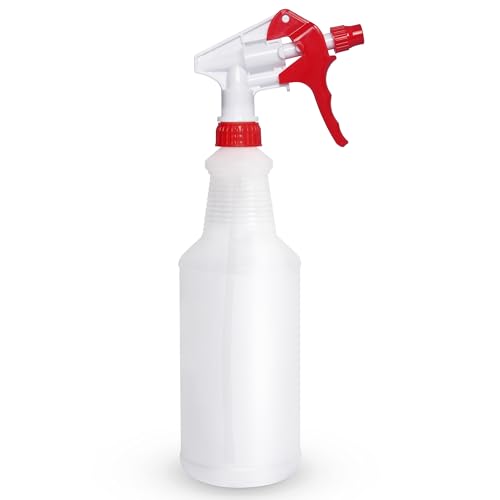
Zoo Med Wipe Out 1 is a disinfectant cleaner, not a food or a supplement, even though it lands in the same shelf of consumables as the calcium tubs and the water conditioners. It is a ready-to-use terrarium disinfectant: it comes in its own 32 ounce spray bottle, and you spray it onto an empty enclosure, decor, or a water bowl, let it sit a few minutes, then wipe it away and let it air out. There is no diluting and no mixing, which is the whole pitch. It belongs to the quaternary ammonium family of surface disinfectants, the same broad class as many household and veterinary cleaners, and what that class does and does not cover is the honest heart of this review.
The appeal is convenience, plainly. You do not measure anything, you do not keep a jug of concentrate and a sprayer, and you do not have to get a dilution ratio right. It is reptile-branded and aimed squarely at terrariums, so a beginner can grab one bottle, spray, wait, wipe, and be done, on glass, on decor, and on the things an animal touches. For a lot of keepers that no-thought routine is exactly what they want out of a cage cleaner, and it is why Wipe Out has been a pet-store shelf staple for years.
So this review is not "does Wipe Out disinfect," because for routine disinfection it does the job and the keepers who use it are calm about it. The honest questions are two. First, it is a disinfectant, not a heavy-duty cleaner: keepers report it does not always lift baked-on waste or urate stains, which is a real limitation on a reptile enclosure. Second, you pay a steep premium per use for the ready-to-use convenience, because a bottle you spray straight is far more expensive per clean than diluting your own chlorhexidine or F10. This covers both sides plainly so you can decide whether the no-mix convenience is worth the price for your setup.
The short version
What's good:
- Ready to use, no mixing. It sprays straight from the bottle at label strength, so there is no dilution math and no concentrate-and-sprayer to keep. That is the entire reason to buy it.
- Consistent dose. Because it is pre-mixed, you cannot get the ratio wrong the way you can when you dilute your own concentrate, which is one fewer thing for a beginner to mess up.
- Reptile-branded and terrarium-aimed, widely stocked in pet stores, and simple enough that keepers describe a boring spray, sit, wipe, air routine that just works for routine disinfection.
- Works the same on glass, decor, and water bowls, so one bottle covers the whole enclosure for regular upkeep.
What's not:
- It is a disinfectant, not a scrubbing cleaner. Keepers report it does not reliably lift dried-on poop or urate stains, so you still scrape or soak stuck-on messes yourself.
- Expensive per use. A ready-to-use bottle costs far more per clean than a gallon of chlorhexidine concentrate or a bottle of F10 that you dilute, because you are paying for water and convenience.
- Like any quaternary ammonium cleaner, its kill range is a routine-disinfection range, not a kill-everything one, so it is the wrong tool for a known outbreak of something the class does not cover.
- It is a clean-it-empty product: the label has you remove the animal and decor, let it work, then wipe and air the enclosure before anything goes back in.
Which reptiles and setups it fits
Buy it for:
- Routine enclosure, decor, and bowl disinfection across almost any species, where you want the simplest possible cage cleaner and are happy to pay for the no-mix convenience.
- Beginners who want zero dilution risk. Because it is ready to use, there is no ratio to get wrong, so it is a safe default for someone who does not want to learn how to mix a concentrate.
- A used tank you are resetting before a new animal moves in. Keepers reach for it exactly here: spray the empty enclosure, let it sit, wipe, and air it out before the reptile goes in, which is the textbook way to use any surface disinfectant.
Pick something else if:
- You clean a lot and want the cost down. A gallon of chlorhexidine or a bottle of F10 diluted down costs a fraction per clean. If you are wiping enclosures weekly across several animals, the ready-to-use premium adds up fast and a concentrate wins on economics.
- Your problem is baked-on waste or urate stains, not germs. Keepers say plainly that Wipe Out does not always lift stuck-on poop or hard-water urate stains. For that you need a scrape, a soak, or a stronger scrubbing cleaner, not more disinfectant.
- You are disinfecting after a confirmed disease. For a known pathogen a quaternary ammonium cleaner may not cover, keepers step up to F10's broader labeled spectrum or a dilute bleach solution. This is a routine cleaner, not an outbreak tool.
The specs that matter
There is not much of a spec sheet on a bottle of ready-to-use cleaner, but a few things about what it is and how it works actually drive the buying decision.
- It is ready to use, not a concentrate. This is the single most important thing about it and the reason to buy it: you spray it at full label strength straight from the 32 ounce bottle. There is no diluting, no measuring, and no separate sprayer to keep, which is the exact opposite of the chlorhexidine and F10 route.
- It is a quaternary ammonium disinfectant. That class is a well-established routine surface disinfectant, generally effective against many bacteria, and against enveloped viruses as a class property. Wipe Out's own label, though, claims only bacteria (it names Salmonella and Pseudomonas), so treat the virus coverage as a general quat trait rather than a label promise. It is not a kill-everything product. Quats are not reliably sporicidal and are weaker against some non-enveloped viruses. We are reporting what the class and the label say here, not making our own microbiology claims. Buy it as a routine disinfectant, and step up when the situation calls for it.
- You are paying for convenience, not concentration. Because most of a ready-to-use bottle is water, the cost per actual clean is high next to a concentrate you dilute. That is not a defect, it is the trade: you buy Wipe Out to skip the mixing, and you pay a premium per use to do it.
How it keeps your animal safe
The safety model for Wipe Out is the standard one for any surface disinfectant, and the label spells it out: this is a clean-it-empty product. You take the animal out, remove the decor, spray the surfaces, let the product do its work, then wipe it away and let the enclosure air and dry before the reptile goes back in. Keepers describe exactly that routine. One who cleaned a used tank before a new animal moved in let it sit for five minutes, wiped, and let it air, which is the whole protocol in one sentence.
The ready-to-use format carries a genuine, quiet safety advantage over the concentrates it competes with. When you dilute your own chlorhexidine or F10, you can mix it too strong, and a harsh over-concentrated solution is exactly what you do not want on surfaces an animal will later contact. Wipe Out removes that failure mode: it sprays at a fixed label strength every time, so there is no ratio to get wrong. For a nervous beginner, that consistency is worth something real.
Two honest cautions, both about using it the way the label intends rather than any fault in the product. First, it is meant for an empty enclosure, not to be sprayed around an occupied tank, so plan to move the animal out until everything is wiped and aired. Second, the wipe-and-air step matters: it is a disinfectant you clear off surfaces, not a residue you leave behind, so give it time to dry fully before the reptile returns. Done that way, keepers treat it as a low-drama, low-risk part of a cleaning routine, and we found no reports of animals harmed by it used as directed.
Build quality and living with it
For a cleaner, "build quality" means does it do its job consistently, and here the split is clear and worth being honest about. As a disinfectant, keepers are quietly satisfied: one who picked a bottle up locally simply says it "works good," and no keeper we found reports it failing to sanitize. As a general cleaner, though, it runs into a real ceiling. Two keepers flag the same limitation from different angles: one finds that urate stains do not always come off and that it "doesn't always seem to do the trick," and another, cleaning cage mats, reports poop that keeps sticking even after scrubbing.
That is the practical thing to understand about living with it: Wipe Out is a disinfectant, not a descaler or a degreaser. It kills germs and deodorizes, but it will not dissolve baked-on waste or lift hard mineral stains for you, and on reptile carpet or a heavily soiled substrate tray you will still be scraping and soaking by hand. None of that is a quality defect so much as a category limit, but it is the gap between what the bottle promises (a clean, disinfected enclosure) and what a stuck-on mess actually requires (mechanical scrubbing first, disinfectant second).
The other ongoing reality is cost. A ready-to-use spray bottle is convenient precisely because it is mostly water, and that is also why the cost per clean is high. There are no defects driving the value question; it is simple arithmetic. If you clean rarely, the premium is easy to swallow for the no-mix convenience. If you clean often, the same money buys a gallon of concentrate that cleans many times over, which is the honest reason value-minded keepers drift toward diluting their own.
How it compares
- Versus chlorhexidine (the cheap DIY concentrate): chlorhexidine is a 2% solution you dilute, and a single gallon diluted down costs almost nothing per clean, which is why keepers default to it for routine cleaning. It is a different chemistry, a biguanide antiseptic rather than a quat, and it needs mixing and a sprayer. Wipe Out's edge is the no-mix convenience; chlorhexidine's edge is cost per use. If mixing is a chore you will actually skip, the ready-to-use bottle wins because it gets used.
- Versus F10 (the vet-grade concentrate): F10 is the step up in labeled kill range, a veterinary disinfectant keepers reach for when routine cleaning is not enough, and it too is a concentrate you dilute, so a small bottle lasts and the cost per clean is low. For everyday disinfection plenty of keepers consider a ready-to-use cleaner enough; for a heavier job or a broader spectrum, F10 is the common upgrade. The trade, again, is that F10 means measuring and mixing.
- Versus bleach: the heavy hammer and a different tool entirely. A dilute bleach solution covers a very broad range, including things a quat cleaner may miss, which is why it comes up for serious disinfection. But it is harsh, must be rinsed and aired thoroughly, and is exactly the fumes-and-rinse ritual many keepers buy a gentle ready-to-use product to avoid. Wipe Out is the low-fuss everyday option; bleach is the occasional serious one.
- Versus plain soap and water: the free option for the part Wipe Out is weak at. For lifting stuck-on poop and grime, mechanical scrubbing with soap and water, plus a soak for baked-on messes, does the physical cleaning a disinfectant will not. The honest workflow many keepers land on is to scrub the mess off first, then disinfect the clean surface. Wipe Out is the disinfect step, not the scrub step.
- Not the same as the other Zoo Med Wipe Out products or a generic wipe: worth clearing up because the names blur. Wipe Out 1 is the terrarium disinfectant covered here. It is not a hand cleaner, not a glass polish, and not a pack of pre-moistened wipes. If you want to disinfect an enclosure, decor, and bowls with a ready-to-use spray, this is the bottle.
The comparison that decides this purchase is cost per clean, and it is not close. Wipe Out arrives ready to use, which is the convenience you are paying for, but the vet-grade options keepers reach for instead are concentrates: chlorhexidine or F10 diluted from a jug into your own spray bottle. Keepers running that route describe a jug lasting more or less indefinitely at a couple of tablespoons per gallon, against a spray bottle of ready-mixed product that empties over a few deep cleans. If you keep one animal and clean occasionally, the convenience wins. If you keep several, the concentrate is the obvious answer and we would not pretend otherwise.
On the cheap end, be clear about what you are buying. Vinegar and water is a genuinely popular routine and a perfectly good cleaner, and keepers who soak decor in it and wipe enclosures down get clean enclosures. But cleaning and disinfecting are different jobs: vinegar is a mild acid, not a registered disinfectant, so it is the right tool for routine upkeep and the wrong one after illness, a quarantine break, or a second-hand enclosure of unknown history. Diluted bleach does disinfect and keepers use it, with the hard requirement that it is rinsed and aired out fully, because the residue is the hazard rather than the bleach itself.
Whatever you use, the discipline that matters is what happens after. Keepers converge on the same two rules: nothing goes back until it is dry, and nothing goes back while it still smells of anything. One keeper describes waiting about a day and then applying a plain smell test before refilling, which is a better standard than any label instruction because it accounts for your ventilation rather than a lab's. If the fumes during cleaning are strong enough to notice, move the animal to another room rather than working around it.
Setting it up
Using it is deliberately simple, which is the entire point. Move the animal out, take out the decor, and spray Wipe Out onto the empty enclosure surfaces, the decor, and the water bowl. Let it sit for a few minutes so it can do its work, then wipe it away. Keepers describe a five-minute dwell, a wipe, and an air-out, and following the label's own directions is the right call since the product is already mixed to strength for you.
The finishing steps are where safety lives. Wipe the surfaces clean, and let everything air and dry fully before the reptile goes back in, because the goal is to clear the disinfectant off the surfaces the animal will contact, not to leave it sitting there. If the enclosure has baked-on waste or urate stains, do the mechanical work first: scrape or soak the stuck-on mess, then disinfect the cleaned surface, because Wipe Out disinfects but will not scrub for you. Done that way it is about as low-effort as enclosure cleaning gets, which is exactly what you are paying the convenience premium for.
The bottom line
Zoo Med Wipe Out 1 is a good, convenient ready-to-use disinfectant with an honest and narrow set of tradeoffs. For routine cage, decor, and bowl cleaning it sprays straight from the bottle with no mixing, gives you a consistent dose every time, and gets the disinfecting done without fuss. If you want the simplest possible cage cleaner and do not mind paying for that simplicity, it is an easy pick and the pet-store popularity is not an accident.
Just be clear about the two things it is not. It is not a heavy-duty cleaner: keepers report it will not always lift stuck-on poop or urate stains, so keep scrubbing and soaking in your routine for baked-on messes. And it is not the cheap option: you pay a real premium per use for the ready-to-use convenience, and if you clean often, diluting your own chlorhexidine or F10 does the same routine job for a fraction of the cost. Buy Wipe Out for the no-mix ease, keep something stronger on hand for a serious disinfection job, and reach for a scrub, not more spray, when the mess is dried on.
Our Ratings
Overall score
For a cleaner, quality means does it do its job consistently, and the honest answer splits. As a disinfectant it satisfies: a keeper says it "works good" and no keeper we found reports it failing to sanitize. As a general cleaner it hits a ceiling, because two keepers flag the same limit, urate stains that will not come off and poop that keeps sticking after scrubbing. That is a category limit rather than a defect: Wipe Out disinfects and deodorizes but is not a descaler or a degreaser, so baked-on messes still need a scrape or a soak by hand.
Safety follows the standard surface-disinfectant model and the ready-to-use format helps: because it sprays at a fixed label strength, there is no dilution to get wrong, unlike the concentrates it competes with, which is a real edge for a beginner. The label protocol keepers describe is clean-it-empty, spray, let it sit a few minutes, wipe, and air fully before the animal returns. Efficacy is the routine range of the quaternary ammonium class, effective for everyday disinfection per the label but not a kill-everything product, which is why the score is solid rather than high.
Value is the weak axis and where it docks. A ready-to-use bottle is mostly water, so the cost per actual clean is high next to a concentrate you dilute. There are no defects driving this, just arithmetic: the same money that buys one Wipe Out bottle buys a gallon of chlorhexidine or a bottle of F10 that cleans many times over. If you clean rarely, the no-mix premium is easy to accept; if you clean often, diluting your own does the same routine job for a fraction of the price, which is the honest reason value-minded keepers move off it.
Zoo Med Wipe Out 1 on Amazon.
The Evidence Behind Our Verdict
The community signal on Wipe Out 1 is thin but consistent, and it splits along the two things a cage cleaner gets judged on: disinfecting and actual cleaning. On disinfecting, keepers are calm and quietly positive. One who picked a bottle up locally just says it works good, another used it to reset a used tank with a simple five-minute spray, wipe, and air-out routine, and no keeper we found reports it failing to sanitize an enclosure.
That is the product doing its core job without drama, and it is why it stays a pet-store default. The criticism is specific and useful rather than a knock on whether it disinfects. The clearest limitation keepers name is cleaning power: one finds urate stains do not always come off and that it does not always do the trick, and another, cleaning cage mats, reports poop that keeps sticking even after scrubbing.
Read together, that is the honest ceiling of the product, it is a disinfectant, not a descaler or a degreaser, so stuck-on waste and hard mineral stains still need a scrape or a soak by hand before the disinfectant step. The other theme sits underneath the threads rather than in a single quote: it is a ready-to-use bottle, which is its whole appeal and also its cost problem, since you pay a premium per use for convenience that a diluted concentrate like chlorhexidine or F10 undercuts heavily. The verdict the small sample points to is that Wipe Out is a convenient, dependable routine disinfectant whose two real weaknesses are that it will not scrub baked-on messes for you and that it is expensive per clean next to mixing your own.
Our rating above is our own editorial call. What follows is the field evidence we weighed to reach it: first-hand reports from keepers on Reddit and dedicated reptile forums, which we lean on more than manufacturer-influenced published reviews because unsponsored owners tend to be the more candid signal.
What Reddit Is Saying
“I picked up one from zoo med I think it's called wipe out. Got it at Pisces in Calgary works good.”View thread →
“I just bought a tank off marketplace place that was used for a royal python. I used the zoo med wipe out (let sit for 5 min, wipe and let air)”View thread →
“F10 or chlorhexidine are veterinarian level safe disinfectants. I use chlorhexidine, personally. You can get a gallon of it from Amazon for $13. Mix 2 tablespoons with a gallon of water and then fill up a spray bottle. That gallon lasts forever.”View thread →
“I always clean with vinegar & water. I spray the enclosures and doors, but tend to soak everything else in a tub while I'm wiping the enclosure down. I wait for it all to dry then put in new substrate.”View thread →
“Also if you want a disinfectant there is F10sc veterinary grade disinfectant. I have used it many times with no issues.”View thread →
“I use diluted bleach. You gotta let it air out after but it's what we use on fish tank equipment too.”View thread →
“If the fumes are really strong you could definitely move them into a separate container in a less chemical heavy room like a closet while you work and wait for it to air out.”View thread →
“I have Zoo Med Wipe Out and use bedding, but sometimes he gets under and his urates stain the tank. Wipe Out doesn't always seem to do the trick.”View thread →
“I have mats on the bottom of the cage and her poop keep sticking. Even after I scrub it. ( I am currently using wipe out 1 from zoo med)”View thread →
Frequently asked questions
Is the Zoo Med Wipe Out 1 worth it?
Value is the weak axis and where it docks. A ready-to-use bottle is mostly water, so the cost per actual clean is high next to a concentrate you dilute. There are no defects driving this, just arithmetic: the same money that buys one Wipe Out bottle buys a gallon of chlorhexidine or a bottle of F10 that cleans many times over.
How is the Zoo Med Wipe Out 1 built?
For a cleaner, quality means does it do its job consistently, and the honest answer splits. As a disinfectant it satisfies: a keeper says it "works good" and no keeper we found reports it failing to sanitize. As a general cleaner it hits a ceiling, because two keepers flag the same limit, urate stains that will not come off and poop that keeps sticking after scrubbing.
Is the Zoo Med Wipe Out 1 safe to use?
Safety follows the standard surface-disinfectant model and the ready-to-use format helps: because it sprays at a fixed label strength, there is no dilution to get wrong, unlike the concentrates it competes with, which is a real edge for a beginner. The label protocol keepers describe is clean-it-empty, spray, let it sit a few minutes, wipe, and air fully before the animal returns. Efficacy is the routine range of the quaternary ammonium class, effective for everyday disinfection per the label but not a kill-everything product, which is why the score is solid rather than high.
What do real owners say about the Zoo Med Wipe Out 1?
The community signal on Wipe Out 1 is thin but consistent, and it splits along the two things a cage cleaner gets judged on: disinfecting and actual cleaning. On disinfecting, keepers are calm and quietly positive. One who picked a bottle up locally just says it works good, another used it to reset a used tank with a simple five-minute spray, wipe, and air-out routine, and no keeper we found reports it failing to sanitize an enclosure.
Options Worth Checking Out

F10 SCXD Veterinary Disinfectant
The vet-grade step up in kill range. F10 is a concentrate you dilute, so a small bottle lasts, and its label claims a broader spectrum than a ready-to-use quat cleaner covers. You trade Wipe Out's no-mix convenience for more reach.

Durvet Chlorhexidine 2% Solution
The cheapest route per clean if you do not mind mixing. A gallon of 2% concentrate diluted down costs almost nothing per use and is gentle on animals when wiped and dried, which is why keepers default to it for routine enclosure cleaning.
You Might Also Need
Accessories worth grabbing alongside your purchase