Zoo Med
Zoo Med ReptiSun T5 HO Reviews + Verdict for Bearded Dragons
By ReptileGearLab · Updated August 2026

Verdict
Sentiment is positive but narrow, and it's about the shortlist more than this specific bulb. The line keepers repeat is that hundreds of UVB brands exist and only Arcadia and the Zoo Med ReptiSun, with Exo Terra's T5 now joining them, have been tested enough to trust. The standard advice is the ReptiSun T5 HO 10.0 or the Arcadia 12%, with everything else described as too weak to bother with. The criticism is specific rather than general: a batch of tubes reported 1-2mm too long to fit their own fixture, one long-term keeper who finds Exo Terra more reliable on both output and life, and an ongoing argument about Poland-manufactured tubes where the alarm rests on the colour of the light and the rebuttal is that nobody involved owns a meter. Underneath all of it, keepers are trusting a brand rather than verifying an output, because the instrument that would settle it costs many times the bulb. In our view that trade is worth taking here, since this is one of the few tubes where the brand reputation has evidence behind it.
Read full take ↓Similar UVB bulbs
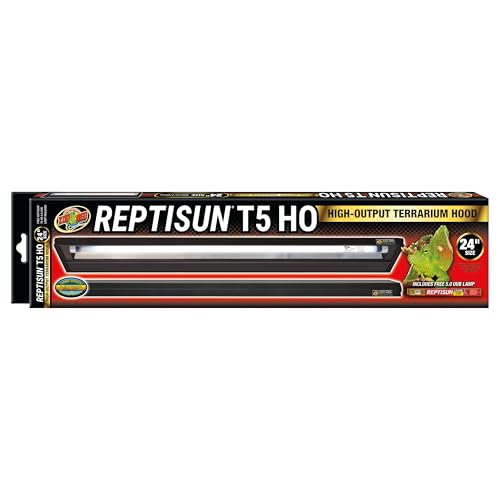
Hundreds of UVB bulbs are on sale. Keepers who take bearded dragons seriously buy from about two brands. The Zoo Med ReptiSun T5 HO is one of them, and that is most of the case for it: the category is full of products that don't do the job, and this one does it reliably.
The size reviewed here is a 34 inch, 39 watt linear fluorescent tube in the 10.0 grade, the desert-species output. It runs about a third the price of a complete Arcadia kit. It's also sitting in the middle of an unresolved argument among keepers about where the tubes are now being made.
The short version
What's good:
- One of only two or three brands keepers trust to deliver the UV index a bearded dragon needs.
- A T5 HO tube holds usable output about twice as long as the older T8, so you replace it yearly instead of every six months.
- Cheap for what it does, and easy to find.
- Fits Arcadia fixtures, so you're not locked into one brand's hardware.
What's not:
- You can't verify the output without a UV meter that costs several times the bulb.
- Owners report fit problems. One keeper got two replacement tubes running 1-2mm too long for the fixture.
- A live community dispute over Poland-manufactured tubes, unmeasured on both sides.
- The bare bulb is half a purchase. You still need a T5 HO fixture with a reflector.
Which reptiles and setups it fits
Buy it for:
- Bearded dragons and other desert species, in the 10.0 grade this bulb was built around.
- Enclosures where a tube can span roughly two thirds of the length.
- Keepers who already own a T5 HO fixture, Arcadia included.
Pick something else if:
- You keep forest species and need the lower 5.0 grade.
- You want one box that solves everything, in which case a fixture kit saves you a second purchase.
- Your basking zone sits more than about two feet from the tube. That's where keepers move to Arcadia's higher percentages.
The specs that matter
Grade, length, tube standard. Brand comes after those.
- Grade: 10.0 is the desert-species output, 5.0 is the forest one. Not a more-is-better scale. Match it to the animal.
- Length: the tube should span about two thirds of the enclosure so the animal can't spend its day on an unlit side. Buy the length that fits the tank, not the one that's cheapest.
- T5 HO, not T8: different effective distances, different fixtures, different replacement intervals. A T5 tube won't drop into a T8 fixture and behave.
Wattage follows from the length you picked.
How it keeps your animal safe
A bearded dragon without UVB can't process calcium properly, and that road ends in metabolic bone disease. So what you need from a bulb is that it puts out the UV index the animal needs, at the distance you've mounted it, for as long as you keep it in the fixture. The hobby's answer is that only a handful of brands have been tested enough to trust on that. This is one of them. The keeper shorthand is blunt: ReptiSun T5 HO 10.0 or Arcadia 12%, and treat the rest as too weak to bother with.
You can't confirm any of it by looking, though. Output decays invisibly. The colour of the light tells you nothing about the UV coming off it, and the cheap UVB test cards sold alongside these bulbs aren't reliable for reading output. A Solarmeter is the only real instrument, and it costs several times what the bulb does, which is why most keepers don't own one and run on brand reputation plus a replacement schedule instead. That's a reasonable way to live. It's also trust rather than verification, and we're not going to pretend otherwise.
Two things you control matter as much as the bulb: distance and mesh. A screen top absorbs a meaningful share of the UVB before it ever reaches the animal, and effective distance differs between tube standards. Keepers target a UV index in the low-to-mid 4s at the basking spot. You get there with grade, distance, and whatever sits in between.
Build quality and living with it
It's a fluorescent tube. Build quality means: does it arrive intact, does it fit, does it hold output as long as the box claims.
The fit complaint is concrete. One keeper ordered the same ReptiSun model they'd been running, found the tube 1-2mm too long for their fixture, and the vendor's replacement had the same problem. Two in a row points at a batch rather than a bad single unit. Small margin to lose a purchase over, and it's the clearest knock on the hardware.
Lifespan is where the T5 HO format earns its keep. Older T8 tubes want replacing about every six months; a T5 runs roughly twelve, and Zoo Med's box says a year. Plenty of keepers swap at six to eight months anyway, whatever the brand, on the logic that a bulb is cheap and a calcium deficiency isn't. Without a meter, there's no arguing them out of it. Budget one tube a year. Two if you'd rather not think about it.
Then there's the Poland argument. Keepers are reporting a visible change in hue on tubes made there and worrying aloud about the phosphor mix. It's worth reporting and it isn't worth a verdict, because nobody on either side has measured anything. The people raising the alarm are describing the colour of the light; the people pushing back note that hue tells you nothing about UV index and that the keeper who raised it owns no meter. That's where it sits. If it turns out to be real, this score moves. For now it's an unresolved concern, not a defect, and you can weigh it yourself.
How it compares
- Versus Arcadia T5: the other half of the duopoly, and what keepers reach for when the basking zone sits far from the tube, where Arcadia's higher percentages have the headroom. Arcadia usually sells as a complete fixture kit, several times the price of a bare ReptiSun tube, but it arrives ready to hang. The two are cross-compatible: a ReptiSun tube drops into an Arcadia fixture.
- Versus compact and coil UVB: not a real comparison. Serious keepers run linear tubes, and a coil bulb lights a fraction of the enclosure. The ReptiSun name appears on compact bulbs too, and those aren't what this review covers.
- Versus T8: the older standard. Weaker, shorter effective distance, replaced twice as often. Buying new, buy T5 HO.
- Versus Exo Terra T5: the newest name on the trusted list. At least one long-term keeper rates Exo Terra above Zoo Med on both output and product life. A minority report, but it comes from someone with years on both.
Setting it up
Mount the tube so it spans about two thirds of the enclosure, over the basking end. Measure from tube to basking surface, and account for the screen top in between, because the mesh takes a cut. Aim for a UV index in the low-to-mid 4s where the animal sits.
Write the install date on the tube in marker. That one habit removes most of the anxiety about decay, because the failure mode here isn't dramatic. It's a bulb going quietly flat a year in while everything still looks fine. If you'd rather know than assume, the Solarmeter 6.5R is the instrument, at many times the price of the bulb. Most keepers skip it and replace on schedule.
Our call
Buy it. In a category full of bulbs that don't do the job, this is one of the two that does, it's the cheaper of the two, and it drops into the other one's hardware if you change your mind later.
Go in clear-eyed, though. You're buying a trusted tube you can't personally verify, from a brand currently arguing with itself about a manufacturing change, and you'll replace it on a calendar rather than on evidence unless you spend more on a meter than you would on years of bulbs. That's UVB, not this bulb.
Our Ratings
Overall score
It's a fluorescent tube, so this comes down to arriving intact, fitting, and holding output. Owners report a real fit problem: one keeper got two consecutive tubes running 1-2mm too long for their fixture, which points at a batch. A long-term keeper also rates Exo Terra above Zoo Med on output and product life. Held back further by the unresolved dispute over Poland-made tubes, which nobody on either side has measured.
The axis that justifies the bulb. Of the hundreds of UVB products sold, keepers trust two or three brands to deliver the UV index a desert species needs, and this is one of them, in the T5 HO format that holds usable output about twice as long as the older T8. Docked because you can't verify any of it yourself: output decays invisibly, hue tells you nothing, test cards are unreliable, and the only real instrument costs many times the bulb.
The affordable half of a two-brand shortlist, at roughly a third of a complete Arcadia kit, and cross-compatible with Arcadia fixtures so the choice isn't a lock-in. The asterisk: a bare tube is half a purchase if you don't own a T5 HO fixture with a reflector, and you're buying one a year.
Zoo Med ReptiSun T5 HO on Amazon.
The Evidence Behind Our Verdict
Sentiment is positive but narrow, and it's about the shortlist more than this specific bulb. The line keepers repeat is that hundreds of UVB brands exist and only Arcadia and the Zoo Med ReptiSun, with Exo Terra's T5 now joining them, have been tested enough to trust. 0 or the Arcadia 12%, with everything else described as too weak to bother with.
The criticism is specific rather than general: a batch of tubes reported 1-2mm too long to fit their own fixture, one long-term keeper who finds Exo Terra more reliable on both output and life, and an ongoing argument about Poland-manufactured tubes where the alarm rests on the colour of the light and the rebuttal is that nobody involved owns a meter. Underneath all of it, keepers are trusting a brand rather than verifying an output, because the instrument that would settle it costs many times the bulb. In our view that trade is worth taking here, since this is one of the few tubes where the brand reputation has evidence behind it.
Our rating above is our own editorial call. What follows is the field evidence we weighed to reach it: first-hand reports from keepers on Reddit and dedicated reptile forums, which we lean on more than manufacturer-influenced published reviews because unsponsored owners tend to be the more candid signal.
What Reddit Is Saying
“there are reasons why there's hundreds of reptile UVB brands out there but only Arcadia and zoomed Reptisun (now exoterra T5VHO too) are recommended, they are the only ones extensively tested and proven to safely and consistently meet a bearded dragon's lighting needs. you only need 1 UVB, get the reptisun T5HO 10.0 or Arcadia 12%.”View thread →
“The arcadia t5 12% or 14% or reptisun t5 10.0. Any other bulb will have too low of an output.”View thread →
“Arcadia t5 pro kit or the reptisun H0 fixture. Unless you have a solarmeter it's really hard to justify most other brands.”View thread →
“Is it a T8 or T5 bulb? T8 needs to be replaced every 6 months, while T5 can be replaced every 12 months.”View thread →
“14% is only needed if the bask zone is more than 2 ft away from the bulb. Most places have stopped carrying the 14%. In a 4x2x2 12% is all that’s needed. If your enclosure is larger or the bask spot is on the bottom with zero elevation you could purchase a solarmeter6.5r to see how much is reaching the bask zone. I think Petco had them on sale but they are still expensive. Ideally you want a UVI of 4.0-4.5”View thread →
“Your UVB/UVA light should be a tube bulb and should cover about 2/3s of the length of the tank. Otherwise, yoir dragon could spend half his day on the side without bulbs and get little to no exposure. Leading to many complications.”View thread →
“So you didn’t measure the UVI then. The most reliable solarmeter is over $100. That is the only way to tell if the linear UV bulb is dangerous or not. You can’t necessarily tell by hue.”View thread →
“I know Arcadia says it will last a year but I still replace mine every 6-8 months just to be safe. Once I invest in a solar meter I'll be able to monitor their output better so maybe I won't be throwing away money and bulbs sooner than I need to.”View thread →
“Thanks!! I will see if I can find a 12%. Her basking spot will be about 32" from the bulb, so 12% sounds perfect! Edit: oof that solarmeter is pricey 😵💫 it'll be a good investment though. Will probably have to wait a few paychecks though 😅”View thread →
“I ordered a replacement bulb (Zoo Med ReptiSun 5.0 UVB T5 HO 22”), same model as I’ve been using, and it didn’t fit (the bulb was 1-2 millimeters too long). I took a picture, sent it to the vendor, and they sent a replacement, but it’s the same problem with the replacement! I don‘t know if it’s a manufacturing issue of a batch of bulbs.”View thread →
“Exo Terra has been far more reliable for me than ZooMed over the years in both output and product life”View thread →
“I did, I mentioned the radiation wavelengths due to incorrect phosphates can harm the reptile and or the owner. I don’t have a UVi reader - they are like $100 or more right?”View thread →
Frequently asked questions
Is the Zoo Med ReptiSun T5 HO worth it?
The affordable half of a two-brand shortlist, at roughly a third of a complete Arcadia kit, and cross-compatible with Arcadia fixtures so the choice isn't a lock-in. The asterisk: a bare tube is half a purchase if you don't own a T5 HO fixture with a reflector, and you're buying one a year.
How is the Zoo Med ReptiSun T5 HO built?
It's a fluorescent tube, so this comes down to arriving intact, fitting, and holding output. Owners report a real fit problem: one keeper got two consecutive tubes running 1-2mm too long for their fixture, which points at a batch. A long-term keeper also rates Exo Terra above Zoo Med on output and product life.
Is the Zoo Med ReptiSun T5 HO safe to use?
The axis that justifies the bulb. Of the hundreds of UVB products sold, keepers trust two or three brands to deliver the UV index a desert species needs, and this is one of them, in the T5 HO format that holds usable output about twice as long as the older T8. Docked because you can't verify any of it yourself: output decays invisibly, hue tells you nothing, test cards are unreliable, and the only real instrument costs many times the bulb.
What do real owners say about the Zoo Med ReptiSun T5 HO?
Sentiment is positive but narrow, and it's about the shortlist more than this specific bulb. The line keepers repeat is that hundreds of UVB brands exist and only Arcadia and the Zoo Med ReptiSun, with Exo Terra's T5 now joining them, have been tested enough to trust. 0 or the Arcadia 12%, with everything else described as too weak to bother with.
Options Worth Checking Out

Arcadia T5 UVB Fixture Kit 36" 39W 14% Dragon
The other brand keepers trust, sold as a complete kit: fixture, reflector and 14% Dragon tube in one box. The 36 inch size spans about two thirds of a four foot tank, the coverage keepers aim for, and the 14% grade has the headroom to get through a screen top.
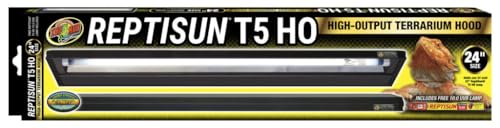
Zoo Med ReptiSun T5 HO Terrarium Hood with 10.0 Bulb 24"
The same bulb with the fixture it needs. A bare tube is half a purchase if you don't already own a T5 HO fixture with a reflector, and this bundles both for less than an Arcadia kit costs.
You Might Also Need
Accessories worth grabbing alongside your purchase