Deep Heat Projector vs Ceramic Heat Emitter
By ReptileGearLab · Updated September 2026

Verdict
Deep Heat Projector
Ceramic Heat Emitter
Keepers treat these as different tools rather than rivals, and the dividing line they draw is consistent: a ceramic emitter warms the air around it while a deep heat projector throws heat downward onto whatever is beneath, so the ceramic gets recommended for lifting whole-enclosure temperature and the projector for producing a warm surface at a distance. Durability reports on the projector side are strong, with one keeper describing the same unit running at maximum output continuously for four years while still holding a 90F hot spot on slate about twenty-two inches below. On brand, one keeper who has run Arcadia, Zoo Med and Pangea units reports they behave much the same and advises choosing by wattage instead, with the caveat that the right wattage depends on room temperature, enclosure size, ventilation and mounting height and usually takes trial and error. The night-use question comes up constantly and the prevailing answer is that a powerful projector may show a faint red glow at full output, closer to a stove element than a lamp, which keepers regard as unproblematic overnight. It is worth noting that the same commenter who is most sceptical of the marketing also suggests a projector may suit daytime supplementary use better than night, so this is a majority view rather than a settled one. The most useful dissent concerns the marketing: one keeper who follows the lighting literature cautions that much of the circulating projector science is repeated promotional copy and that halogen output sits closer to sunlight than a projector does, which is worth knowing before paying a premium for the penetration story specifically. A note on the evidence behind this comparison: the keeper discussion we found is weighted heavily toward the deep heat projector, so Product B's assessment leans on our own ceramic emitter review, where the drying effect and the output ceiling are documented, rather than on comments gathered here. Our own read splits the decision on humidity: the directional argument for a projector is real and sufficient on its own, the tissue-penetration argument is not the reason to buy one, and a ceramic emitter remains the better value wherever the animal does not need the air kept damp.
Read full take ↓Top Picks
Once you accept that a reptile should not sleep under a coloured night bulb, you are choosing between two lightless heaters: a deep heat projector, or a ceramic heat emitter. Both give off heat without visible light, both need a ceramic fixture and a thermostat, and neither of them is a basking lamp.
That last point is the one keepers get wrong most often, so it is worth saying before anything else. A basking species picks its basking spot by brightness, and neither of these produces meaningful light. If you are shopping for the hot spot a bearded dragon sits under during the day, you want a halogen, not either of these. What follows is the choice between them for the job they do share: lightless warmth.
Before you buy either: do you need one?
Night heat is assumed far more often than it is needed. Most common pet reptiles tolerate a night-time drop that is colder than keepers expect, and the first step is to measure the enclosure overnight rather than to buy a heater on principle. Our night heat guide gives the species floors. If the enclosure holds above them on its own, neither of these devices needs to be in your basket.
The short version
If you do need lightless heat, the deciding question is usually humidity, not heat output. A ceramic emitter dries the air noticeably; a deep heat projector does the same job while drying it far less. So an arid species can take either, and a humidity-dependent animal like a ball python or a crested gecko should have the DHP.
After that it is about what you are warming. A CHE mainly heats the air around it, which suits raising the ambient temperature of a whole enclosure. A DHP throws its output downward onto whatever sits below, which suits a tall or well-ventilated cage where heated air escapes before it does any good. And if budget is the binding constraint, ceramic emitters sell in two-packs for less than a single deep heat projector.
The mechanical difference that matters
A ceramic heat emitter is a resistive element in a ceramic body. It runs hot and warms the air in contact with it, which then circulates, and its output is almost entirely IR-C, the longest and most surface-level infrared band.
A deep heat projector emits a shorter-wavelength mix that includes IR-B and a small share of IR-A, aimed downward by an internal reflector. The shorter bands carry further into tissue rather than stopping at the surface, and the reflector is what makes the heat directional. Between them, that means the DHP puts usable warmth onto a surface at a distance while heating the intervening air less, which is also why it dries an enclosure less than a ceramic emitter does.
Where the DHP earns its price
- Humidity-dependent species. This is the strongest argument and the one most likely to decide your purchase. A ceramic emitter will fight you on humidity all winter; a DHP largely does not.
- Tall and ventilated enclosures. Heated air rises and leaves through a screen top. Directional radiant heat does not care.
- Surface warmth at distance. It will hold a warm surface below it rather than only warming the air, which is useful for a nocturnal or crepuscular animal that wants a warm place to lie without a bright lamp over it.
- Longevity. One keeper reports running the same unit at full power continuously for four years and still holding a 90F surface about twenty-two inches below it, which spreads the higher purchase price over a long service life.
Where the ceramic emitter wins
- Price, and it is not close. Ceramic emitters sell in two-packs for less than a single deep heat projector, and the gap widens against the premium DHP brands. Across several enclosures that compounds fast.
- Whole-enclosure ambient heat. If the problem is a cold room and an enclosure sitting at 68F, warming the air is the direct fix.
- Arid species. The drying effect that rules a CHE out for a ball python is irrelevant to a bearded dragon or a leopard gecko, which removes the DHP's main advantage.
- Spares. Buying in pairs means one failing overnight is an inconvenience rather than an emergency.
The DHP claim worth narrowing
Deep heat projectors are sold on penetration: the idea that their infrared reaches deeper into tissue than other heat sources. The underlying physics is real, and a DHP does out-penetrate a ceramic emitter, because IR-A and IR-B carry further than IR-C. That part is not marketing.
What is oversold is the implication that this makes a DHP sun-like. It is not an IR-A source in any meaningful sense; sunlight and a halogen deliver a far larger share of IR-A than a DHP does, and a good deal of a DHP's own output is still IR-C, which puts it closer to a ceramic emitter than the packaging suggests. One keeper who follows the lighting literature makes the blunter version of the point, that much of the circulating DHP science is repeated promotional copy. Buy a DHP for directionality and for humidity, which are real. Do not buy it believing it substitutes for sun. Our Arcadia deep heat projector review and our ceramic heat emitter review cover each device on its own terms.
Neither one is a basking lamp
This bears repeating because it is the expensive mistake. Reptiles orient to brightness when they bask, and both of these devices are effectively lightless, so a diurnal basker will not recognise either as a basking spot. You can hit a correct air temperature with a DHP over a bearded dragon and still fail the animal, because it never gets the bright overhead cue it needs to thermoregulate properly.
Use these for what they are: overnight floor temperature, supplementary warmth, and ambient or surface heat for species that do not bask under a bright lamp in the first place. A daytime basking species needs a halogen for that job, with one of these as a lightless supplement if the nights are cold enough to warrant it.
Brand matters less than wattage
Among DHPs specifically, a keeper who has run Arcadia, Zoo Med and Pangea units reports they behave much the same and advises choosing by wattage instead. Wattage in turn depends on room temperature, enclosure size, ventilation and mounting height, which is why no chart will give you the right answer. Buy the lowest wattage that reaches temperature in a reasonable time and expect some trial and error.
One first-use note applies to both types: a new element often gives off a faint burn-off smell for the first day as manufacturing residue cooks off. It is unnerving and it is normal, though it is worth running a new heater ventilated and supervised rather than leaving the house.
Fixtures, guards and control
- A ceramic or porcelain socket, never plastic. Both devices run hot enough to melt a plastic lamp socket, and the manufacturers of both specify ceramic holders rated for the wattage. This is not optional and it is the most common way these setups become a fire risk.
- Mount it out of reach, and guard it. Reptiles judge thermal damage poorly and will sit against a hot element rather than move off it. Mount above the screen where possible, and use a wire guard where the animal can climb to it.
- A thermostat, always. Neither device should ever run unregulated, in any enclosure, reachable or not.
- Dimming for the DHP, on-off is fine for the CHE. Manufacturers specify a dimming controller for a deep heat projector. Because a ceramic emitter is entirely lightless, simple on-off control causes no visible flicker and works fine, which is part of its cost advantage.
Probe placement decides whether any of it means anything. The thermostat regulates the element, not the animal, so the number you set will read higher than the surface the animal occupies. Set it by measuring that surface with an infrared gun. Our thermostat guide covers the controller types and their failure modes.
Our verdict
For a humidity-dependent species the deep heat projector is the better buy and it is not particularly close, because a ceramic emitter will spend every winter pulling moisture out of an enclosure you are trying to keep damp. That single criterion decides more of these purchases than heat output does, and it is why the DHP scores higher here.
For an arid species the ceramic emitter is the sensible default: it does the same lightless job, it costs less, and its one real drawback does not apply to the animal. Whichever you choose, put it in a ceramic socket, guard it, run it on a thermostat, and set that thermostat by measuring the surface rather than trusting the display. And check first whether your nights are cold enough to need either, because a lot of keepers buy night heat they do not need.
Scores at a Glance
Deep Heat Projector
Our pick
Ceramic Heat Emitter
Filled circle = category winner. Scores are our editorial assessments on a 1–10 scale.
Build Quality
Both are simple, durable devices with no meaningful failure pattern in the reports we have for the deep heat projector, where one keeper describes the same unit running at full power continuously for four years and still holding a 90F surface about twenty-two inches below it. Ceramic emitters are equally unfussy mechanically, and their two-pack packaging means a failure is an inconvenience rather than an emergency. Product B scores slightly lower here on the output ceiling our own ceramic emitter review documents rather than on build quality. Both are docked for depending entirely on an external controller and a rated ceramic socket to be usable at all.
Safety & Reliability
Safety with either device is about heat you cannot see, and both demand a ceramic or porcelain socket, a guard where the animal can climb, and a thermostat without exception. The deep heat projector takes the higher score for one reason: it delivers usable warmth to a surface while heating and drying the intervening air far less, so a keeper of a humidity-dependent species can hit a temperature without wrecking the humidity. That drying effect is exactly what our ceramic emitter review docks that device for, and it is why Product B sits a point lower. Neither is a basking source, and treating either as one is the failure mode that harms animals.
Value
The deep heat projector's weak axis, and the reason this comparison stays close for arid keepers. A ceramic emitter two-pack costs less than a single deep heat projector, and the gap widens against the premium DHP brands, so the DHP only earns the difference when you need its directionality or its gentler drying. Bought for the sun-like penetration story rather than for those two properties, it is a premium paid for a claim the packaging overstates.
The Evidence Behind Our Verdict
Keepers treat these as different tools rather than rivals, and the dividing line they draw is consistent: a ceramic emitter warms the air around it while a deep heat projector throws heat downward onto whatever is beneath, so the ceramic gets recommended for lifting whole-enclosure temperature and the projector for producing a warm surface at a distance. Durability reports on the projector side are strong, with one keeper describing the same unit running at maximum output continuously for four years while still holding a 90F hot spot on slate about twenty-two inches below. On brand, one keeper who has run Arcadia, Zoo Med and Pangea units reports they behave much the same and advises choosing by wattage instead, with the caveat that the right wattage depends on room temperature, enclosure size, ventilation and mounting height and usually takes trial and error.
The night-use question comes up constantly and the prevailing answer is that a powerful projector may show a faint red glow at full output, closer to a stove element than a lamp, which keepers regard as unproblematic overnight. It is worth noting that the same commenter who is most sceptical of the marketing also suggests a projector may suit daytime supplementary use better than night, so this is a majority view rather than a settled one. The most useful dissent concerns the marketing: one keeper who follows the lighting literature cautions that much of the circulating projector science is repeated promotional copy and that halogen output sits closer to sunlight than a projector does, which is worth knowing before paying a premium for the penetration story specifically.
A note on the evidence behind this comparison: the keeper discussion we found is weighted heavily toward the deep heat projector, so Product B's assessment leans on our own ceramic emitter review, where the drying effect and the output ceiling are documented, rather than on comments gathered here. Our own read splits the decision on humidity: the directional argument for a projector is real and sufficient on its own, the tissue-penetration argument is not the reason to buy one, and a ceramic emitter remains the better value wherever the animal does not need the air kept damp.
Our rating above is our own editorial call. What follows is the field evidence we weighed to reach it: first-hand reports from keepers on Reddit and dedicated reptile forums, which we lean on more than manufacturer-influenced published reviews because unsponsored owners tend to be the more candid signal.
Deep Heat Projector owners
“I've had one running at max power non-stop for FOUR YEARS. And it still maintains a hot spot of 90F on slate at ~22".”View thread →
“I'd definitely leave the DHP on at night with those temps. If you have a powerful one it might glow a little at full blast, but they're generally regarded as safe to use at night and the glow shouldn't be bright enough to disturb them.”View thread →
“An alternative would be a CHE (ceramic heat emitter). It doesn't project heat downwards but it's pretty effective at heating up the surrounding air. Seems like a good fit for your needs.”View thread →
“I've used a few brands of DHP, Arcadia, zoomed, and Pangea. And they all seem pretty much the same :) just get one that is the wattage you need, but this may take some trial and error!”View thread →
“I don't specifically have an Arcadia brand DHP, but mine does glow red. Think of a coil stove top/range on medium to medium high heat. While it does "glow" red it's not really producing any significant light by any means.”View thread →
“To put it simply, halogens basically emit closer to sun-like energy than DHPs. A lot of DHP "info" that tends to be spread is more just people repeating marketing”View thread →
Frequently asked questions
Should I buy the Deep Heat Projector or the Ceramic Heat Emitter?
That last point is the one keepers get wrong most often, so it is worth saying before anything else. A basking species picks its basking spot by brightness, and neither of these produces meaningful light. If you are shopping for the hot spot a bearded dragon sits under during the day, you want a halogen, not either of these.
How do the Deep Heat Projector and Ceramic Heat Emitter compare on construction?
Both are simple, durable devices with no meaningful failure pattern in the reports we have for the deep heat projector, where one keeper describes the same unit running at full power continuously for four years and still holding a 90F surface about twenty-two inches below it. Ceramic emitters are equally unfussy mechanically, and their two-pack packaging means a failure is an inconvenience rather than an emergency. Product B scores slightly lower here on the output ceiling our own ceramic emitter review documents rather than on build quality.
What do real owners say about the Deep Heat Projector and the Ceramic Heat Emitter?
Keepers treat these as different tools rather than rivals, and the dividing line they draw is consistent: a ceramic emitter warms the air around it while a deep heat projector throws heat downward onto whatever is beneath, so the ceramic gets recommended for lifting whole-enclosure temperature and the projector for producing a warm surface at a distance. Durability reports on the projector side are strong, with one keeper describing the same unit running at maximum output continuously for four years while still holding a 90F hot spot on slate about twenty-two inches below. On brand, one keeper who has run Arcadia, Zoo Med and Pangea units reports they behave much the same and advises...
Top Picks

Pangea 50W Deep Heat Projector
The DHP side of this comparison, at a price that softens its main disadvantage. A keeper who has run several DHP brands reports they behave much the same, so wattage and mounting height matter more than the name. Needs a ceramic socket and a dimming thermostat.

LUCKY HERP 100W Ceramic Heat Emitter (2-Pack)
The CHE side, and the reason the value argument stays close for arid keepers. A two-pack costs less than one deep heat projector and buys a spare for the night one fails. Best for lifting whole-enclosure air temperature; the wrong call for a humidity-dependent species.
You Might Also Need
Accessories worth grabbing alongside your purchase
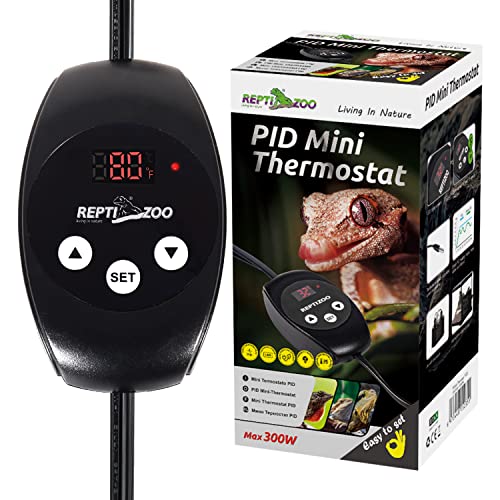
REPTIZOO Dimming Thermostat (PID)
The dimming type a deep heat projector needs: it eases output rather than cycling a hot element. A ceramic emitter runs fine on cheaper on-off control. Keepers are split on this unit and there are failure reports, so back it with a failsafe.

Etekcity Infrared Thermometer 774
The tool that keeps either heater accountable. Your thermostat regulates the element, not the animal, so the set number reads higher than the surface below. Measure the basking surface and adjust until that reads right.
Full Individual Reviews
Deep-dive on each, individually