Do Leopard Geckos Need UVB? A Straight Answer
By ReptileGearLab · Updated October 2026
Quick Take
A leopard gecko does not strictly need UVB if you dust its food with a calcium supplement that contains D3, which is how the hobby kept them for decades. But providing a low level of UVB is the better, more natural route: it lets the gecko make its own vitamin D and removes the guesswork of getting D3 dosing exactly right. If you add it, treat the gecko as what it is, a crepuscular, low-UV animal.
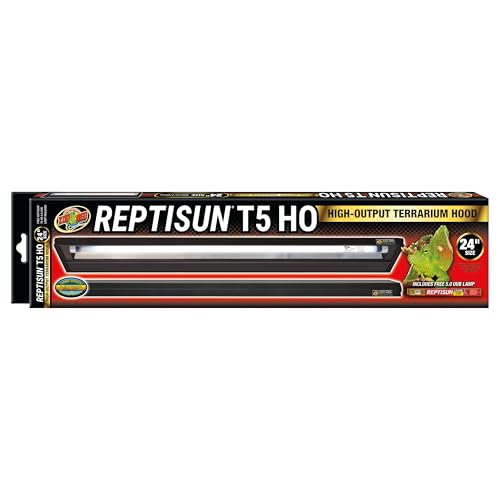
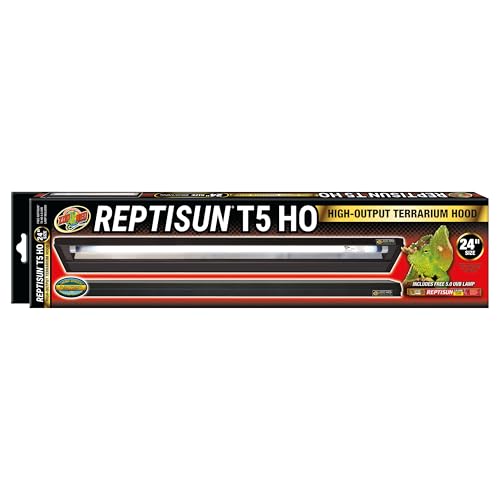
That means a weak lamp, a 5.0 or 7 percent T5 giving a basking reading near UVI 1.0, with shade to hide in, and never a 10.0 or a desert bulb. The low-output lamps, the meter, and the calcium to pair with each route are below.
Ask whether a leopard gecko needs UVB and you will get two confident, opposite answers. The old-school reply is no, leopard geckos are nocturnal and do fine on a calcium supplement with D3. The newer one is yes, they benefit from it and should have it. Both camps are partly right, which is exactly why the question keeps starting arguments.
Here is the current version, and the one detail that matters more than the yes-or-no: leopard geckos are a low-UV species, so if you do give UVB, it has to be weak. A bright desert bulb is worse than none at all.
The old answer, and why it is changing
Leopard geckos are crepuscular, active at dawn and dusk, and they spend the bright part of the day hidden. Because they are not out baking in the sun, keepers reasonably concluded they did not need UV light and supplied the vitamin D3 they need for calcium through dusted food instead. Done carefully, that works, and millions of healthy leopard geckos have been raised that way.
What shifted is the evidence. Studies on leopard geckos specifically found they synthesize vitamin D3 efficiently from even low levels of UVB, and that crepuscular animals do meet low doses of sun at dawn and dusk in the wild. Low UVB also supports natural behavior and is thought to benefit the immune system. So the modern position is not that the old way was killing geckos; it is that a small amount of the right UVB is a genuine upgrade, and it is safer than leaning entirely on getting supplement dosing perfect.
UVB or D3: you need one of them
This is the real decision, and it is an either-or that a lot of care sheets skip. A leopard gecko must get vitamin D3 from somewhere to use the calcium in its diet, or it develops metabolic bone disease. There are exactly two sources: its own skin making D3 under UVB, or D3 you add to its food. You are choosing which.
Our take is that UVB is the better default. The gecko's own body self-regulates how much D3 it makes, so you cannot overdose it the way you can with a heavy hand on a D3 supplement, and it does not depend on you dusting every meal correctly for years. The supplement route is not wrong, and it is the right call in a setup where UVB is impractical, but it is the one with a margin for human error on both sides, too little D3 causes bone disease and too much causes its own problems. If you run UVB, you pair it with a plain calcium and only a light D3 multivitamin; if you skip UVB, your calcium needs to carry the D3.
We should be straight about how well the supplement route works in practice, because the people running it are not careless keepers. Breeders across Europe have raised leopard geckos on calcium with D3 and no UVB for decades, and they report animals living into their twenties and beyond on that regime. Keepers who have kept one gecko for six or seven years on weekly D3 and a calcium dish describe the same. The supplement route is not a compromise; it is a different, proven protocol, and it is the reason we frame this as a choice rather than a correction.
What is not safe is mixing them carelessly, and this is where the two camps genuinely disagree. Some keepers continue a monthly D3 dose even with UVB running, on the grounds that no one knows exactly how much the animal is getting from a tube. Others drop supplemental D3 entirely once UVB is in, because the risk flips from too little to too much. Our own position is that if UVB is your route, you can ease off the D3, and if supplements are your route, be consistent rather than occasional, because an irregular D3 schedule is the worst of both.
One thing both camps agree on is vitamin A. Leopard geckos do not reliably convert beta-carotene into the usable form, so the multivitamin you choose wants preformed vitamin A, retinol, on the label rather than beta-carotene alone. This is the part of a supplement routine that keepers most often get wrong while believing it is handled.
If you add UVB, do it the low-output way
This is where leopard geckos get hurt, so it matters more than the yes-or-no. A leopard gecko is a Ferguson Zone 1 animal, the lowest UV band, and its eyes are built for dim light. A strong lamp, or a lamp mounted too close over a ground-dwelling gecko, is not a bigger benefit; it is a real risk of eye damage and over-exposure.
- Use a weak lamp. A low-percent T5 HO tube, a 5.0 or a 7 percent, or a compact shade-dweller kit designed for Zone 1 species. Never a 10.0, never a desert 12 percent, and never a coil bulb, which outputs UV unevenly and has a history of eye issues.
- Aim for UVI around 1.0 at the basking spot. This is a low target on purpose. Because a leopard gecko sits on the ground close to the lamp, the safe distance matters, and the only way to know your real number is to check it with a meter.
- Give dense shade. A gecko must be able to get completely out of the UV. Mount the lamp over the warm end and make sure hides and cover let it escape the light entirely, which is how it self-doses.
- Mount it right and replace it. Run the tube over roughly half the enclosure on the warm side, account for the UV a screen mesh blocks, and replace it about once a year, because output fades before the light looks dim.
Two practical things decide what percentage you need, and neither is on the box. The first is what sits between the tube and the animal: a tight metal mesh can absorb a large share of the output, so the same bulb delivers very different exposure through a fine screen than through an open front. The second is distance, because output falls off sharply with it. This is why a fixture you can mount low and close, over a raised basking spot, lets you run a gentler bulb than one stuck on top of a tall enclosure.
Budget for replacement rather than for the purchase. A UVB tube keeps producing visible light long after its useful output has fallen away, so it gets swapped on a calendar and not when it looks dim; follow the interval the manufacturer states for the tube you buy. Keepers often find a replacement tube for a standard fixture costs nearly as much as a complete low-output kit, which changes the arithmetic on which fixture to start with.
The gear: a weak lamp, a meter, and the right calcium
If you go the UVB route, the lamp is a low-output T5, either a Zoo Med ReptiSun 5.0 or the plain Arcadia ShadeDweller, which Arcadia sells direct, paired with a plain calcium and a light multivitamin. If you go the supplement route instead, your calcium needs to contain D3. Either way, a Solarmeter 6.5 is the one accessory worth buying, because UVB is invisible and a Zone 1 dose is easy to overshoot without one. The full lamp comparison is in our best UVB for a leopard gecko guide.
Our call
No, a leopard gecko does not strictly need UVB, and a gecko kept on a good D3 supplement is not doomed. But we would give it low-level UVB anyway, because letting the animal make its own vitamin D is more natural, more forgiving, and removes the standing risk of a supplement dosing mistake. The catch is that it only helps if it is weak: a 5.0 or 7 percent T5 at a Zone 1 distance, with real shade and a meter to check the number.
Whatever you choose, choose one on purpose. The only dangerous setups are the two extremes: no UVB and no D3 in the diet, which starves the bones, or a bright desert bulb over a low-UV animal, which can harm its eyes. Aim for the low, shaded middle.
Recommended
Products related to this guide.


What owners say
Real owner reports from the threads and editorial sources we drew on for this guide.
“I've also Heard mixed things about this. The old school would of said no. But nowadays some people are saying yes. A leopard gecko would sometimes,get some uvb (at dusk and dawn, due to being nocturnal). If you already have the equipment then there is no harm in using it.”
— r/leopardgeckos / mmmetroidvania
“If you want your gecko to have a long happy life, buy the Arcadia ShadeDweller 7% UVB. It’s 12 inches and comes as a kit.”
— r/leopardgeckos / NYR_Aufheben
“Also 1 more thing, your gecko is getting wayyyy too close to the uvb and this can cause burns, when you get a taller tank this shouldn’t be an issue but for now take the clutter surrounding the uvb out”
— r/leopardgeckos / LibsnZeus23
“It's possibly not absolutely necessary, like I guess supplements can help, but there's no reason why you shouldn't. Use multivitamin dust as well, and leave calcium in there for him. If it can help then you should always do it”
— r/leopardgeckos / pichael289
“I live in Germany and the majority here doesn't even use uvb and instead relies on d3, for new owners I always recommend uvb but the most people I know own Leo's for decades and none of us are going to change a setup that's proven to be working for so long”
— r/leopardgeckos / eyelidgeckos
“I use reptivite with D3 once a week and leave a calcium dish inside his terrarium and he's done well so far.”
— r/leopardgeckos / Outrageous_Neck_9815
“UVB - t5 Arcadia shade dweller or reptisun 2.5% Calcium, calcium with d3 (sometimes, or not at all if you have UVB and keep it replaced every six mos), reptile multivitamins with good source of vitamin a (retinol not beta carotene) OR Repashy calcium plus - all the above combined, use on every bug”
— r/leopardgeckos / CD274
“uvb depends on the mesh type and distance between your basking spot and the top of the enclosure! what brand is the tank? if its an exoterra you can probably use either the 7% arcadia shadedweller or the 2.5% shadedweller max”
— r/leopardgeckos / xiabrine
“I just switched my reptisun to a shadedweller as well as a new reptisun bulb as almost as expensive as the whole shadedweller kit”
— r/leopardgeckos / MND420
“You can get a small linear UVB, a 10 gallon isn't "too small" for it. You can put it over the hot side and have it hang over the sides if need be, but if this guy has MBD he really needs UVB.”
— r/leopardgeckos / One-plankton-